U.S. flag

An official website of the United States government

Official websites use .gov
A .gov website belongs to an official government organization in the United States.

Secure .gov websites use HTTPS
A lock ( ) or https:// means you’ve safely connected to the .gov website. Share sensitive information only on official, secure websites.

Projects/Programs

Displaying 526 - 550 of 576

Synchrotron X-ray Spectroscopic Imaging

Ongoing
Building off technologies and expertise developed in the Synchrotron X-ray Absorption Spectroscopy project, the Spectroscopic Imaging effort seeks to develop measurements that provide spatial mapping of the local chemical, electronic, and physical structure in advanced materials. Technology is...

Synthesis and longevity of candidate direct air capture (DAC) materials

Ongoing
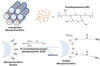
We have been working on the identification and development of repeatable synthesis techniques for DAC materials for the purposes of generating repeatable samples for evaluating DAC characterization techniques. We have initially focused on impregnated and grafted aminosilane-silica materials. We are...

Synthetic Biology

Ongoing
New measurement methods and tools are required for biology to emerge fully as an enabling, practical platform for engineering. The Cellular Engineering Group works to provide a foundation of measurement assurance to support the control and rational design of biological function. Through state of the...

U.S. TAG for ISO/TC276: Biotechnology

Ongoing
Get involved: Interested U.S. Stakeholders may participate in the US TAG at no cost. Membership provides access to all ISO/TC 276 and US TAG documents, including standards under development. Please click here to join. Contribute to standards development: Please click here to review, submit comment...

Tandem Mass Spectral Library

Ongoing
Intended Impact Modern mass spectrometers commonly generate ions by electrospray mass spectrometry which are separated and then fragmented by collisional dissociation. This process yields fragment ion ‘fingerprints’ (or mass spectra) that are widely used to identify the individual components in a...

Teaching Liquid State Theory to an Artificial Neural Network (ANN)

Ongoing
Scientific questions: Can an ANN allow us to predict the structure of fluids that are impossible to predict numerically via liquid-state theory? Can we learn something about liquid-state theory itself by the nature of the trained ANN? What features do the hidden layers capture?...

Technological Advances in Aquaculture

Ongoing
According to the NOAA Fisheries of the U.S. report, in 2020 U.S. seafood consumption was estimated at ~6B pounds (~2.7 x 10⁹ kg). Of that, 85% is imported and U.S. exports have seen a significant decline. Globally, the U.S. ranked only 18th in aquaculture production (2020). NIST aims to enhance the...

Templated Assembly of Block Copolymer Films

Completed
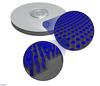
Viable nanomanufacturing of templated block copolymers will require a capability to control orientation and line edge roughness of trillions of structures to within a single nanometer, however there are no existing platforms that meet this need. We are developing small angle x-ray and neutron...

Tension-Compression Testing

Ongoing
The inability to reliably predict the mechanical behavior of new automotive alloys during forming has generated strong demand for more advanced constitutive relationships and property data necessary to calibrate them. There is a particular need for models that incorporate combined kinematic and...

Theoretical Mass Spectrometry

Ongoing
No Description Intended Impact Unknown compounds will be identified more reliably. Quality control for the NIST Mass Spectrometry Database will be enhanced. Goals Develop software tools for predicting microcanonical branching fractions automatically. This is currently too laborious and too technical...

Thermal Desorption Ambient Mass Spectrometry

Ongoing
The Surface and Trace Chemical Analysis Group is involved in a number of research avenues for the rapid screening of wipe-collected samples for the security and forensic chemistry fields. Similar to the widely-deploy ion mobility spectrometry (IMS) systems for screening, this is accomplished through...

Thermodynamic & Kinetic Data for Sustainable Energy

Completed
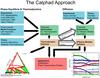
Knowledge of the thermodynamic, phase equilibria and diffusion properties of potential novel materials can greatly accelerate their development. However, the data needed for new, multi-component materials are often not available. The CALPHAD (Computer Coupling of Phase Diagrams and thermochemistry)...

Thermodynamics of Enzyme-catalyzed Reactions

Ongoing
Current efforts are focused on industrially important biotransformation problems such as those found in hydrogenation, hydroxylation, aromatic amino acid metabolic pathways, and biofuel applications. The methods used include calorimetry, chromatography, enzymology, and spectrophotometry. The...

Thermoelectric Measurements

Ongoing
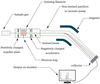
Thermoelectric effects enable the inter-conversion of thermal and electrical energy, with applications that include solid-state waste heat recovery in engines for automotive and industrial manufacturing; power generation for aerospace, non-terrestrial exploration, and remote sensing; and...

Time-of-Flight Secondary Ion Mass Spectrometry

Ongoing
ToF-SIMS is an imaging mass spectrometry (MS) technique that allows us to obtain isotopic, elemental, and molecular information from the surface of solid samples. A pulsed, energetic “primary” ion beam bombards the surface and induces a collision cascade, liberating “secondary” ions that are then...

Tissue Engineering

Ongoing
Tissue Engineering Measurands: Tissue engineering measurands are confusing to discuss and a charting method to improve communication is demonstrated. Measurement Assurance Strategies for Regenerative Medicine: Reliable methods for assessing product consistency and quality. Regenerative Medicine...

Tissue Engineering Measurands

Ongoing
Making a Measurand Chart: A measurand chart can be created for any measurement by writing down all the measurands that occur during the measurement. The panels should not be procedural steps, such as “wash the sample with buffer” or “centrifuge the microfuge tubes.” Consider if the measurement has a...

Toxicology

Ongoing
Development of Low-Volume Drop Blood Drug Screening Tools This project aims to leverage recent NIST advances in ambient ionization mass spectrometry to develop platforms for low-volume blood drug screening. Direct Analysis in Real Time Mass Spectrometry (DART-MS) and Paper Spray Ionization Mass...

Trace Contraband Detection

Ongoing
Screening of people and their belongings including luggage, vehicles, and packages for the presence of trace residues of explosives and narcotics (trace contraband detection) is widely used in aviation security and law enforcement. In common screening scenarios, trace contraband residues in the form...

Traceability in Molecular Spectrophotometry

Ongoing
This program, sometimes referred to as the Optical Filters program, has supported the development, certification, and (as specified) recertification of Standard Reference Materials ® (SRMs ®) for the verification of the transmittance (absorbance) and wavelength scales of spectrophotometers in the...

Traceable Calibration Gases: SRMs, NTRMs, and Protocol Gases

Ongoing
The Gas Sensing Metrology Group prepares the highest level gas standards, known as Primary Standard Gas Mixtures based on precise gravimetric methods and accurate purity analysis. These Primary Standards are verified at NIST, stability confirmed through reanalysis over many years, and compared...

Training for Screeners and Lab Staff

Ongoing
Advances in primary screening technologies (x-ray, CT, AIT) have allowed the detection and discrimination of bulk quantities of potentially dangerous compounds on people or in bags. However, a secondary screening method - typically based on trace detection - is still required for correct...
Was this page helpful?