U.S. flag

An official website of the United States government

Official websites use .gov
A .gov website belongs to an official government organization in the United States.

Secure .gov websites use HTTPS
A lock ( ) or https:// means you’ve safely connected to the .gov website. Share sensitive information only on official, secure websites.

Material Measurement Laboratory

MML conducts measurement science across the chemical, biological and material sciences. Activities range from fundamental and applied research to the development and dissemination of certified reference materials and data to industry, academia, and other government agencies to assure the quality of measurement results.

About the Material Measurement Laboratory

The NIST Material Measurement Laboratory (MML) conducts measurement science research to benefit industries based in the chemical, biological, and material sciences, and contributes technical expertise to the development of standards. MML researchers perform fundamental and applied research, evaluate data, and create other programs and tools to assure the quality of measurement results. 

Learn more about MML's work: 
Projects & Programs | News & Updates | Events | Publications | Awards | Press Coverage | Blogs | Patents | Software

Our work supports areas of national importance:

Projects & Programs

Advanced Materials Design: Electronic and Functional Applications

Ongoing
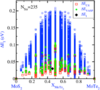
Accelerating Materials Discovery using Machine Learning and AI Using machine learning and AI techniques along with high-throughput DFT calculations materials with specific properties are identified to accelerate the the discovery process for a variety of applications. Some of the specific materials...

3D Molecular Orientation Imaging

Ongoing
We have developed 3D orientation measurement techniques by analyzing polarization-dependent molecular vibrational signals based on infrared (IR) absorption [1,2] and coherent anti-Stokes Raman scattering (CARS) [3]. The two imaging modalities are complementary to each other: IR imaging broadly...

News & Updates

Events

Build-A-Cell Workshop #16

Tue, Sep 22 2026, 8:30am - 5:30pm EDT
The Build-A-Cell Workshop #16 will continue Build-A-Cell’s mission to support the open collaboration of researchers in

Publications

Reference Correlation of the Thermal Conductivity of Neon

Author(s)
Marc Assael, Sofia Sotiriadou, Monika Thol, Marcia Huber
A new wide-ranging correlation for the thermal conductivity of neon, based on the most recent ab-initio dilute gas theoretical calculations, a simplified...

Structure-Property Relationships for Biodegradability in Copolyesters

Author(s)
Katharina Fransen, Julia Casey, Gabrielle Godbille-Cardona, Natalie Mamrol, Jiale Shi, Alex Zappi, Jignesh Mahajan, Jiarui Lu, Debra Audus, Bradley Olsen
With growing concerns about increasing plastic pollution, interest in biodegradable polymers, particularly polyesters, continues to grow. Copolymerization is an...

Awards

Press Coverage

Meet the author: Nathan D. Olson

Cell Genomics
In their latest Cell Genomics paper, “Characterization of subclonal variants in HG002 Genome in a Bottle reference material as a resource for benchmarking...

Blog Posts

Patents

Non-Destructive Concrete Quality Testing System

NIST Inventors
Huaiyu Heather Chen-Mayer
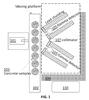
This invention uses prompt gamma neutron activation analysis (PGAA) to analyze materials, especially concrete, without damaging them. It fires neutrons at the sample, which then emits gamma rays. By measuring those rays, the material's makeup can be identified, including cement, sand, aggregates
(a) Without an aptamer’s protein ligand, dARTs are transcribed to produce RNA outputs (left), while protein binding represses transcription (middle). The input and output domains are decoupled (right), enabling modular design of dARTs by swapping out the aptamer domain or customizing the output sequences. (b) dARTs serve as the protein sensing layer (left) whose outputs can be coupled with downstream circuits (middle). RNA outputs are measured via fluorescence (right).

Aptamer Regulated Transcription For In-Vitro Sensing And Transduction

NIST Inventors
Samuel Schaffter
It relates to nucleic acid transcription templates, systems, and methods for detection and measurement of molecules and biomolecules (e.g., biomarkers). Particularly, systems and methods utilize a transcription template with an aptamer domain configured to bind a molecule of interest to regulate

Software

NIST DTSA-II

NIST DTSA-II builds on the best available algorithms in the literature to simulate, quantify and plan energy dispersive x-ray analysis measurements.

OCEAN

OCEAN is a versatile package for calculating both optical/UV and core-edge spectroscopy. It is a first-principles code based on both ground-state density

NIST Mass and Fragment Calculator Software

The NIST Mass and Fragment Calculator is a program written in Visual Basic which calculates the mass of an input peptide or protein sequence along with m/z ions

Contacts

GENERAL INFORMATION: 301-975-8300 (PHONE); [email protected]; 100 BUREAU DRIVE, M/S 8300, GAITHERSBURG, MD 20899-8300

Was this page helpful?