U.S. flag

An official website of the United States government

Official websites use .gov
A .gov website belongs to an official government organization in the United States.

Secure .gov websites use HTTPS
A lock ( ) or https:// means you’ve safely connected to the .gov website. Share sensitive information only on official, secure websites.

Projects/Programs

Displaying 426 - 450 of 575

Polymer Advanced Manufacturing and Rheology

Ongoing
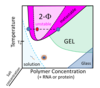
The manufacture of polymeric materials, whether from virgin or reclaimed sources, occurs under highly non-equilibrium conditions where temperature and stress fields evolve rapidly. The quality of the materials made from these processes depends not only on the composition of the starting material

Polymer Analytics

Ongoing
This project focuses on a variety of activities to achieve the aforementioned goal of accelerating the discovery of new polymer physics. Enhanced machine learning Two major hurdles to applying machine learning to polymer science is a lack of large datasets and a need to understand the model

Polymer Composites

Ongoing
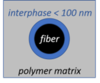
Measurements of interphase properties are extremely challenging, and their effects on macroscopic properties and performance of composites are poorly quantified. The objectives of this project fall into the following four research thrusts: Fluorescence Based Probes to Sense Damage and Water in

Polymer Formulations

Completed
Bringing new and optimized formulated products to market requires measurements that will allow rapid assessment of the structure and properties of multicomponent mixtures over large parameter spaces. To this end, we are developing microfluidic "lab on a chip" technologies that enable researchers to

Polymer Mechanics

Ongoing
The mechanical behavior for polymers is very sensitive to the deformation rate of the impact test. Thus we are developing and applying several novel measurements that can study the mechanical response of the polymer at different deformation rates and at different material length scales. High-rate

Polymer Membranes

Ongoing
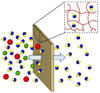
We are developing and applying the following advanced tools to measure the structure, dynamics, and performance of polymer-based membranes and sorbents: Vibrational Spectroscopy We have developed a custom-built tandem quartz crystal microbalance (QCM), which measures total mass uptake of adsorbed

Polymer Property Predictor and Database

Ongoing
We aim to generate the data necessary for polymer informatics by developing information extraction pipelines to automatically extract polymer properties from the literature. We use natural language processing software (ChemDataExtractor) to extract both names of chemical entities and properties

Polymers for Next-Generation Lithography

Completed
We work closely with the semiconductor industry to develop and apply measurements with high-spatial and chemically-specific resolution to elucidate the critical materials properties and process kinetics at nanometer scales that are needed to advance next-generation photolithography, including both

Potential Primary Measurement Tool for the Quantification of DNA

Ongoing
The biotechnology industry relies primarily on absorbance and fluorescence methodologies to assess DNA mass. However, these measurements can be seriously compromised by impurities in the DNA preparations or state of the DNA itself. These techniques are also not traceable to the SI because the

Powder Diffraction SRMs

Ongoing
This program strives to produce the highest-quality, traceable powders and other artifacts for x-ray diffraction calibration. (to be completed)

Precision X-ray Emission Line Measurements

Ongoing
Precise knowledge of the shape and position of x-ray emission lines is the basis of connecting x-ray diffraction measurements to the Système Internationale d'Unités (SI), the official worldwide standard for making any measurement. Measurements of position of x-ray emission lines have been made been

Prediction of Global Warming Potential

Ongoing
Goals Use ANN models to fit RF and .OH rate constant data k(.OH). Be able to predict RF, k(.OH), and GWP with reasonable accuracy using readily available information. Create a screening tool based on the ANNs.  Research Activities Improve the performance of rate constant prediction. Compare rate

Protein Preservation

Completed
This project is an integral part of a cooperative effort – led by NIST, and partially funded by NIH/ NIBIB – which includes the University of Wisconsin, the University of Colorado, and the University of Connecticut. We use the following approach to develop measurement solutions for biopharmaceutical

Protein rheology measurements

Ongoing
Intended Impact Why does the health-care industry care about rheology and scattering of protein solutions? Operations. Viscosity is a critical and fundamental constitutive input for drug delivery, device design and manufacturing. For example, high viscosity leads to poor syringeability due to high

Prototype Cell Assay Measurement Platform (P-CAMP)

Ongoing
A systematic approach to the development of robust biological assay includes identifying and ranking the sources of variability in an assay protocol. With a focus on mammalian cellular assays, the Prototype Cell Assay Measurement Platform ( P-CAMP) laboratory was designed and built to take advantage

Pushing the Limits of Measurement Accuracy in Atom Probe Mass Spectrometry

Ongoing
Isotopic Analysis for Isotopic Geochemistry, Nuclear Safety, and Materials Science : Atom probe tomography has a significant advantage over other forms of mass spectrometry, which typically have a combined efficiency < 5%, in terms of ionization and detection efficiency. Commercial atom probe

Quantitative, Cell-based Immunofluorescence Assays

Completed
Analysis of signaling events within individual cells with microscopy imaging has several advantages over non-imaging techniques. The principal advantage of imaging cytometry over plate reader assays and even other single cell techniques such as flow cytometry is the potential for collection of

Quantitative Flow Cytometry Measurements

Ongoing
Flow cytometry is an essential tool for: basic biotechnological and immunological research, the clinical discovery of potential therapeutics, development and approval of drugs and devices, disease diagnosis, and therapeutic treatment and monitoring For example, flow cytometry is commonly used in pre

Radioanalytical Metrology

Ongoing
The Group engages in a wide range of methods applicable to the detection and characterization of nuclear materials. The work can benefit environmental studies, waste remediation, naturally occurring radioactivity detection and characterization and general radioanalytical metrology. Expertise in

Rapid DNA Typing

Ongoing
The Applied Genetics Group at NIST has been involved in testing integrated rapid DNA instruments since the prototype stage in the fall of 2012 and began robustly testing the maturity of these rapid DNA instruments in 2013. The three maturity assessments conducted by NIST focused on the genotyping

Reactivity of Nanoparticle Catalysts

Ongoing
Goals: Provide mechanisms for various prototypical electrocatalytic reactions on different metallic surfaces an nanoparticles. Validate the results of DFT calculations versus experimental data. Research Activities: Studying the methanol oxidation reaction on Pt and PtRu surfaces. Studying the effect

Real Fuels

Ongoing
The variability of the price of oil, the need for energy efficiency and pollution minimization has led to increasing interest in alternative fuels. These fuels are structurally and compositionally different than the conventional fuels presently used.  Past work on conventional fuels have established
Was this page helpful?