U.S. flag

An official website of the United States government

Official websites use .gov
A .gov website belongs to an official government organization in the United States.

Secure .gov websites use HTTPS
A lock ( ) or https:// means you’ve safely connected to the .gov website. Share sensitive information only on official, secure websites.

Projects/Programs

Displaying 451 - 475 of 575

Recaptured and Reclaimed Plastic Measurements

Paused
Plastics are a complex mixture of various types of polymers with different chemical structures, shapes, and chemical additives. From microscopic nanoplastics (as small as 1 nm) to large megaplastics (over 1 m), plastic poses significant measurement science challenges. By developing accurate methods

Reference Fluid Thermodynamic and Transport Properties Database (REFPROP)

Ongoing
REFPROP is a computer program, distributed through the Standard Reference Data program of NIST, that provides thermophysical properties of pure fluids and mixtures over a wide range of fluid conditions including liquid, gas, and supercritical phases. It contains critically evaluated mathematical

Reference Material Production and Support

Ongoing
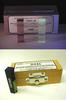
Bulk Cryogenic Production Large-batch cryogenic reference materials are produced using a specialized Palla VM-KT Vibrating Cryomill. The mill is pre-cooled to cryogenic temperatures using liquid nitrogen. Frozen material is fed through the inlet funnel to a vibrating chamber containing 26 titanium

Refrigerants and Working Fluids

Ongoing
We apply a wide range of experimental apparatus to the task of measuring the properties of working fluids. Many of these instruments are the same as those used in our work on standard reference fluids, and our data for working fluids approach the accuracy of the reference fluids. Thermodynamic

Reliability Metrologies for Advanced Electronic Interconnects

Completed
High-performance devices, such as microprocessors and memory chips, are typically composed of structures with strict dimensional tolerances and geometries and are made up of various materials, all in close proximity in a three-dimensional system. Material interactions lead to reliability issues such

Renewable Energy and Fuels

Ongoing
Fuel volatility and chemical characterization. We specialize in the Advanced Distillation Curve (ADC) method, developed at NIST, which is a powerful tool for the measurement of distillation curves to characterize complex fluids. We have applied this to simple hydrocarbons, gasolines, diesel fuels

Renewable Polymers

Completed
In this project, use innovative measurements to optimize existing materials synthesis and discover new routes to polymers from renewable feedstocks by providing characterization methods that can describe the mechanisms and of enzymatic catalysis of polymers from renewable feedstocks and synthetic

Research Data Framework (RDaF)

Ongoing
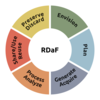
What is the Research Data Framework? A map of the research data space: who, what, where, why, when? A dynamic guide for the various stakeholders in research data to understand best practices for research data management and dissemination A resource for understanding costs, benefits, and risks

Resonating Platforms for Microbial, Environmental, and Materials Sensing

Ongoing
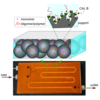
The high sensitivity of resonating piezoelectric crystals to surface perturbations has led to quartz crystal microbalances (QCMs) being widely used to measure changes in mass of thin films and adhered nanoparticles or cells. This project proceeds beyond this traditional sensing approach with quartz

RMAT Laboratory Programs

Ongoing
Examples of Current Activities: Cell Counting and viability are key measurements critical for decision making from R&D to manufacturing. We recently developed an approach for evaluating the quality of cell counting measurements through experimental design and statistical analysis that does not

RNA Computation and Metrology for Engineering Biology

Ongoing
RNA computation RNA computation, i.e., programmed interactions between RNA molecules that process information, is an increasingly useful synthetic biology tool with applications spanning in vitro biosensing, synthetic cells, and cellular control. We have developed cotranscriptionally encoded RNA

Safety and Security Technologies

Ongoing
The safety and security of citizens is enhanced when law enforcement and criminal justice agencies and the military use the appropriate and properly performing equipment and technologies. To ensure these entities have the necessary equipment, the STG conducts and performs research to advance these

Sample Tracking and Analytical Reporting (STAR)

Ongoing
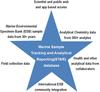
STAR (formerly known as Marine STAR) will develop a web-based interface to provide easy access to sample information from the NIST Biorepository. Information will include, but is not limited to, sample availability, chemical analysis status and results, and links to publications. Metadata associated

SARS-CoV-2 Research Grade Test Material

Completed
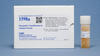
In response to the COVID-19 pandemic, the National Institute of Standards and Technology released a synthetic RNA material for SARS-CoV-2 in June 2020. The goal was to rapidly produce a material to support molecular diagnostic testing applications. This material, referred to as Research Grade Test

Scanning Probe Microscopy for Advanced Materials and Processes

Ongoing
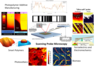
With a nanometer-sharp probe capable of delicate interaction with a limitless array of materials, SPM methods such as Atomic Force Microscopy (AFM) can aid in characterizing a wide range of materials in diverse environments from vacuum to biological serums. The atomic force microscope is operated in

Scanning Probe Microscopy Calibrations and Standards

Ongoing
The Nanomechanical Properties Group has expertise in a wide variety of SPM techniques, especially atomic force microscopy (AFM); however, the main research thrust for the Group’s standards project area deals with accurate cantilever stiffness calibration and the use and development of AFM methods

Scientific Workflow

Ongoing
Digitally capturing the "scientific workflow" will be a key component to modernizing scientific data management. Defined in this context, a scientific workflow is the encapsulation of all processes and accompanying relevant data necessary to reproduce and validate an experiment. Thus, a workflow

Scope and Working Group Structure

Ongoing
Summary: The US TAG assumes a mirror structure to ISO/TC 276. As each member country has one vote within ISO/TC 276, the US vote is determined by the consensus position of US TAG members. Scope: The scope of ISO/TC 276 is standardization in the field of biotechnology processes including the
Was this page helpful?