U.S. flag

An official website of the United States government

Official websites use .gov
A .gov website belongs to an official government organization in the United States.

Secure .gov websites use HTTPS
A lock ( ) or https:// means you’ve safely connected to the .gov website. Share sensitive information only on official, secure websites.

Projects/Programs

Displaying 476 - 500 of 575

Seabird Tissue Archival and Monitoring Project (STAMP)

Ongoing
Seabirds are an important group of upper trophic-level marine organisms with potential for accumulating lipophilic chemical contaminants which have been linked to adverse health effects. Analyses of seabird tissues, particularly eggs, have played important roles in temporal and spatial ecosystem

Searching the ICSD for new functional materials from first principles

Ongoing
The combination of increased computing power and the improvement and streamlining of numerical techniques over the past decade have allowed for high quality first principles density functional theory calculations to be routinely performed on large numbers of compounds. This computational power, when

Secondary Ion Mass Spectrometry Ion Source Development

Ongoing
In SIMS, a typical analysis requires <1% of the surface to be sampled, which minimizes chemical damage in the form of molecular fragmentation due to energetic ion bombardment. Cluster sources such as C 60 and Ar GCIB allow for efficient removal of the damage volume, and by operating the analysis and

AI self-quality assurance using learning curves in feedback loops

Ongoing
One application of artificial intelligence (AI) in materials is the acceleration of materials innovation, which is the mission of the Materials Genome Initiative. However, to decrease the cost and time-to-market, we must continuously assess the quality of models with new facts. AI quality assurance

Semiconductor Nanowire Metrology: Electronics, Photonics, and Sensors

Completed
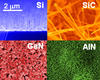
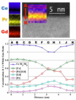
One of the key issues hampering progress in semiconductor nanotechnology is the absence of standardized nanostructures. We address this need through the controlled fabrication and assembly of semiconductor nanowire test structures with well-defined properties. To achieve this, we have manufactured

Sensing and Imaging of concealed objects

Ongoing
Threats to personal and collective safety abound in our society. The Security Technologies Group (STG) performs research to advance the technology and measurement science of security imaging and sensing. This work includes the establishment of test and evaluation tools, reference test beds, test

Serology and Neutralization Assays for COVID-19

Ongoing
Multiplexed bead-based SARS-CoV-2 serological assay We have developed a validated multiplexed bead-based SARS-CoV-2 serological assay that measures different antibodies produced by a patient (IgG, IgM, IgA). In collaboration with the NIST Applied and Computational Mathematics Division, we have

Single-Cell Manipulation and Measurement

Ongoing
Mammalian cells are an important source material for applications in regenerative medicine, gene therapy, engineering biology, and genome editing. Traditional tools for manipulating mammalian cells operate at a bulk cell population level without precision manipulation of individual cells

Small Scale Mechanical Testing

Ongoing
Knowledge of a material’s mechanical properties is key to designing safe and reliable structural components for applications ranging in size from medical implants to large civil engineering structures. Traditionally, a material’s mechanical properties are measured by performing mechanical tests on

Solvation Thermodynamics

Ongoing
Solvation thermodynamics data are essential in the characterization and interpretation of any process carried out in the liquid phase. The data have application in the study of biochemical processes such as protein folding and protein-protein association in aqueous fluids and are useful as

Springback

Ongoing
Springback, or the elastic change in shape when a part is released from the manufacturing process, has been a problem for decades and accounts for a significant fraction of the expense that the US auto industry spends each year trying out die sets for new body designs. The inability to predict the

Standard Reference Materials for Hexavalent Chromium in Contaminated Soil

Completed
During the last century, chromate and dichromate chemical production facilities processed considerable amounts of chromite ore for industrial manufacturing purposes. The waste material from these operations called chromite ore processing residue (COPR) was disposed of in waste sites across the

Standard Reference Measurements

Ongoing
State-of-the art property measurements have been the hallmark of the Fluid Properties Group for more than four decades. Many of these measurements have been carried out on one-of-a-kind instruments developed at NIST. In some cases the older instruments are still among the very best of their kind

Standard Solution SRMs Provide Traceability for Millions of Measurements

Ongoing
Literally millions of measurements of elemental composition are performed each year worldwide. The vast majority of these measurements depend upon reference materials for establishing traceability of results to the SI. Leveraged through commercial CRM producers, the NIST SRM 3100 series provides an

Standards

Ongoing
Standards for Optical Based Standoff Detection NIST is researching methods for creating explosive threat materials standards relevant to optical detection technologies (e.g. that result in samples with particle morphologies similar to those found in explosive threat devices). This includes both

Standards Development to Ensure Reliable Breath Analysis in the Field

Ongoing
Numerous volatile organic compounds (VOCs) have been identified in human breath. These compounds can be produced by the body or by organisms in the body (e.g., bacteria or viruses) and provide a non-invasive window into human health. Inexpensive point-of-care devices are being developed to diagnose

Standards for Metagenomics

Ongoing
Metagenomics is a powerful technology combining high-throughput (a.k.a. “next-generation”) sequencing with advanced bioinformatics to identify and quantify mixtures of organisms in a sample. Metagenomics workflows consist of 4 main steps: Sample collection: location, amount, storage, etc. Extraction

Standards to Support Biological Detection in the Field

Ongoing
NIST is working in partnership with the Department of Homeland Security Science and Technology Directorate (DHS S&T) to develop methods, guidance, standards, and reference materials to support and improve our Nation's ability to detect and respond to suspected biothreat incidents. Specific

Standards to Support Biothreat Detection

Ongoing
Since 9/11 and the subsequent anthrax attacks in 2001, suspicious white powder incidents continue to occur within the US, often requiring Federal law enforcement response. Suspect samples are sent to public health laboratories for confirmatory evaluation, which can take hours to weeks to receive

Statistical methods for MGI metrology

Ongoing
We focus on research and development of statistical methods to enable new measurement science and metrology relevant to MGI. In particular, we illustrate our methods for examples from near-field scanning probe microwave microscopy (NSSM) for characterization, development, and modeling of novel

Stem Cell Metrology: WSDOM

Ongoing
Stem cells are critical starting materials for advanced therapies and diagnostic devices. The most commonly used are induced pluripotent stem cells (iPSCs) which can be created with any individual’s skin cells, and then can be coaxed to become cells for any tissue of the body. Therapies and

Steroid Hormone Suite Analysis

Ongoing
Steroid hormones are signaling molecules that are major regulators of development, reproduction, stress, and growth. Steroids are synthesized from cholesterol through a series of enzymes, resulting in hormones with distinct biological activities. Although hormones are similar in structure, and
Was this page helpful?