

Official websites use .gov
A .gov website belongs to an official government organization in the United States.

Secure .gov websites use HTTPS
A lock (
) or https:// means you’ve safely connected to the .gov website. Share sensitive information only on official, secure websites.


Wildfire Prevention Education
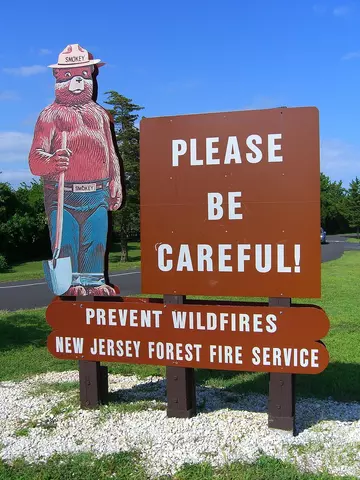
Fire prevention education is a critically important, cost-effective strategy for mitigating the devastating impacts of wildfires, especially in vulnerable Wildland-Urban Interface (WUI) areas. Research demonstrates that because the vast majority of ignitions are human-caused—stemming from both accidents and deliberate acts like incendiary fires—targeted educational programs represent a vital intervention point for public safety. By informing communities about high-risk behaviors and promoting fire-safe practices, education helps reduce both the frequency and severity of human-caused ignitions. Moreover, studies on the economic dimensions and optimal timing of these programs confirm that prevention education is not merely a necessary public safety measure but also a fiscally sound investment that significantly lowers the enormous long-term costs associated with wildfire suppression, property damage, and environmental recovery.
- Economics of WUI/Wildfire Prevention and Education
- Butry, D.T., Prestemon, J.P. (2019). Economics of WUI/Wildfire Prevention and Education. In: Manzello, S. (eds) Encyclopedia of Wildfires and Wildland-Urban Interface (WUI) Fires. Springer, Cham. https://doi.org/10.1007/978-3-319-51727-8_105-1
- Optimal timing of wildfire prevention education
- Butry, D. T., Prestemon, J. P., and Abt, K. L. (2010). Optimal timing of wildfire prevention education. In C. A. Brebbia (Ed.), Modelling, Monitoring and Management of Forest Fires II (Vol. 137, pp. 197–208). WIT Press. [online], https://tsapps.nist.gov/publication/get_pdf.cfm?pub_id=905196 (Accessed December 5, 2025).
- Effect of fire prevention programs on accidental and incendiary wildfires on tribal lands in the U.S.
- Abt, K. L., Butry, D. T., and Prestemon, J. P. (2015). Effect of fire prevention programs on accidental and incendiary wildfires on tribal lands in the U.S.. International Journal of Wildland Fire, 24(5), 629–638. https://research.fs.usda.gov/treesearch/50911 and https://doi.org/10.1071/WF14168.