

Official websites use .gov
A .gov website belongs to an official government organization in the United States.

Secure .gov websites use HTTPS
A lock (
) or https:// means you’ve safely connected to the .gov website. Share sensitive information only on official, secure websites.


Other Wildfire Prevention
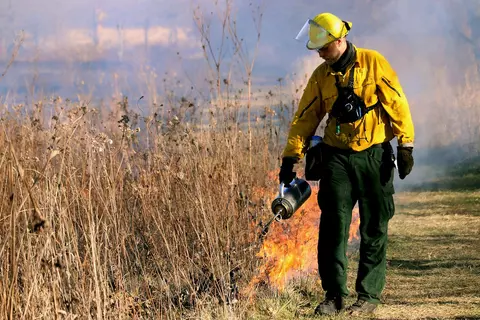
Fire prevention is of paramount importance because it serves as the most cost-effective intervention for mitigating the severe social, ecological, and economic damages caused by wildfires. Since human activity is the primary cause of a large percentage of ignitions, prevention activities—ranging from educational campaigns to proactive land management—directly target the source, substantially reducing the frequency of accidental starts and offering strategies for wildland arson management. Furthermore, from an economic standpoint, prevention is crucial because research confirms that properly optimizing intervention activities and investments yields a higher return on investment than relying solely on costly suppression efforts after a fire has started, thereby safeguarding human lives, protecting property, and ensuring the long-term sustainability of forested and Wildland-Urban Interface (WUI) environments.
- The Effects of Wildfire Prevention Activities
- Thomas, D., Butry, D., & Prestemon, J. (2013). The Effects of Wildfire Prevention Activities. In Louisiana Natural Resources Symposium, Baton Rouge, LA (August 1-2, 2013). National Institute of Standards and Technology. https://www.srs.fs.usda.gov/pubs/ja/2013/ja_2013_thomas_001.pdf
- Wildland Arson Management
- Prestemon, Jeffrey P., Butry, David T. (2008). Wildland Arson Management. In The Economics of Forest Disturbances: Wildfires, Storms, and Invasive Species, 123-147. https://research.fs.usda.gov/treesearch/32961
- Economic optimization of wildfire intervention activities
- Butry, D. T., Prestemon, J. P., Abt, K. L., & Sutphen, R. (2010). Economic optimization of wildfire intervention activities. International Journal of Wildland Fire, 19(5), 659–672. https://doi.org/10.1071/WF09090