

Official websites use .gov
A .gov website belongs to an official government organization in the United States.

Secure .gov websites use HTTPS
A lock (
) or https:// means you’ve safely connected to the .gov website. Share sensitive information only on official, secure websites.


Fire Economics
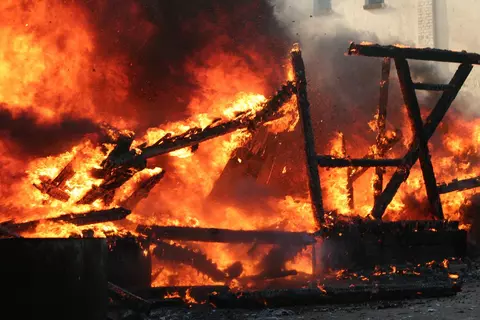
NIST research on the economics of fire provides a critical, quantitative framework for evaluating the effectiveness of fire prevention and protection strategies across both wildland and structural environments. This body of work is essential because it moves the discussion beyond simple compliance and suppression costs to focus on net societal benefits. By treating prevention as a strategic investment, this research identifies the most cost-effective interventions for saving lives and reducing property damage. This work includes comprehensive benefit-cost analyses of residential technologies like fire sprinklers and the mandated use of less-fire-prone cigarettes, alongside detailed assessments of the hidden costs associated with fire, such as the economics of firefighter injuries and the impact of human behavioral risk factors like social disorder and arson.
This research extensively analyzes risk and intervention effectiveness across the fire domain. In the wildland sector, the work explores wildfire prevention education and utilizes forecasting models to calculate the net benefits of human-ignited wildfire forecasting. Key studies also examine the economic impact of individual mitigation efforts and their resulting spatial externalities on neighbors. Concurrently, the structure fire research focuses on detailed risk mapping, utilizing the FireCARES system for community risk ratings, and providing the technical foundation to quantify the fire hazard of design alternatives in tall buildings and homes. By identifying vulnerable populations and assessing the impact of safety regulations, this economics-driven research is important for guiding policy, code development, and resource allocation to achieve economical safety benefit.
Wildfires
Loss and Incident Reporting
Prevention Education
Other Prevention
Behavioral Factors
Prediction Research
Structure Fires
Fire Sprinklers
Deaths, Injuries, and Losses
Upholstered Furniture
Fire Protection