U.S. flag

An official website of the United States government

Official websites use .gov
A .gov website belongs to an official government organization in the United States.

Secure .gov websites use HTTPS
A lock ( ) or https:// means you’ve safely connected to the .gov website. Share sensitive information only on official, secure websites.

Projects/Programs

Topic Area
Displaying 326 - 350 of 481

NIST OWM – NCWM: An Enduring Partnership

Ongoing
The National Conference on Weights and Measures (NCWM) was first held as the “First Annual Meeting of Sealers of Weights and Measures of the United States” in 1905 and as part of the National Bureau of Standards (NBS), which was the predecessor non-regulatory agency to the National Institute of

NIST Stars

Ongoing
Several current astrophysical research programs require SI traceable flux measurements (also called spectral irradiance) at accuracies higher than currently available. For example, exoplanet research requires improved host star absolute brightness knowledge to better determine habitability

Nonlinear nanophotonic control of light

Ongoing
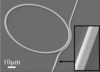
Light-matter interactions with nonlinear materials provide a powerful tool for converting optical fields from one state to another. For example, nonlinear wavelength conversion leverages efficient scattering of photons of a single frequency to another, enabling generation of coherent sources across

Novel Sources for Focused-ion Beams

Completed
Commercial focused ion beams (FIBs) are used in a wide variety of applications. For example, they serve as diagnostic tools, slicing through a nanodevice to expose its internal structure. They can also shape nanoscale materials either by adding atoms to a structure or by shaving them off. And they

Ocean Color

Ongoing
The primary reference instrument for the United States and most international ocean-color sensors is the Marine Optical Buoy (MOBY), an automated radiometric system operated by NOAA and deployed about 20 km offshore from Lanai, Hawaii, where the atmospheric and water conditions support utilizing

Operando Measurements of Electrochemical (Charge-transfer) Processes

Ongoing
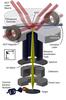
There are two ways to study a very fast process such as charge transfer. One can use very high-speed measurement that can follow the effect of the process, or one use a method that is sensitive only to the process itself. Either way has its weakness. Many fast measurements can follow the process

Optical Clock Atomic Structure and Theory

Ongoing
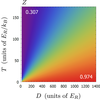
An atomic clock aims to realize the intrinsic ticking rate of an atom. This ticking rate (i.e., frequency) is associated with a transition between two quantum levels of the atom, where each level corresponds to a different configuration of the electrons around the nucleus. Atomic clocks derive their

Optical grating scatterometry

Ongoing
In the past few years, scatterometry has emerged as a method for performing linewidth and line profile metrology, especially by the semiconductor industry. The method uses a periodic target containing repetitive lines whose profile, i.e., its width, height, and shape, is to be determined. The

Yb Optical Lattice Clock

Ongoing
In recent years, optical clocks have achieved performance that is orders of magnitude beyond more traditional atomic clocks utilizing a microwave timebase. A particularly promising type of advanced optical clock is the optical lattice clock. At their heart, these systems use an ensemble of ultracold

Optical medical imaging

Ongoing
Optical medical imaging technologies proliferate in academic research and yet very few translate into the clinic. Optical techniques have high spatial and spectral resolution, lends itself to portability, and inexpensive relative to conventional imaging modalities such as MRI (Magnetic Resonance

Optical Methods for 3-D Nanostructure Metrology (Archived)

Completed
This project develops new approaches to optical microscopy based on a high magnification optical platform that samples the full 3-D scattered field. Both the semiconductor industry and the evolving nanomanufacturing sector are facing enormous challenges measuring nanometer scale features over large

Optical and Microwave Spectroscopy of Microelectronic Systems

Ongoing
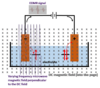
Collaborations with industry leaders have led to new understanding of magnetic damping in advanced materials and replication of our magnetic metrology tools. We investigate fundamental aspects of spin transfer in materials and structures that offer improved performance in future devices such as

Optical and Microwave Waveform Synthesis

Ongoing
A typical optical frequency comb consists of thousands to millions of phase coherent modes (the "teeth" of the comb) that can all be used to synthesize precisely controlled electromagnetic waveforms. Our main research thrust in this area has been focused on the generation of microwave and millimeter

Optical and Optoelectronic Materials Characterization

Ongoing
Today's electronics have reached a point where sheer computation power has combined form and function as the key driver of large consumer markets. The demand for portable and pervasive electronics with greater functionality promises significant changes over the next decades in how society interacts

Optical Polarization Metrology

Ongoing
Electromagnetic waves are transverse. That is, besides propagating energy, they also have polarization represented by the direction of the electric field, which is constrained to lie in the plane perpendicular to the direction of propagation. Light rays can be characterized by a four-element Stokes

Optical Probes of 2D Magnetic Phenomena

Ongoing
The unique measurement capabilities developed in this Project enable diffraction-limited, optical spectra (both Raman and photoluminescence) to be collected and analyzed as a function of laser energy, polarization, temperature, magnetic field, and device parameters such as current load and back

Optical Radiation Metrology and Standard Radiometers

Ongoing
Radiometric, radiance temperature, photometric, and color scales have been realized based on the spectral responsivity of standard detectors and radiometers. These reference responsivity scales have been transferred to other NIST calibration facilities to realize and maintain these detector-based

Optical scattering from surfaces

Ongoing
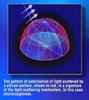
Light Scattering Ellipsometry: The polarization of scattered light can often indicate the source of that scattered light. Using Light Scattering Ellipsometry, whereby the polarization of light scattered into directions out of the plane of incidence is measured for a fixed incident polarization

Optofluidic Cytometry

Ongoing
Flow cytometers are commercial instruments that provide rapid multiparameter measurements of single cells, which makes them indispensable in basic research and clinical studies of diseases and drug therapies. Measurements of cellular attributes can include indicators of cell size and shape and well

Optomechanical Pressure Sensing

Ongoing
Measurement and control of high-vacuum pressure is important for many industrial processes, particularly semiconductor fabrication. Typical process pressure monitors are known to lose accuracy over time and so require repetitive calibration. Pressure transfer standards that support high-vacuum and

OWM Training Program: Metrology, Metrication, and More!

Ongoing
OWM offers a variety of in-person, online, and "blended" training classes and materials that provide guidance instruction on national legal metrology standards, weights and measures field inspection procedures, and laws and regulations related to packaging and labeling. OWM provides technical

Phase and Amplitude Noise Calibration Services

Ongoing
The primary responsibility of the Phase Noise Metrology Group is to develop and provide calibration services for industrial, military, and commercial organizations to support the core mission of NIST. The PM and AM noise measurements require traceability and certification of devices such as phase
Was this page helpful?