Official websites use .gov
A .gov website belongs to an official government organization in the United States.

Secure .gov websites use HTTPS
A lock (
) or https:// means you’ve safely connected to the .gov website. Share sensitive information only on official, secure websites.


Libera
Telescope Details
Location
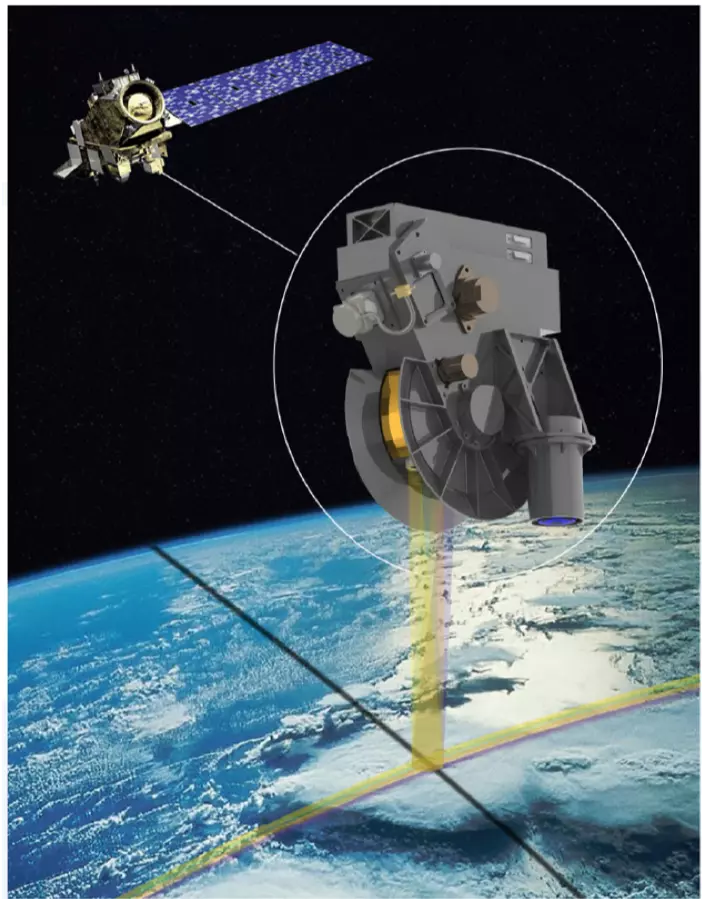
To be launched into polar orbit by 2027 on NOAA’s Joint Polar Satellite System-3 satellite.
Purpose
Libera will take daily measurements of Earth’s radiation. It will extend and improve the decades-long data record of the balance between the amount of solar energy arriving at the Earth and the amount the Earth absorbs, reflects and emits back into space. This balance is a key measurement for quantifying whether and to what degree Earth is warming or cooling over time.
NIST’s role
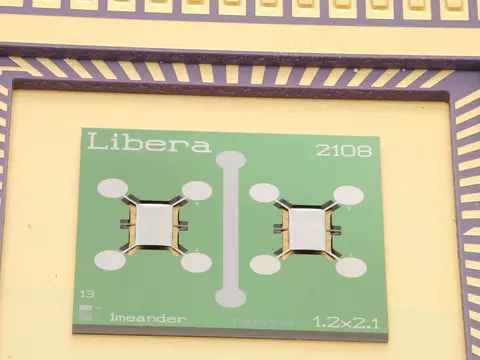
NIST designed and built advanced detectors to more accurately measure the Earth’s radiation across a broadband infrared light spectrum (0.3 to 200 micrometers) and link the results to international standards (the SI) to help calibrate measurements across all wavelengths. The detectors, to be mounted on four radiometers, will be made of metal patterned on silicon wafers with very black carbon nanotubes to absorb the incoming light.
Other interesting facts
In Roman mythology, Libera is the daughter of Ceres, goddess of agriculture. The name was chosen because the Libera satellite will continue and extend the data record of the existing Clouds and the Earth’s Radiant Energy System (CERES) instruments.
Supported by
NASA Langley Research Center
Operated by
Laboratory for Atmospheric and Space Physics, Ball Aerospace and Utah State University
Media