Official websites use .gov
A .gov website belongs to an official government organization in the United States.

Secure .gov websites use HTTPS
A lock (
) or https:// means you’ve safely connected to the .gov website. Share sensitive information only on official, secure websites.


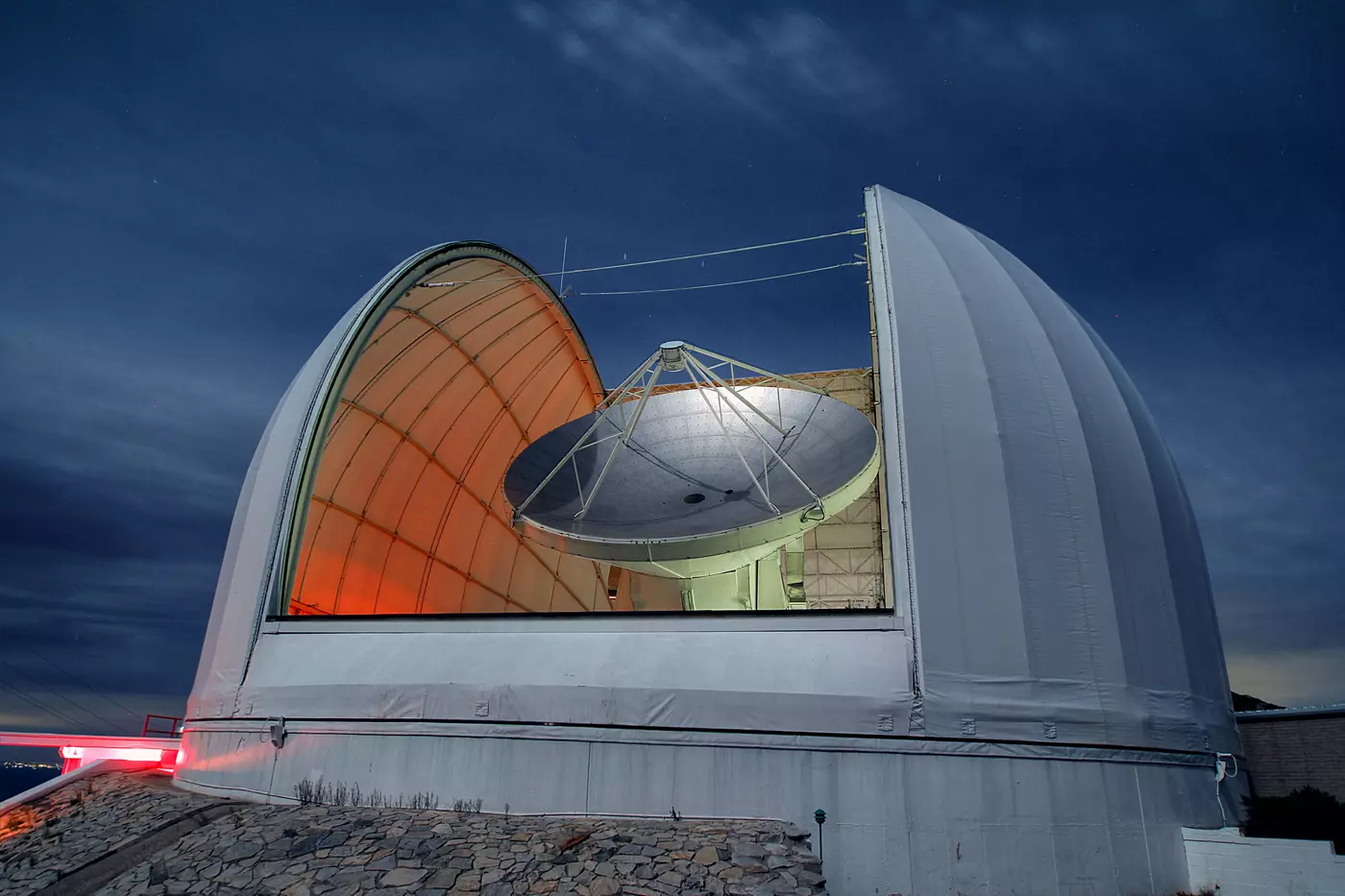
Arizona Radio Observatory
Telescope Details
Location
Kitt Peak, Arizona
Purpose
Observe light emitted by the first stars, which astronomers believe came into existence more than 12 billion years ago. The telescope uses a novel technique to observe light emitted by ionized carbon atoms in these early stars. Light from the early universe is highly redshifted, putting the carbon signal into the submillimeter wavelength band (microwave light with wavelengths below 1 millimeter).
NIST’s role
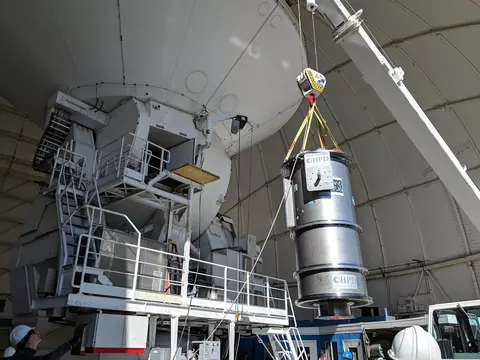
NIST researchers provided electronics for the tomographic ionized carbon intensity mapping experiment (TIME) instrument.
Major discoveries and current status
TIME carried out observations in early 2022. Further observations are planned for early 2026.
Other interesting facts
TIME’s measurements of the carbon signal, sensitive to the emission from dwarf galaxies that is otherwise difficult to detect individually, could validate theoretical estimates of this new cosmological indicator, opening the door for a new generation of instruments to probe the history of star formation.
Funded by
State of Arizona and the National Science Foundation
Media