

Official websites use .gov
A .gov website belongs to an official government organization in the United States.

Secure .gov websites use HTTPS
A lock (
) or https:// means you’ve safely connected to the .gov website. Share sensitive information only on official, secure websites.


How Do Stars and Galaxies Live and Die?
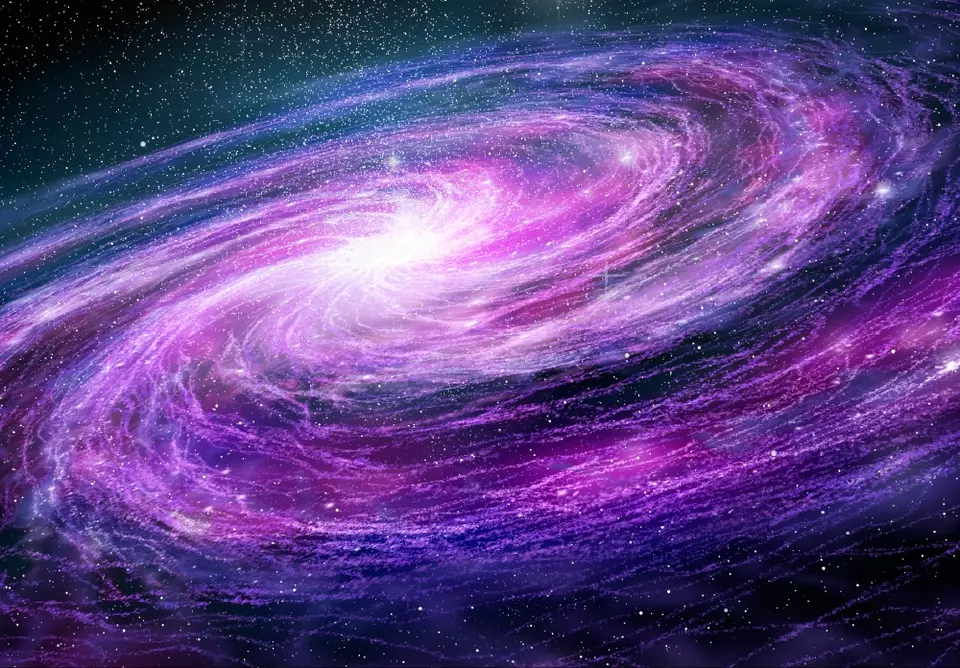
Since the dawn of time, people have looked up at the stars in the night sky and marveled. With the development of telescopes, people could do more than marvel — they could observe, collect data and make scientific discoveries.
Around a century ago, astronomers revealed that all the stars we can see are in a single galaxy — the Milky Way, where our solar system also resides — and that the universe is far vaster than anyone imagined and full of billions of galaxies. The modern scientific discipline of cosmology was born.
Today, we know a lot about how stars and galaxies live and die. But major unanswered questions remain, including:
- How did the first stars form?
- How do stars in our galaxy form out of giant gas clouds?
- How did the first galaxies form, and how do galaxies evolve?
- How do black holes grow and shape the universe?
- What happens when black holes collide?
- How many supermassive black holes (black holes with the mass of millions of stars) exist?
NIST has contributed to telescopes that are allowing astronomers to push the frontiers of knowledge on all of these questions. Click on the individual telescope pages below to learn more about these pathbreaking instruments.
The Telescopes
- Arizona Radio Observatory
- Advanced Telescope for High Energy Astrophysics (NewAthena)
- Fred Young Submillimeter Telescope
- Hubble Space Telescope
- James Clerk Maxwell Telescope
- James Webb Space Telescope
- Large Millimeter Telescope
- Laser Interferometer Gravitational-Wave Observatory (LIGO)
- Robert C. Byrd Green Bank Telescope
- Stratospheric Observatory for Infrared Astronomy (SOFIA)