Official websites use .gov
A .gov website belongs to an official government organization in the United States.

Secure .gov websites use HTTPS
A lock (
) or https:// means you’ve safely connected to the .gov website. Share sensitive information only on official, secure websites.


Atacama Cosmology Telescope
Telescope Details
Location
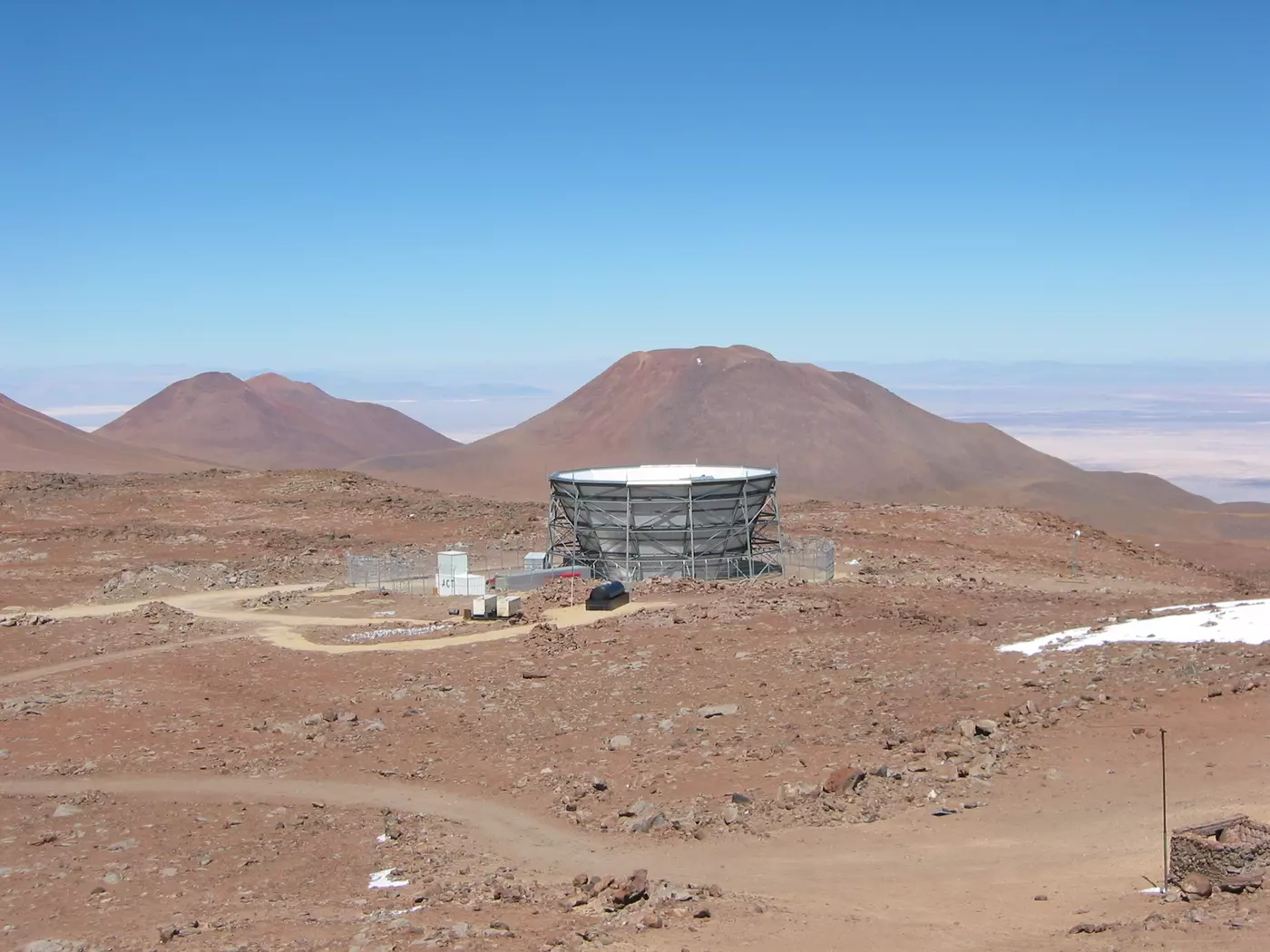
Atacama Desert in Chile
Purpose
Study how the universe began, what it is made of and how it evolved to its current state. Specifically, researchers aimed to measure the cosmic microwave background — the first light released into the universe — to (1) confirm and refine models cosmologists use to describe the evolution of the universe, and (2) study large, distant clusters of galaxies and their environments.
NIST’s role
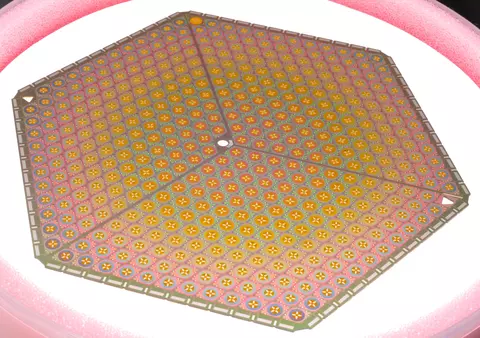
NIST has contributed to three generations of ACT instruments, including superconducting sensors and electronics for two cameras: ACTPol, used from 2013 to 2015, and AdvACT, used from 2017 to 2022.
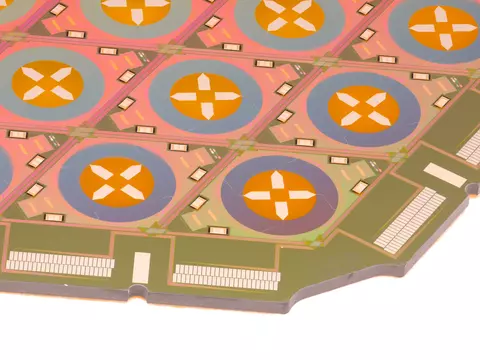
For AdvACT, NIST researchers invented the world’s first multicolor camera for measuring the cosmic microwave background, helping to separate the true signal from interference such as galactic dust. For this camera, NIST built four arrays of specialized transition-edge sensors made of superconducting circuit elements that operate at a temperature just a fraction of a degree above absolute zero.
Reading the measurements taken by these sensors requires multiplexed superconducting electronics, which NIST also provided. The two-color camera effectively doubled the telescope’s capabilities, greatly reducing the time required to make very difficult observations.
Significant discoveries and current status
NIST’s two-color camera provided the clearest picture to date of the cosmic microwave background and supported previous estimates of the universe’s expansion rate based on measurements of the microwave background. This estimate is at odds with one made by measuring light from distant stars and supernovas. The divergent results suggest that either there is a hidden error in one of the measurement methods or the model cosmologists use to describe the evolution of the universe is wrong or incomplete.
Read more about these results.
The telescope also produced the most detailed map ever made of the distribution of dark matter across a quarter of the entire sky and far back in time. To do this, astronomers looked for evidence that the dark matter had bent and stretched the microwave background light on its way to Earth.
The Atacama Cosmology Telescope took its final data in 2022.
Other interesting facts
Located at an altitude of 5,190 meters (17,030 feet), the ACT was one of the highest ground-based telescopes in the world. By operating at such an arid, high-altitude site, the telescope avoided problems posed by atmospheric water vapor, which emits microwave radiation that can contaminate measurements.
Supported by
National Science Foundation
Operated by
Collaboration of 22 institutions led by Princeton University
Media