U.S. flag

An official website of the United States government

Official websites use .gov
A .gov website belongs to an official government organization in the United States.

Secure .gov websites use HTTPS
A lock ( ) or https:// means you’ve safely connected to the .gov website. Share sensitive information only on official, secure websites.

Projects/Programs

Topic Area
Displaying 801 - 825 of 1667

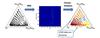
Machine Learning to Predict Multicomponent Colloidal Crystals

Ongoing
There is a direct link between a material’s macroscopic properties and its microscopic structure, which makes rational bottom-up self-assembly a powerful tool for engineering properties of materials. In general, colloids are facile material building blocks whose shape, charge, and surface...

AM Machine and Process Control Methods for Additive Manufacturing

Completed
Objective Develop algorithms, methods and standard protocols for Additive Manufacturing (AM) process control, and implement it with software and hardware tools for open control of AM systems to enable more flexible process optimization by manufacturers. What is the Technical Idea? Additively...

Machine Translation

Ongoing
Current MT technology evaluation activities: OpenMT: A biannual NIST evaluation of text-to-text MT technology. Focus is placed on the core task of MT technology where information learned is applicable to other MT technology types. Past MT evaluation activities: LORELEI/LOREHLT, 2016-2019: Low...

Macromolecular Architectures

Ongoing
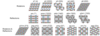
This project’s purpose is to synthesize and characterize model thermoplastics, thermoplastic elastomers (TPE), and mixed resins with systematic variation of polymer sequence, chemistry, and architectures to generate libraries of quantitative structure-property relationships validated by multiple...

Macromolecule and Nanoparticle Composition and Architecture

Completed
Bringing new products to market requires measurements for rapid, quantitative assessment of composition and structure. To this end, NIST has developed a series of mass spectrometry-based tools that decrease the time necessary to achieve measurement success while producing more accurate results. The...

MAGIK Offspecular Reflectometer

Ongoing
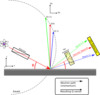
Polarized-beam measurements are possible with the use of a 3He analyzer. This instrument is an evolution of the AND/R reflectometer, which was located on the NG-1 guide. MAGIK is located along the NG-D guide in the expanded guide hall (part of the NCNR's Expansion Initiative).

Magnetic Imaging

Completed
Advanced magnetic devices and storage media will rely on ultra thin ferromagnetic films; since such films are quasi two-dimensional magnets, they can have strong perpendicular magnetic anisotropy (PMA). Optimization of future materials, including improved yields, requires an ability to measure film...

Magnetic Materials Metrology

Ongoing
Our aim is to develop the metrology for control and manipulation of magnetic anisotropy in magnetic materials. This includes development of the measurement science for quantification of the magnetic properties (e.g., magnetic anisotropy, magnetic exchange) and the structure-property-processing...

Magnetic Nanostructures for post-CMOS Electronics

Completed
We focus primarily on arrays of magnetic nanostructures in order to reveal how defects alter the fundamental physics of magnetization reversal processes in the nanometer regime. We have an integrated approach that consists of four inter-related elements. The first element, film edge metrology...

Magnetic Random Access Memory

Ongoing
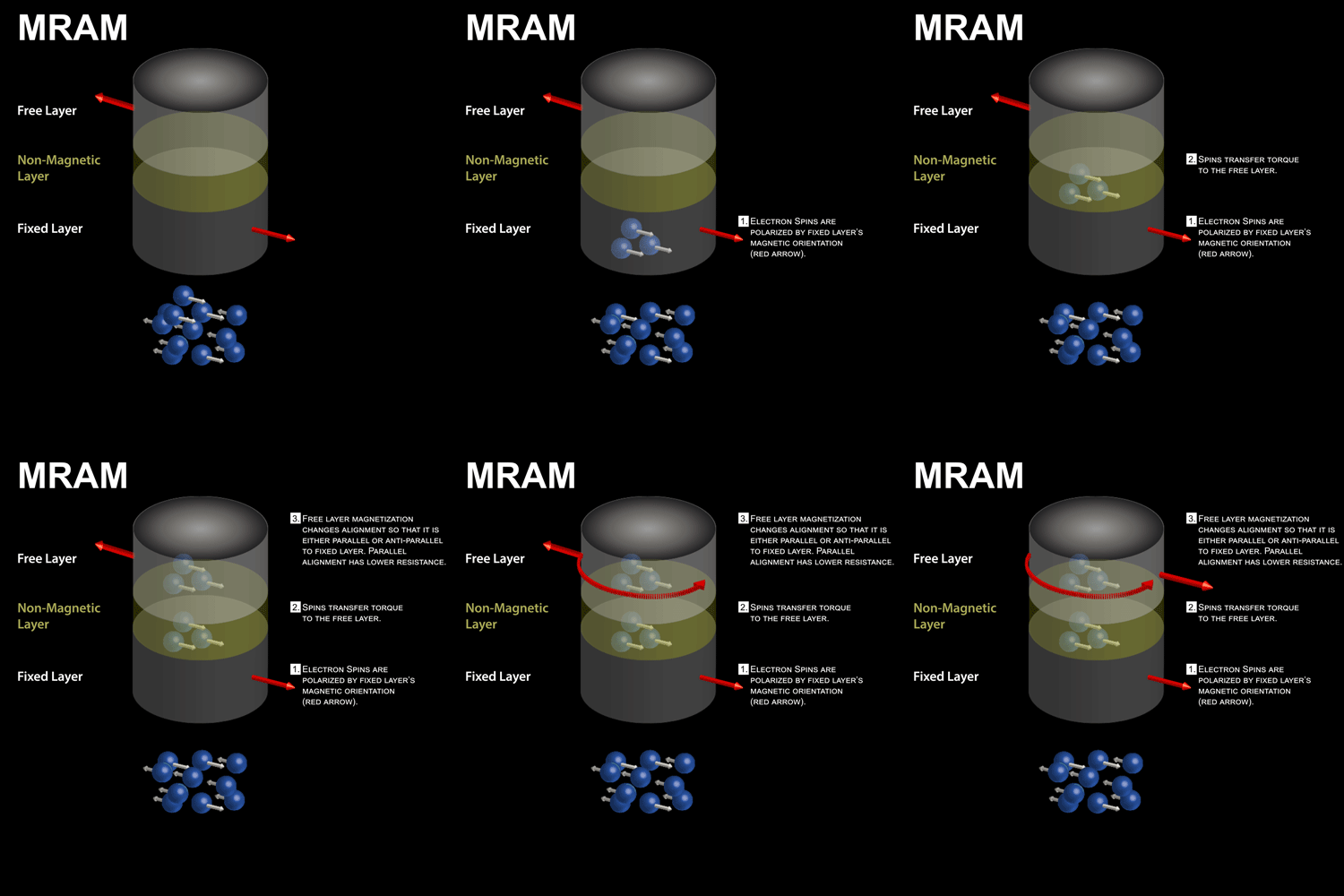
Focus areas include (1) the fundamental understanding of the interactions between spin and magnetic materials and materials with large spin-orbit scattering; (2) the nonlinear dynamics of both individual and interacting nanoscale magnetic systems; and (3) the role of thermal noise in nanomagnetic...

Magnetic Resonance Imaging (MRI) Biomarker Measurement Service

Ongoing
Biomarkers are parameters that can be quantitatively measured in-vivo and provide information on tissue health/ pathology. Phantoms are medical imaging calibration structures designed to test scanner performance, image quality, and image-based measurements.

Magnetic Resonance Spectroscopy

Ongoing
Custom-built wafer level probes in position to perform EDMR measurements on fully processed transistors. Electronics are all around us and have completely reinvented nearly every aspect of our society. Virtually any system, large or small, contains some type of electronics that may or may not be...

Magnetic Sector Secondary Ion Mass Spectrometry

Ongoing
Magnetic sector SIMS uses high energy “primary” ions to bombard the surface and liberate “secondary” ions much like in ToF-SIMS, but the ion beam is operated continuously to maximize duty cycle. The high ion dose is preferred for depth profiling, where the concentration of elements and isotopes are...

Magnetic Sensing and Metrology

Ongoing
Magnetic sensors have a wide range of sensitivities, spatial resolution, dynamic range, bandwidths, size, and cost. Applications such as magnetic data storage and chip NDE require sensitivity of 1 nT, spatial resolution down to a few nanometers and bandwidths up to 10 GHz, while MEG requires...

Manipulation and Imaging of Dilute Densities of Electron Spins

Ongoing
While the characteristics of the unpaired electrons which are trapped in these bonding errors have a dramatic impact on the macroscale material properties, observing these same unpaired electrons has proven quite difficult. These unpaired electrons are transient in time, temperature, and pressure...

Material Flammability Characterization

Ongoing
This project develops a database that includes tools, measurement data, material properties, and validation data to enable quantitative prediction of material flammability behavior, such as ignition, steady burning, and fire growth.

Material Qualification

Ongoing
Objective To develop, utilize, and analyze methods of characterizing the precursor materials in additive manufacturing in both virgin and recycled states with the goal of advancing measurement science to benefit the AM community. The components of principal interest will include the rheological...

Materials Data Curation System

Ongoing
The NIST Materials Data Curation System (MDCS) provides a means for capturing, sharing, and transforming materials data into a structured format that is XML based amenable to transformation to other formats. The data are organized using user-selected templates encoded in XML Schema. These templates...

Materials Data Repository

Ongoing
In support of NIST's MGI goals, the NIST materials data repository provides a concrete mechanism for the interchange and re-use of research data on materials systems. The NIST repository is principally a file repository, accepting data in any format. To mitigate the opacity of binary data, and to...
Was this page helpful?