U.S. flag

An official website of the United States government

Official websites use .gov
A .gov website belongs to an official government organization in the United States.

Secure .gov websites use HTTPS
A lock ( ) or https:// means you’ve safely connected to the .gov website. Share sensitive information only on official, secure websites.

Projects/Programs

Topic Area
Displaying 401 - 425 of 481

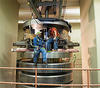
Reconditioning of the 4.45 MN deadweight machine

Completed
The 4.45 MN DWM has been in use in the NIST Force Laboratory since 1965 and is frequently characterized as the largest deadweight force standard in the world. Thousands of measurements through many force calibrations have been performed over the lifespan of the machine. The machine was the

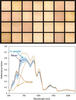
Reflectance Measurements of Human Skin

Ongoing
Investigations of the optical properties of human skin have largely been limited to the visible part of the electromagnetic spectrum, whereas many applications require high-quality reflectance data in the near infrared and short-wave infrared. Further, the complex and dynamic nature of skin results

Reliable Vaccine Storage

Completed
Our group examines best practices for the storage and monitoring of vaccines in partnership with the Centers for Disease Control and Prevention’s (CDC) Vaccine Supply and Assurance Branch. Vaccines are highly temperature sensitive, and inappropriate storage conditions can render them ineffective

Remote Sensing Laboratory

Ongoing
The Remote Sensing Laboratory (RSL) is designed to address Earth-oriented remote sensing radiometry for the spectral region from the ultraviolet (UV) to the short wave infrared (SWIR), or 250 nm to 2500 nm. For spectral radiance, several lamp-illuminated integrating sphere sources are arranged

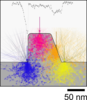
Scanning-electron microscopy

Ongoing
Nanoscale measurements provide necessary feedback for the fabrication of nanoscale structures. However, achieving subnanometer uncertainty is challenging for even the best microscope systems. The challenge is even greater for three-dimensional nanostructures, which often require measurement of

SDO/EVE/ESP Calibration

Ongoing
The SDO satellite is the first mission in NASA's Living With a Star program, which aims to understand the connections between the Sun and Earth. In addition to the light and heat with which we are familiar, the Sun produces x-ray radiation, extreme ultraviolet light, and the solar wind which

Security: Air-Kerma Measurements in High Energy X-ray Beams

Completed
X rays are used for imaging the contents of vehicles and cargo. Because of the need to penetrate through the thickness of the wall of containers and vehicles in addition to the objects contained within, these systems rely on the use of penetrating radiation such as high energy megavoltage x rays

Security (Archive): Neutron Detector Replacement Program

Completed
This course of action has included an intense sequence of tests of alternative technologies performed at the Los Alamos National Laboratory and the Nevada National Security Site. NIST has been integral to all phases of these testing programs, including evaluation of submitted detectors, design and

Security: Nuclear Forensics Reference Material (RM) Program

Ongoing
NIST coordinates the production and characterization of nuclear forensics reference materials (NFRMs), which are vital for making precise and accurate measurements of nuclear materials. These materials will help ensure that measurements of nuclear material evidence are highly reliable, are traceable

Semiconductor Integration of Electronics and Photonics

Ongoing
Using integrated photonics, we generate spectrally flat, dark soliton microresonator frequency combs with accurate alignment to the ITU-T grid. These laser sources support innovation in advanced communication and computation applications. Moreover, technical development in these application areas

Sensing, Transport, and Simulation

Ongoing
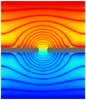
We have recently developed a finite-size scaling approach and special simulation cell aspect ratio—the golden aspect ratio—to enable accurate incorporation of access resistant and bulk diffusion in ionic transport, see the figure. This enables quantitative, and efficient, prediction of ion transport

Sequential Bayesian Experiment Design

Completed
We develop and publish the optbayesexpt python package. The package implements sequential Bayesian experiment design to control laboratory experiments for efficient measurements. The package is designed for measurements with: an experiment (possibly computational) that yields measurements and

Si-Based Single Spin/Single Photon Measurement, Coherence and Manipulation

Ongoing
Devices based on moving and controlling single electrons offer the tantalizing possibility of achieving quantum information processing by virtue of their spin or charge coherent properties. We are pursuing CMOS-compatible Si-based quantum dots for a variety of goals, including:” Narrowband high-MHz

Silicon-based single electron current standards

Ongoing
Our devices can manipulate and trap a single electron in a quantum dot through the application of voltages to electrostatically controlled tunnel barriers. By cycling these voltages appropriately, we are able to sequentially pump one electron at a time through the device. To produce a current

Silicon-based Solid-State Analog Quantum Simulators

Ongoing
Why Atom-based Si AQS Analog quantum simulators are designed quantum systems with a tunable Hamiltonian to emulate complex quantum systems intractable using classical computers due to the exponential growth of the calculations with system size. Simulating strongly interacting fermions (electrons) on

Single photon measurements: Single Photon Tunneling

Completed
We are studying what happens when a single particle (in this case a photon) crosses a tunneling barrier. This is a particularly interesting question because tunneling is a fundamental distinguishing characteristic of quantum mechanics and it implies remarkable properties such as barrier crossing

Single Photonics and Quantum Information

Ongoing
One of the activities in this group is the development of single photon technologies for quantum information science and technology. We work closely with the Nanostructure Fabrication and Metrology Project on the generation of novel non-classical states of light and the detection of single photons

Single-molecule biosensors

Ongoing
We are developing new tools to investigate the energy landscape of single-molecule sensors. Our goal is to apply a wide-ranging array of technologies to probe the critical physicochemical properties of nanopore biosensors. These properties include the free energy of confinement for polymers as they

Small Mass and Small Force Metrology at NIST

Ongoing
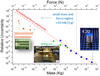
Project 1: The electronic milligram. As a result of kilogram redefinition within the SI, it may be possible to realize mass at the milligram level and below using electrical measurements. To this end, the NIST Electrostatic Force Balance (EFB) has been used to measure the mass of artifacts spanning

SMART Contrast Agents

Ongoing
Work on smart agents is focused on developing new micro- and nanoparticle- based contrast agents for MRI and new MR imaging and sensing schemes. These include synthetic antiferromagnet nanoparticles as potential new contrast agents, high-moment iron microparticles for enhanced T2* contrast for in
Was this page helpful?