U.S. flag

An official website of the United States government

Official websites use .gov
A .gov website belongs to an official government organization in the United States.

Secure .gov websites use HTTPS
A lock ( ) or https:// means you’ve safely connected to the .gov website. Share sensitive information only on official, secure websites.

Projects/Programs

Displaying 76 - 100 of 181

Hydration Reactions in Microstructures Project

Completed
Objective - Generate and publish reaction rate data and enhanced computer modeling tools to better understand and predict the rates of microstructure development and phase interactions in portland cement concrete binders. What is the new technical idea? Reflection digital holographic microscopy (DHM...

Integrated Data Management for Materials Discovery

Ongoing
Learn more about the Thermodynamics Research Center (TRC); it's history, capabilities, and expanding role in chemical processing, experimental planning, and process design. TRC overview TRC's growth in becoming the nation's leading repository of thermodynamics data, along with evolving programing...

Ion Traps

Ongoing
Trapped ions are sensitive to electric-field noise from trap-electrode surfaces. This noise has been an obstacle to progress in trapped-ion quantum information processing (QIP) experiments for more than a decade. It causes motional heating of the ions, and thus quantum-state decoherence. This...

JARVIS-ALIGNN, JARVIS-ALIGNN-FF

Ongoing
ALIGNN uses a line graph neural networks to include bond distances and angular information graph to incorporate finer details of atomic structure, leading to high accuracy models. While the nodes of an atomistic graph correspond to atoms and its edges correspond to bonds, the nodes of an atomistic...

JARVIS-ML

Ongoing
JARVIS-ML introduced Classical Force-field Inspired Descriptors (CFID) as a universal framework to represent a material’s chemistry-structure-charge related data. With the help of CFID and JARVIS-DFT data, several high-accuracy classifications and regression ML models were developed, with...

Lead-Free Solder

Completed
The U.S. microelectronics industry has clearly articulated the measurement needs for lead-free solders, and for solderability and assembly. For example, the urgency for materials data for lead-free solders has been specified in the 1997 IPC, 1999 International Technology Roadmap for Semiconductors...

Lead-Free Surface Finishes for Electronic Components: Tin Whisker Growth

Completed
Tin is widely used as a coating in the electronics industry because it provides excellent solderability, ductility, electrical conductivity, and corrosion resistance. Unfortunately, tin whiskers often grow spontaneously from pure tin electrodeposits and short-circuit finely pitched electrical...

Light-matter interactions in Semiconductor Nanostructures

Ongoing
We investigate the interaction of light with semiconductor-based nanostructures. We extend concepts of entanglement and coherence in atomic physics to our solid-state systems. Our devices are based on semiconductors, like GaAs. We use InAs quantum dots (QDs) in GaAs as artificial atoms; they have...

A Low-Cost Robot Science Kit for Education

Ongoing
Despite its low cost, Legolas has been demonstrated for machine learning-driven hypothesis design, discovery, and validation. For the last four years, Legolas has been used in hands-on courses at the University of Maryland to teach next-generation workforce skills, including ML, control systems...

Machine Learning to Predict Multicomponent Colloidal Crystals

Ongoing
There is a direct link between a material’s macroscopic properties and its microscopic structure, which makes rational bottom-up self-assembly a powerful tool for engineering properties of materials. In general, colloids are facile material building blocks whose shape, charge, and surface...

Macromolecule and Nanoparticle Composition and Architecture

Completed
Bringing new products to market requires measurements for rapid, quantitative assessment of composition and structure. To this end, NIST has developed a series of mass spectrometry-based tools that decrease the time necessary to achieve measurement success while producing more accurate results. The...

Magnetic Imaging

Completed
Advanced magnetic devices and storage media will rely on ultra thin ferromagnetic films; since such films are quasi two-dimensional magnets, they can have strong perpendicular magnetic anisotropy (PMA). Optimization of future materials, including improved yields, requires an ability to measure film...

Magnetic Materials Metrology

Ongoing
Our aim is to develop the metrology for control and manipulation of magnetic anisotropy in magnetic materials. This includes development of the measurement science for quantification of the magnetic properties (e.g., magnetic anisotropy, magnetic exchange) and the structure-property-processing...

Magnetic Nanostructures for post-CMOS Electronics

Completed
We focus primarily on arrays of magnetic nanostructures in order to reveal how defects alter the fundamental physics of magnetization reversal processes in the nanometer regime. We have an integrated approach that consists of four inter-related elements. The first element, film edge metrology...

Materials Informatics

Ongoing
To develop the need data infrastructure and informatics tools, NIST is focusing on three areas: data curation, data infrastructure, and data access. Data curation efforts include efforts to develop a phase-based materials ontology to ensure that the data is represented in a semantically...

Materials and Structures for Resilience Program

Ongoing
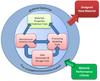
Objective To improve building codes, standards, and engineering practice by developing and deploying advances in measurement science that enhance the robustness, resilience, and durability of materials and structures against natural and manmade hazards. Technical Idea The Materials and Structures...

Measurement and Prediction of Local Structure

Ongoing
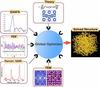
Functional materials enable applications in the computer, data storage, wireless communication, and energy sectors. The properties of many of these systems are critically dependent on deviations of local atomic arrangements from the global average of the crystal. No single measurement technique can...

Measurements for Hydrogen Storage Materials

Completed
The evaluation of candidate storage materials is complicated by a lack of readily available methods for the direct measurement of hydrogen content. MML is working together with researchers from NCNR, and PML to provide measurement tools to fill this gap. Prompt Gamma Activation Analysis (PGAA) is a...

Membranes for Clean Water

Completed
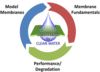
Impact Access to affordable, clean water is vital to the nation's economic growth and security. Polymer-based membrane separation technologies based on reverse osmosis, forward osmosis and nanofiltration will play an increasingly critical role in the production of clean, safe water. In order to...

Metrics for Reactive Wetting in Complex Systems

Completed
From fundamental physical considerations, we have derived a set of partial differential equations describing wetting and spreading. These equations are derived using a variational thermodynamic principle applied to a two-component alloy system with three (vapor, liquid and solid) phases. The method...

Metrologies for Non-linear Materials in Impact Mitigation

Ongoing
Overview This project develops fundamental structure-property measurements on model materials and novel material chemistries from quasi-static to dynamic rates. The goal is to foster a materials by design approach for novel energy dissipation and force re-direction mechanisms. Processing-Structure...

Metrology for Accelerated Laboratory Weathering

Ongoing
Objective To develop and implement measurement science using the NIST Accelerated Weathering Laboratory technology for conducting accurate and traceable aging experiments and service life prediction of resilient infrastructure materials. Technical Idea The integrating sphere-based technology used in...
Was this page helpful?