U.S. flag

An official website of the United States government

Official websites use .gov
A .gov website belongs to an official government organization in the United States.

Secure .gov websites use HTTPS
A lock ( ) or https:// means you’ve safely connected to the .gov website. Share sensitive information only on official, secure websites.

Projects/Programs

Displaying 51 - 75 of 174

Energy Storage & Delivery

Completed
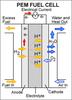
Our program will address key measurement issues related to structure and dynamics of important classes of PEM materials, including emerging systems like block copolymers, polymer blends, and candidate materials proposed by industry leaders like GM. We are developing advanced methods that illuminate...

Engineering and Optical Characterization of Magnetic Nanoparticles (MNPs)

Completed
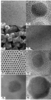
Nanomagnets by Design Nanoparticles are an important subclass of low-dimensional magnetic materials displaying size-dependent magnetic behavior. The controllable magnetocrystalline anisotropy introduced at nanoscale size regimes (as low as 3 nms in diameter) allows for MNPs of ferro/ferrimagnetic...

Extreme Atom Probe Tomography

Ongoing
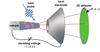
Sub-nanometer-resolved 3-D chemical mapping of any atom in any solid continues to be an imperative goal of materials research. If reduced to practice, it would have profound scientific, engineering, and economic impacts on U.S. industries collectively worth hundreds of billions of dollars. Such...

Fatigue in Silicon

Ongoing
It has long been thought that bulk silicon is immune to fatigue. We present contrary evidence by demonstrating severe fatigue in macroscale specimens. Cracks are produced during cyclic loading of monocrystalline silicon plates with a 3 mm radius sphere indenter mounted onto a universal testing...

FiPy

Ongoing
The solution of coupled sets of PDEs is ubiquitous to the numerical simulation of science problems. Numerous PDE solvers exist, using a variety of languages and numerical approaches. Many are proprietary, expensive and difficult to customize. As a result, scientists spend considerable resources...

Flexible and Printed Electronics

Completed
Approach Developing commercial products based on organic electronics requires materials that deliver predictable and reproducible performance. One advantage of these materials is their compatibility with versatile solution processing methods. However, this advantage can lead to unpredictable...

Functional Barriers for Low-Flammability Products

Ongoing
This project enables low-flammability products without flame retardants by providing methods to assess functional barriers, advancing their performance, and exploring their use in multi-layer products for critical applications.

Fundamental Measurements for Metal Additive Manufacturing

Ongoing
Objective The objective of this project is to instill confidence and aid adoption of AM as a viable technology for production in critical applications. To achieve this goal, a strong understanding of how to measure, characterize and qualify AM parts, processes, and feedstock materials is required...

Fundamentals of Deformation

Ongoing
• We have provided general users from industry, academia and national laboratories with a completely new class of X-ray imaging techniques for materials studies (ultra-small-angle X-ray scattering imaging), that we developed from basic concept to DOE-supported operations at the Advanced Photon...

Future Directions for Magnetic Sensors

Completed
Bringing new or improved magnetic sensors to market requires modeling for rapid assessment of the effect of new designs or improved materials properties. To this end, we are investigating the fundamental properties of a new class of magnetic sensors that is rapidly displacing ones based on older...

Genomics of Electronic Materials

Ongoing
We approach this multidimensional characterization problem by developing measurement-based techniques to rapidly quantify all of the relevant properties of thin-film materials, interfaces, and microelectronic structures. We make extensive use of finite-element simulations, as well as linear and non...

Graphene

Ongoing
Two remarkable features of graphene that are opening avenues to multiple applications are its high transport carrier mobility and the broad tunability of its electronic properties. Graphene charge carriers can be tuned continuously from negative carriers (i.e., electrons) to positive carriers (holes...

Hardness Standardization and Measurements

Ongoing
DESCRIPTION Purpose: Provide measurement traceability for the Knoop, Rockwell, and Vickers hardness scales and for coating thickness measurements that are based on magnetic methods. Goals: Harmonization of hardness and coating thickness testing protocols, in pursuit of reduction of measurement...

High Performance Crystal Plasticity

Ongoing
“Crystal plasticity” is a computationally intensive way of computing the behavior of materials undergoing large permanent deformations. Computation is very inhomogeneous: A large effort is expended everywhere, but only a small portion of the computational domain is doing anything interesting. We...

High Temperature Hall Effect Measurements

Ongoing
Customized Hall effect measurement apparatus which supports measures of Hall effect mobility and resistivity of semiconducting films across a wide range of temperatures (77K-825K).

Hydration Reactions in Microstructures Project

Completed
Objective - Generate and publish reaction rate data and enhanced computer modeling tools to better understand and predict the rates of microstructure development and phase interactions in portland cement concrete binders. What is the new technical idea? Reflection digital holographic microscopy (DHM...

Integrated Data Management for Materials Discovery

Ongoing
Learn more about the Thermodynamics Research Center (TRC); it's history, capabilities, and expanding role in chemical processing, experimental planning, and process design. TRC overview TRC's growth in becoming the nation's leading repository of thermodynamics data, along with evolving programing...

Ion Traps

Ongoing
Trapped ions are sensitive to electric-field noise from trap-electrode surfaces. This noise has been an obstacle to progress in trapped-ion quantum information processing (QIP) experiments for more than a decade. It causes motional heating of the ions, and thus quantum-state decoherence. This...

JARVIS-ALIGNN, JARVIS-ALIGNN-FF

Ongoing
ALIGNN uses a line graph neural networks to include bond distances and angular information graph to incorporate finer details of atomic structure, leading to high accuracy models. While the nodes of an atomistic graph correspond to atoms and its edges correspond to bonds, the nodes of an atomistic...
Was this page helpful?