U.S. flag

An official website of the United States government

Official websites use .gov
A .gov website belongs to an official government organization in the United States.

Secure .gov websites use HTTPS
A lock ( ) or https:// means you’ve safely connected to the .gov website. Share sensitive information only on official, secure websites.

Projects/Programs

Displaying 51 - 75 of 139

Health Assessment Measurements Quality Assurance Program (HAMQAP)

Completed
Participants in the HAMQAP measured concentrations of nutritional and toxic elements, fat- and water-soluble vitamins, fatty acids, active and/or marker compounds, and contaminants in samples distributed by NIST.   Samples that represent human intake (e.g., foods, dietary supplements, tobacco) were...

High-Precision Isotopic Reference Materials

Ongoing
A new generation of multi-collector IRMS, utilizing both inductively coupled plasma and thermal ionization sample sources, is now capable of measuring isotope ratios with extremely high precision – a few parts in 10 6. This new measurement capability has caused a minor revolution in the use of...

High-Sensitivity IR Spectroscopy of Proteins

Ongoing
Infrared (IR) absorption spectroscopy has been widely used as a non-invasive, label-free characterization method of chemical identification and structure for complex biomolecules. Conventional IR spectroscopy, e.g., Fourier-transform IR (FT-IR) technology, can characterize proteins and other...

Instrument Standards for Detection of Hazardous Chemical Vapors

Ongoing
Chemical threat detection is a challenging problem. Contaminants must be accurately identified and quantified often in complex mixtures where non-toxic components can often obscure the measurement. Furthermore, highly toxic chemicals are problematic at low concentrations, requiring ultra-sensitive...

International Comparisons for Chemical Measurements

Ongoing
International agreements and decisions concerning trade and our social well-being increasingly require mutual recognition of measurements and tests among nations. The Mutual Recognition Arrangement (MRA) on national measurement standards and calibration and measurement certificates issued by NMIs...

Ion Mobility Spectrometry

Ongoing
IMS employs a drift tube with an applied electric field to separate ionized molecules based on their mobility. The technique is robust and capable of differentiating a wide range of drug and explosive molecules. Recent work has sought to investigate the utility of IMS for screening of illicit...

Isotopes as Environmental Tracers in Biological Specimens

Ongoing
Multicollector inductively coupled plasma mass spectrometry (MC-ICP-MS) provides sensitive and precise measurements of stable isotope ratios and can be coupled to a variety sample introduction systems such as laser ablation and gas or liquid chromatography. The versatility and performance of MC-ICP...

Macromolecular Architectures

Ongoing
This project’s purpose is to synthesize and characterize model thermoplastics, thermoplastic elastomers (TPE), and mixed resins with systematic variation of polymer sequence, chemistry, and architectures to generate libraries of quantitative structure-property relationships validated by multiple...

Magnetic Sector Secondary Ion Mass Spectrometry

Ongoing
Magnetic sector SIMS uses high energy “primary” ions to bombard the surface and liberate “secondary” ions much like in ToF-SIMS, but the ion beam is operated continuously to maximize duty cycle. The high ion dose is preferred for depth profiling, where the concentration of elements and isotopes are...

Measurement Quality in Hydrogen Storage R&D

Ongoing
The hydrogen storage project targets metrologies that assess kinetics and energetics of hydrogen charging and discharging in combinatorial structures as well as the degradation mechanisms that limit life of use. New capabilities are being developed and several existing measurement capabilities are...

Measurement and Sampling Standards

Ongoing
A foundational activity that crosscuts our research goals is the development of a variety of standards and test materials to support the effective operation of trace explosive and narcotic detection devices. Trace sampling issues are addressed through fundamental studies on the adhesion and...

Measurements and Standards for Botanical Dietary Supplements

Ongoing
Many consumers believe that botanical dietary supplements will improve their health and that these "natural" remedies are both effective and free from the side effects that may occur with other medications. There are occasional reports of inaccurate labeling, adulteration, contamination (with...

Measurements and Standards for Contaminants in Biological (Human) Materials

Ongoing
The development of SRMs to support measurements for contaminants in biological fluids and tissues will expand quality assurance capabilities to important species critical to human health. We will provide SRMs that are representative of the analytical challenges that may be encountered by analysts in...

Measurements and Standards to Support Nutrition Labeling

Ongoing
Well-characterized certified reference materials are needed by laboratories in the food testing and nutrition communities to facilitate compliance with labeling laws and improve the accuracy of information provided on product labels so that consumers can make good choices. As a result of the...

Method Assessment for Non-Targeted Analyses (MANTA) Program

Ongoing
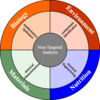
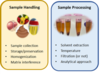
Typical targeted analysis aims to detect and/or quantify a set of known chemical compounds using specific instrumental techniques (such as liquid chromatography with triple quadrupole mass spectrometry). In contrast, non-targeted analysis is an analytical technique that detects, identifies, and/or...

pH Metrology

Ongoing
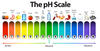
The suite of NIST pH SRMs forms the basis for pH measurements in the United States, and pH is the most-often-measured chemical quantity. Hence this NIST work directly or indirectly impacts a large number of users in industry, government, and academia. One of the most critical set of users is in...

Metrology and Standards for Canine Olfactory Detection of Explosives

Completed
Effective and accepted by the public, trained dogs are the most frequently deployed detection systems for identification of explosives threats in mobile applications. In addition to being highly sensitive, dogs can rapidly discriminate the unique profile of an explosive in a presence of a large...

Micro- and Nanoelectromechanical Systems

Completed
MEMS/NEMS are enabling technologies that bring new functionalities with the potential to radically transform markets ranging from consumer products to national defense. The meteoric rise of the smartphone is an excellent example, in which MEMS accelerometers, gyroscopes, microphones, displays, and...

Microbial Metabolomics

Ongoing
Mass spectrometry (MS) and nuclear magnetic resonance (NMR) spectroscopy are widely used and complementary analytical platforms for the characterization, identification, and quantification of a metabolome. MS techniques, typically coupled to chromatography, provide a chemical fingerprint of complex...
Was this page helpful?