U.S. flag

An official website of the United States government

Official websites use .gov
A .gov website belongs to an official government organization in the United States.

Secure .gov websites use HTTPS
A lock ( ) or https:// means you’ve safely connected to the .gov website. Share sensitive information only on official, secure websites.

Projects/Programs

Displaying 1051 - 1075 of 1608

NIST Tools for Cannabis Laboratory Quality Assurance

Ongoing
Since the 1970s, cannabis (marijuana and hemp) and its constituent, Δ 9-tetrahydrocannabinol or THC, have been classified as Schedule I controlled substances. Seized evidence is tested by forensic laboratories, which verify the identity of the plant through macro- and microscopic evaluation and the...

NIST Traceable Reference Material Program for Gas Standards

Ongoing
The Gas Mixture SRM, NTRM, and EPA Protocol Programs provide a mechanism to produce needed calibration gas standards with a well-defined traceability. These mixtures are specified in the Code of Federal Regulations (CFR) to calibrate instruments to be used to monitor regulated emissions. The NTRM...

NIST Urine Albumin Standardization Program

Ongoing
Kidney Disease – A Global Concern Kidney disease is a significant global public health and economic issue, with Chronic Kidney Disease (CKD) ranking among the top 10 worldwide causes of death. The critical need for early and accurate diagnosis, effective treatment management, and ongoing patient...

NIST Workshops on Cell-Free Expression Systems

Completed
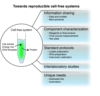
NIST has co-hosted two cell-free workshops. NIST CELL-FREE (Comparable Engineered Living Lysates For Research Education and Entrepreneurship) Workshop (2019) The NIST CELL-FREE workshop took place in La Jolla, CA in February 2019, in collaboration with the J. Craig Venter Institute (JCVI). The...

NIST23: Updates to the NIST Tandem and Electron Ionization Spectral Libraries

Ongoing
NIST Tandem Mass Spectral Library, 2023 release 51,501compounds 60% increase over the 2020 release 399,267 precursor Ions 2.4 million spectra Fragmentation methods 49,590 HRAM (high res accurate mass) compounds 51,292 QTOF, HCD, IT-HRAM, QqQ compounds 49,561 ion trap compounds (low res., up to MS 4)...

NISTCHO

Ongoing
NISTCHO, a new mammalian cell line of interest to the biopharmaceutical and biomanufacturing communities, is now available from the National Institute of Standards and Technology. This Chinese hamster ovary (CHO) cell line has been engineered by MilliporeSigma to express a non-originator version of...

Noise Thermometry

Completed
The project has also created a quantum-based electronic temperature standard that uses the ACJVS in conjunction with measurement of the Johnson noise -- random electrical noise caused by thermal agitation in a conductor -- in resistors at arbitrary temperatures. This Johnson noise thermometry system...

Nonlinear nanophotonic control of light

Ongoing
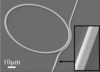
Light-matter interactions with nonlinear materials provide a powerful tool for converting optical fields from one state to another. For example, nonlinear wavelength conversion leverages efficient scattering of photons of a single frequency to another, enabling generation of coherent sources across...

Nonlinear Optics for Quantum Information and Networking

Ongoing
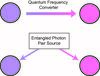
Quantum networking and distributed quantum sensing will require photonic links (so called flying qubits) to connect nodes and enable scaling to larger distances and network sizes. An interconnect may consist of a photon going from one node to another where both nodes operate at the same wavelength...

Northeast Corridor Urban Test Bed for Greenhouse Gas Emissions

Ongoing
The NEC project includes multiple measurement and analysis components. The backbone of the NEC project is a network of in-situ CO2 and CH4 observation stations with continuous high-accuracy mole fraction measurements of these two greenhouse gases. In addition, the University of Maryland, Stony Brook...

Novel Psychoactive Substance (NPS) Data Hub

Ongoing
A growing portion of forensic drug laboratory’s workload is the identification of novel psychoactive substances (NPSs), or emerging synthetic drugs (ESDs), presented as exhibit materials after seizure events. A pressing need exists for the rapid characterization of both the active ingredient(s) and...

Novel Sources for Focused-ion Beams

Completed
Commercial focused ion beams (FIBs) are used in a wide variety of applications. For example, they serve as diagnostic tools, slicing through a nanodevice to expose its internal structure. They can also shape nanoscale materials either by adding atoms to a structure or by shaving them off. And they...

NRC Postdoctoral Associate Program

Ongoing
Description: The Statistical Engineering Division (SED), within the Information Technology Laboratory, serves primarily as a research and consulting group working with the NIST scientific staff. Members of the Division engage in research in the areas of statistical graphics, reliability, linear...

Numerical Reproducibility

Ongoing
The Information Systems group in ITL is developing a program in numerical reproducibility, which has been funded through several projects. Issues with numerical reproducibility are becoming increasingly significant, for several reasons Increased use of parallel computing has caused order of...

Object Oriented Finite Elements (OOF)

Ongoing
The best and most current information about the OOF software, including current downloads, can be found at the main OOF site. The general workflow of the OOF software begins with a 2D or 3D image. OOF provides tools for maniupating the image to highlight scientifically important features, and to...

Ocean Color

Ongoing
The primary reference instrument for the United States and most international ocean-color sensors is the Marine Optical Buoy (MOBY), an automated radiometric system operated by NOAA and deployed about 20 km offshore from Lanai, Hawaii, where the atmospheric and water conditions support utilizing...

Ontologies and Interoperability in Evolutionary Comparative Analysis

Completed
Intended impact Nearly all scientists who regularly use online resources on genes, proteins and genomes make use of comparative data to advance biomedical research. For instance, researchers often make useful inferences by comparing human genes (as well as proteins, reactions, interactions, pathways...

Ontology for Mapping Platform Configuration in Security Properties

Ongoing
The output of this project will improve the trust in the most vulnerable (weakest) element participating in a trusted cyber transaction. Additionally, the extensible ontology will enable establishment of assurance measures for new types of online transactions as they emerge.

OOF

Ongoing
The OOF project is a software development project designed to make advanced computational modeling capabilities available to materials science researchers who are not themselves computational experts. Researchers bring domain expertise from materials science to assist in building high-quality finite...

Open RAN Interoperability

Ongoing
Open RAN aims to enable components from different vendors to work together seamlessly. However, integrating elements from various suppliers poses technical challenges. It requires thorough testing, standardization, and collaboration to ensure that hardware and software work together seamlessly. This...

Open RAN Research at NIST

Ongoing
Network Disaggregation An Open RAN gNB is a decentralized gNB and consists of three parts, each with its own hardware/software: Radio Unit (RU); Distributed Unit (DU); Control Unit (CU). Each unit in Open-RAN takes over a section of gNB tasks. The RU has the responsibility of transmitting and...

OpenCALPHAD

Ongoing
Thermodynamic data are essential for the understanding, developing, and processing of materials. The CALPHAD technique has made it possible to calculate properties of multicomponent systems using databases of thermodynamic descriptions with models that were assessed from experimental data. The OC...
Was this page helpful?