U.S. flag

An official website of the United States government

Official websites use .gov
A .gov website belongs to an official government organization in the United States.

Secure .gov websites use HTTPS
A lock ( ) or https:// means you’ve safely connected to the .gov website. Share sensitive information only on official, secure websites.

Projects/Programs

Displaying 1076 - 1100 of 1601

Optical Clock Atomic Structure and Theory

Ongoing
An atomic clock aims to realize the intrinsic ticking rate of an atom. This ticking rate (i.e., frequency) is associated with a transition between two quantum levels of the atom, where each level corresponds to a different configuration of the electrons around the nucleus. Atomic clocks derive their

Optical/electrical particle measurement system

Completed
Intended Impact The results of this work should provide instrument manufacturers with data, methods, and algorithms for enhancing the clarity and accuracy of information their instruments provide to their customers. Users of these instruments (pharma companies) and regulators, will have better

Optical grating scatterometry

Ongoing
In the past few years, scatterometry has emerged as a method for performing linewidth and line profile metrology, especially by the semiconductor industry. The method uses a periodic target containing repetitive lines whose profile, i.e., its width, height, and shape, is to be determined. The

Yb Optical Lattice Clock

Ongoing
In recent years, optical clocks have achieved performance that is orders of magnitude beyond more traditional atomic clocks utilizing a microwave timebase. A particularly promising type of advanced optical clock is the optical lattice clock. At their heart, these systems use an ensemble of ultracold

Optical medical imaging

Ongoing
Optical medical imaging technologies proliferate in academic research and yet very few translate into the clinic. Optical techniques have high spatial and spectral resolution, lends itself to portability, and inexpensive relative to conventional imaging modalities such as MRI (Magnetic Resonance

Optical Methods for 3-D Nanostructure Metrology (Archived)

Completed
This project develops new approaches to optical microscopy based on a high magnification optical platform that samples the full 3-D scattered field. Both the semiconductor industry and the evolving nanomanufacturing sector are facing enormous challenges measuring nanometer scale features over large

Optical and Microwave Spectroscopy of Microelectronic Systems

Ongoing
Collaborations with industry leaders have led to new understanding of magnetic damping in advanced materials and replication of our magnetic metrology tools. We investigate fundamental aspects of spin transfer in materials and structures that offer improved performance in future devices such as

Optical and Microwave Waveform Synthesis

Ongoing
A typical optical frequency comb consists of thousands to millions of phase coherent modes (the "teeth" of the comb) that can all be used to synthesize precisely controlled electromagnetic waveforms. Our main research thrust in this area has been focused on the generation of microwave and millimeter

Optical and Optoelectronic Materials Characterization

Ongoing
Today's electronics have reached a point where sheer computation power has combined form and function as the key driver of large consumer markets. The demand for portable and pervasive electronics with greater functionality promises significant changes over the next decades in how society interacts

Optical Polarization Metrology

Ongoing
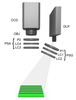
Electromagnetic waves are transverse. That is, besides propagating energy, they also have polarization represented by the direction of the electric field, which is constrained to lie in the plane perpendicular to the direction of propagation. Light rays can be characterized by a four-element Stokes

Optical Probes of 2D Magnetic Phenomena

Ongoing
The unique measurement capabilities developed in this Project enable diffraction-limited, optical spectra (both Raman and photoluminescence) to be collected and analyzed as a function of laser energy, polarization, temperature, magnetic field, and device parameters such as current load and back

Optical Radiation Metrology and Standard Radiometers

Ongoing
Radiometric, radiance temperature, photometric, and color scales have been realized based on the spectral responsivity of standard detectors and radiometers. These reference responsivity scales have been transferred to other NIST calibration facilities to realize and maintain these detector-based

Optical scattering from surfaces

Ongoing
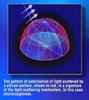
Light Scattering Ellipsometry: The polarization of scattered light can often indicate the source of that scattered light. Using Light Scattering Ellipsometry, whereby the polarization of light scattered into directions out of the plane of incidence is measured for a fixed incident polarization

Optical Two-way Time-frequency Transfer

Ongoing
Researchers in the Fiber Sources and Applications Group have been developing the technique of “Optical Two-Way Time-Frequency Transfer” (OTWTFT) which can link time between distant clocks to the femtosecond level over free-space links. Optical clock networks could enable tests of fundamental physics

Optofluidic Cytometry

Ongoing
Flow cytometers are commercial instruments that provide rapid multiparameter measurements of single cells, which makes them indispensable in basic research and clinical studies of diseases and drug therapies. Measurements of cellular attributes can include indicators of cell size and shape and well

Optomechanical Pressure Sensing

Ongoing
Measurement and control of high-vacuum pressure is important for many industrial processes, particularly semiconductor fabrication. Typical process pressure monitors are known to lose accuracy over time and so require repetitive calibration. Pressure transfer standards that support high-vacuum and

Organic Compounds in Human Serum, Milk, and Urine

Ongoing
Standard Reference Materials (SRMs) have been specifically designed to assist in the quality assurance measurements for compounds found in human fluids. Clinical and biomonitoring laboratories rely on these SRMs for method validation and as control materials during specific analyses. Various human

Orthogonal Measurements

Ongoing
Definitions: Orthogonal measurements: Measurements that use different physical principles to measure the same property of the same sample with the goal of minimizing method-specific biases and interferences. Complementary measurements: Measurements that corroborate each other to support the same

Out-of-Band Emissions Measurements of LTE Devices Operating in the AWS-3 Band

Completed
The project, proposed by Edwards Air Force Base, measured Out-of-Band (OoB) emissions from new Long Term Evolution (LTE) systems operating in bands adjacent to existing incumbent Department of Defense (DoD) Aeronautical Mobile Telemetry (AMT) systems used at government test and training ranges (TTRs
Was this page helpful?