U.S. flag

An official website of the United States government

Official websites use .gov
A .gov website belongs to an official government organization in the United States.

Secure .gov websites use HTTPS
A lock ( ) or https:// means you’ve safely connected to the .gov website. Share sensitive information only on official, secure websites.

Projects/Programs

Displaying 226 - 250 of 274

Smart Grid National Coordination

Completed
Objective: This project leads, coordinates and manages the national public-private stakeholder partnership effort to accelerate development of interoperability standards for the smart grid, fulfilling NIST’s statutory responsibility under the Energy Independence and Security Act of 2007 (EISA), and...

Smart Grid System Testbed Facility

Completed
Objective: To develop an advanced multi-mode interacting measurement testbed to facilitate implementation, validation, and full characterization of smart grid interoperability standards and smart grid performance. What is the technical idea? An interacting multi-mode measurement and characterization...

Smoke Stack Flow Measurement

Completed
The Fluid Metrology Group is using its smoke stack simulator (See Fig. 1.) and field tests in operating smoke stacks to critically test conventional and improved ways of measuring the flow of stack gases. In the NIST stack simulator, the inlet cone and reference (upstream) section of the simulator...

Speaker and Language Recognition

Ongoing
Current Speaker and Language Recognition Activities: Speaker Recognition Evaluation series: (1996-) A biennial NIST evaluation of fully automated text-independent speaker recognition technology. Human Assisted Speaker Recognition Evaluation series: (2010- ) A biennial NIST evaluation of approaches...

Spectrophotometry

Ongoing
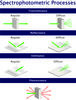
NIST uses spectrophotometric techniques to measure the optical properties of materials for dissemination of national measurement scales to its stakeholders and advancing the development of standards, measurement methods, and modeling capabilities. The beneficiaries of these activities include the...

Spectroscopy and Application of Solid-State Quantum Centers

Ongoing
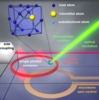
Quantum color centers in wide-bandgap semiconductors have spin and optical degrees of freedom, which can be leveraged for applications such as sensing and single-photon generation. In materials like diamond and silicon carbide, long spin lifetimes and quantum coherence times enable sensitive...

Spectrum Coexistence Metrology

Ongoing
The overarching goal of the Coexistence Project is to support the development, evaluation, and optimization of spectrum sharing techniques. These techniques include methods to model, simulate, and physically measure the ability of wireless communications systems to maintain their functional...

Spectrum Sensing and Noise

Ongoing
Reports in the NIST Technical Notes series were extensive measurements of radiated noise. Researchers also made key early contributions to standardizing guided-wave noise measurements in microwave systems. These contributions continue to underpin our ongoing work, but basic applications and hardware...

Standard Platinum Resistance Thermometer Calibration Laboratory (SPRTCL)

Ongoing
The SPRTCL provides an extensive list of calibration services that cover the whole temperature range for which long-stem SPRTs, including high-temperature SPRTs, are the ITS-90 interpolation artifacts. This range spans from the triple point of argon (-189.3442 °C) to the freezing point of silver...

Standard Reference Materials for Hexavalent Chromium in Contaminated Soil

Completed
During the last century, chromate and dichromate chemical production facilities processed considerable amounts of chromite ore for industrial manufacturing purposes. The waste material from these operations called chromite ore processing residue (COPR) was disposed of in waste sites across the...

Standard Solution SRMs Provide Traceability for Millions of Measurements

Ongoing
Literally millions of measurements of elemental composition are performed each year worldwide. The vast majority of these measurements depend upon reference materials for establishing traceability of results to the SI. Leveraged through commercial CRM producers, the NIST SRM 3100 series provides an...

Standards Development to Ensure Reliable Breath Analysis in the Field

Ongoing
Numerous volatile organic compounds (VOCs) have been identified in human breath. These compounds can be produced by the body or by organisms in the body (e.g., bacteria or viruses) and provide a non-invasive window into human health. Inexpensive point-of-care devices are being developed to diagnose...

Standards for Metagenomics

Ongoing
Metagenomics is a powerful technology combining high-throughput (a.k.a. “next-generation”) sequencing with advanced bioinformatics to identify and quantify mixtures of organisms in a sample. Metagenomics workflows consist of 4 main steps: Sample collection: location, amount, storage, etc. Extraction...

Strain Measurement for Semiconductor Devices and Packages

Ongoing
Strain is a critical parameter that influences both electrical and mechanical failures of devices, however, measuring strain in complex 3D geometries and vanishingly small feature sizes remains a challenge for manufacturers. Data provided by strain measurements can be used to validate computational...

Strain Measurement for Semiconductor Devices

Ongoing
Mechanical strain is hugely important to semiconductor devices and packages while also being difficult to measure accurately. Strain is engineered into CMOS channels to improve carrier mobility for higher performance at lower power but is also intrinsically present from manufacturing processes where...

Study of Microheterogeneity in Solid Reference Materials

Ongoing
Presently there are a variety of analytical techniques that are served by few or no reference materials due to the small sample sizes they require. NIST currently certifies solid reference materials at or above the 100 mg mass level in most cases with no mention of the effect of using smaller sample...

Surrogate protein particle standards

Ongoing
Intended Impact This work will enable industry to obtain accurate, reproducible counts of protein particles, and to differentiate protein particles from other particle types, resulting in greater drug efficacy and safety. Objectives Create a polydisperse suspension of polymer particles that mimic...

Synchrotron Resonant Scattering and Diffraction

Ongoing
The Resonant Scattering and Diffraction effort seeks to develop measurements that provide spatial correlations in chemical, electronic, and physical structure in advanced materials. Scattering technology is developed as part of the NIST BNL partnership at the National Synchrotron Light Source II in...

Synchrotron X-ray Absorbance Spectroscopy

Ongoing
The Absorbance Spectroscopy effort seeks to develop measurements that provide details of the local chemical, electronic, and physical structure in advanced materials. Spectrometer technology is developed as part of the NIST BNL partnership at the National Synchrotron Light Source II in Upton, NY...

Synchrotron X-ray Spectroscopic Imaging

Ongoing
Building off technologies and expertise developed in the Synchrotron X-ray Absorption Spectroscopy project, the Spectroscopic Imaging effort seeks to develop measurements that provide spatial mapping of the local chemical, electronic, and physical structure in advanced materials. Technology is...

Synthetic Biology

Ongoing
New measurement methods and tools are required for biology to emerge fully as an enabling, practical platform for engineering. The Cellular Engineering Group works to provide a foundation of measurement assurance to support the control and rational design of biological function. Through state of the...

US TAG for ISO/TC 334: Reference Materials

Ongoing
Get involved: Interested US Stakeholders may participate in the US TAG at no cost. Membership provides access to all ISO/TC 334 and US TAG documents, including standards under development. Please click here to join or renew your membership. Contribute to standards development : Please click here to...

Thermoelectric Measurements

Ongoing
Thermoelectric effects enable the inter-conversion of thermal and electrical energy, with applications that include solid-state waste heat recovery in engines for automotive and industrial manufacturing; power generation for aerospace, non-terrestrial exploration, and remote sensing; and...

Thin Film Electronics (Archived)

Completed
Today's electronics have reached a point where sheer computation power has yielded to combined form and function as the key driver of large consumer markets. The demand for portable and pervasive electronics with greater functionality promises significant changes over the next decades in how society...
Was this page helpful?