U.S. flag

An official website of the United States government

Official websites use .gov
A .gov website belongs to an official government organization in the United States.

Secure .gov websites use HTTPS
A lock ( ) or https:// means you’ve safely connected to the .gov website. Share sensitive information only on official, secure websites.

Projects/Programs

Displaying 26 - 45 of 45

Machine Learning to Predict Food Provenance

Ongoing
Adulteration of food and food products is a pernicious problem which is difficult to solve as supply chains and international trade routes become increasingly complex; yet agriculture contributed over $1 trillion to the US GDP in 2017, [1] illustrating the importance of protecting this and related...

Machine Learning to Predict Multicomponent Colloidal Crystals

Ongoing
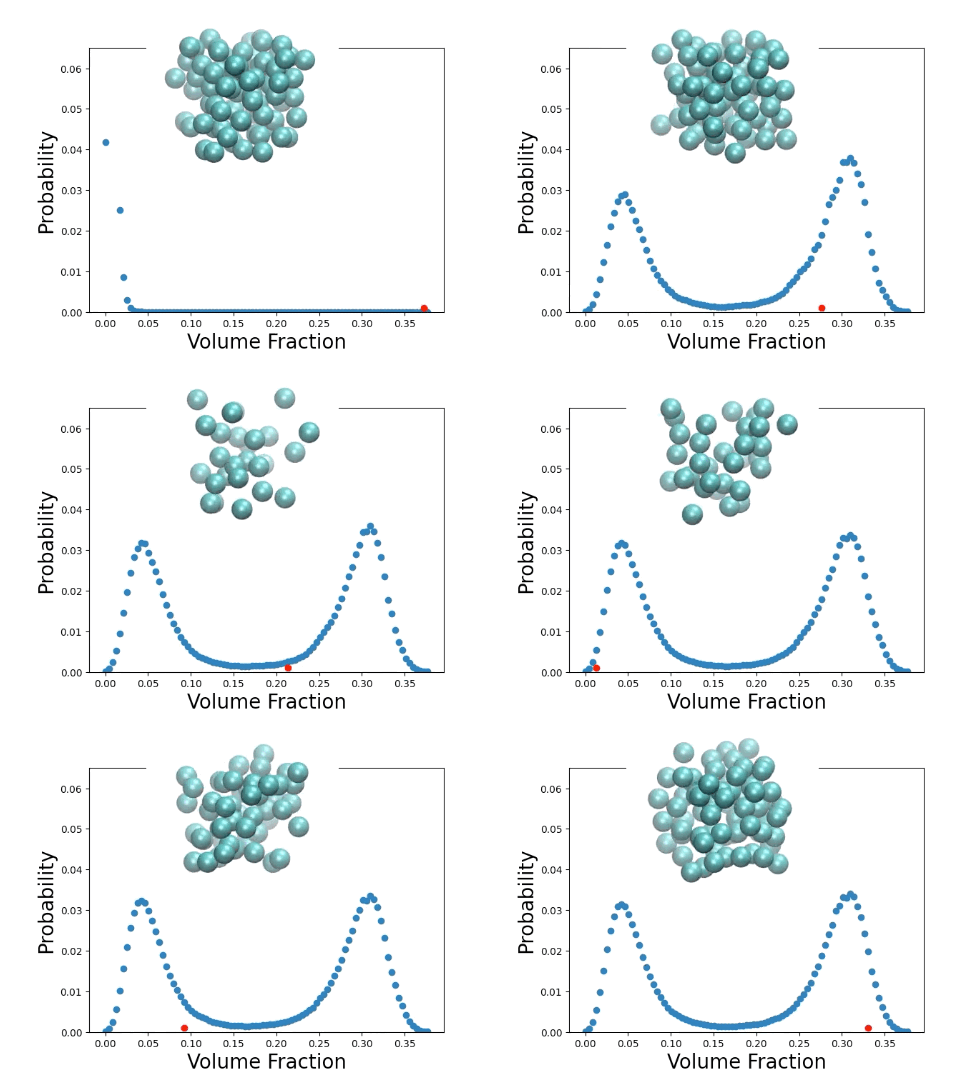
There is a direct link between a material’s macroscopic properties and its microscopic structure, which makes rational bottom-up self-assembly a powerful tool for engineering properties of materials. In general, colloids are facile material building blocks whose shape, charge, and surface...

Materials Informatics

Ongoing
To develop the need data infrastructure and informatics tools, NIST is focusing on three areas: data curation, data infrastructure, and data access. Data curation efforts include efforts to develop a phase-based materials ontology to ensure that the data is represented in a semantically...

METIS

Ongoing
A Metrology Exchange to Innovate in Semiconductors

Multiscale Modeling and Validation of Semiconductor Materials and Devices

Ongoing
The limitations of scaling traditional CMOS (complementary metal-oxide semiconductors) designs have necessitated that the semiconductor industry consider new materials and design concepts. For wide bandgap semiconductor devices, optimization of materials and fabrication processes is needed to...

The NIST Chemistry Webbook

Ongoing
Intended Impact It is part of NIST's mission to distribute Standard Reference Data to scientists, engineers, educators, and the general public. The NIST Chemistry WebBook is intended to help fulfill NIST's mission by distributing such data over the Internet. Objective Develop a web site that...

NIST Data Resources for Adsorption

Ongoing
NIST/ARPA-e Database of Novel and Emerging Adsorbent Materials A centralized resource for the scientific community to find and compare single- and multi-component adsorption isotherms reported in the literature. The database sorts data according to adsorbent material, adsorbate species...

NIST Materials Resource Registry

Ongoing
The MRR is a comprehensive inventory of high-level data collections, repositories, databases, tools, software, and services useful to materials research and design but located anywhere in the world. Its specialization for Materials Science is in the domain-specific metadata and vocabulary it can...

NIST Standard Reference Simulation Website

Ongoing
Molecular simulations, in particular Monte Carlo Molecular Simulation and Molecular Dynamics Simulation, are methods for computing the properties of some kind of system, for which the intermolecular interactions are specified via mathematical relationships derived from statistical mechanics. Since...

Ontologies and Interoperability in Evolutionary Comparative Analysis

Completed
Intended impact Nearly all scientists who regularly use online resources on genes, proteins and genomes make use of comparative data to advance biomedical research. For instance, researchers often make useful inferences by comparing human genes (as well as proteins, reactions, interactions, pathways...

Performance Metrics for Industrial Gas Separation and Purification

Ongoing
Sorbents in Direct Air Capture (DAC) are exposed to the atmosphere, where they adsorb CO2 then are isolated from atmosphere, the CO2 is driven off by heating or pulling vacuum, refreshing the sorbents. This adsorption-refresh cycle depends not only on the competitive adsorption of CO2 with the other...

Prediction of Global Warming Potential

Ongoing
Goals Use ANN models to fit RF and .OH rate constant data k(.OH). Be able to predict RF, k(.OH), and GWP with reasonable accuracy using readily available information. Create a screening tool based on the ANNs.  Research Activities Improve the performance of rate constant prediction. Compare rate...

Reactivity of Nanoparticle Catalysts

Ongoing
Goals: Provide mechanisms for various prototypical electrocatalytic reactions on different metallic surfaces an nanoparticles. Validate the results of DFT calculations versus experimental data. Research Activities: Studying the methanol oxidation reaction on Pt and PtRu surfaces. Studying the effect...

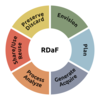
Research Data Framework (RDaF)

Ongoing
What is the Research Data Framework? A map of the research data space: who, what, where, why, when? A dynamic guide for the various stakeholders in research data to understand best practices for research data management and dissemination A resource for understanding costs, benefits, and risks...

Solvation Thermodynamics

Ongoing
Solvation thermodynamics data are essential in the characterization and interpretation of any process carried out in the liquid phase. The data have application in the study of biochemical processes such as protein folding and protein-protein association in aqueous fluids and are useful as...

Theoretical Mass Spectrometry

Ongoing
No Description Intended Impact Unknown compounds will be identified more reliably. Quality control for the NIST Mass Spectrometry Database will be enhanced. Goals Develop software tools for predicting microcanonical branching fractions automatically. This is currently too laborious and too technical...

Understanding Protein Solution Phase Behavior via Coarse-Grained Modeling

Ongoing
Intended Impact Because biological systems span a broad range of length and time scales, they cannot be studied effectively using conventional all-atom simulations. While hardware advances represent one route to improving the computational tractability of simulating biological systems, significant...

Validation of Density Functional Theory for Materials

Completed
A variety of systems will be considered in this work: Pure and alloy solids will be studied using periodic DFT methods with three distinct crystal structures that are relevant to the widely-used CALPHAD (Computer Coupling of Phase Diagrams and Thermochemistry) method. This study emphasizes the...

Virtual Measurements

Ongoing
Intended Impact When engineering data, such as for reactive-chemical hazards, are obtained using quantum chemistry, the lack of associated uncertainties means that the reliability of the data is poorly known. Safety thus requires a skeptical view, often leading to expensive over-design. Objective...
Was this page helpful?