U.S. flag

An official website of the United States government

Official websites use .gov
A .gov website belongs to an official government organization in the United States.

Secure .gov websites use HTTPS
A lock ( ) or https:// means you’ve safely connected to the .gov website. Share sensitive information only on official, secure websites.

Applied Genetics Group

Advancing technology and traceability through quality genetic measurements to aid work in Forensic and Clinical Genetics.

Since the late 1980s, NIST has had scientists involved in DNA testing. Early concerns over measurement accuracy and issues with poor quality control of forensic DNA tests caused the Department of Justice to call upon NIST scientists to help with standards development and technology evaluation. For the past several years, our Forensic Genetics Project Team has been part of the Applied Genetics of the Biomolecular Measurements Division at NIST. The Applied Genetics Group was formed to focus on developing standards and technology to aid human, plant, and animal identification and to benefit agricultural, law enforcement, and clinical applications using genetic information.  

Our work is primarily nucleic acid-based and focuses on the characterization of genetic polymorphisms. We utilize the techniques of gel and capillary electrophoresis for the characterization of size- and sequence polymorphisms. Variations on the polymerase chain reaction (PCR) technique such as rapid PCR, multiplex PCR, real-time PCR, and digital PCR are used to genotype, sequence, and provide quantitative information pertaining to an organism's genome. Standard Reference Materials (SRMs) developed by the Applied Genetics group enable accurate measurements of short tandem repeats (STRs) commonly used in the field of human identity testing. A clinical standard for the CAG triplet repeat-based Huntington's disease provides a calibration standard for the challenging measurements of these length based polymorphisms. Information and techniques developed by the Applied Genetics group are freely shared on the websites.

Projects and Programs
Clinical and Forensic Reference Materials

Ongoing
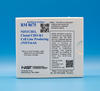
Below is a listing of the reference materials currently produced by the Applied Genetics group. Clinical Diagnostics SRM 2393 - CAG Repeat Length Mutation in Huntington`s Disease SRM 2365 - BK Virus DNA Quantitative Standard SRM 2366a - Cytomegalovirus DNA (Towne Δ147 BAC) for DNA SRM 2367 - JC

Digital PCR

Ongoing
With appropriately validated assays, digital polymerase chain reaction (dPCR) determines the number of DNA targets (copies) per reaction partition, without the need for a standard curve. Reaction partitions can be in the form of fixed chambers in a microfluidic device, referred to as chamber digital

DNA Mixture Interpretation

Ongoing
Interlaboratory Studies Mixture interlaboratory studies provide a means to assess a laboratory's ability to process and interpret DNA mixtures. Initial ‘Mixed Stain’ studies (published in 2001) provided physical samples for DNA profiling with the first commercial STR typing tests. Later, mixture

Forensic Genetics

Ongoing
Since the late 1980s, NIST has had scientists involved in DNA testing (aka "DNA Fingerprinting"). Early concerns over measurement accuracy and poor quality control of forensic DNA tests caused the Department of Justice to call upon NIST scientists to help with standards development and technology

News and Updates

STRBase Web Resource Update

A significant update was undertaken to modernize STRBase and make it more user-friendly. This project aimed to ensure that the website remains a relevant and

Publications

Developmental Validation of the PowerPlex® 18E System: An 8-Dye STR Multiplex for Human Identification Applications

Author(s)
Jonelle Thompson, Michael Lauck, Elizabeth Hamilton, Heather Hodges, Maximilian Neis, Cornelius Courts, Aimee Hack, Alan Pierce, David Moore, Katja Anslinger, Birgit Bayer, Peter Vallone, Carolyn Steffen, Rachel Knoener, Karthika Karthika Divakaran, Stephen McDaniel, Robert McLaren
The PowerPlex® 18E System is an 18-locus, eight-dye, STR multiplex optimized for use with the Spectrum CE System and Spectrum Compact CE System. It

From Crisis to Routine - Standardization of SARS-CoV-2 Genome Detection by Enhanced EQA Schemes in a Scientific Pandemic Network

Author(s)
Martin Kammel, Hans-Peter Grunert, Anika Zimmerman, Annemarie Martin, Vanessa Lindig, Samuel Samuleit, Ulf Duehring, Mechthild Adams-Bagusche, Dirk Sander, Hannah Zeichhardt, Christian Drosten, Victor Corman, Daniela Niemeyer, Sandra Ciesek, Holger Rabenau, Martin Obermeier, Robert Ehret, Rolf Kaiser, Jim Huggett, Denise O'Sullivan, Peter Vallone, Megan Cleveland, Samreen Falak, Andreas Kummrow, Esmeralda Valiente, Rainer Macdonald, Mojca Milavec, Sabine Goseberg, Silke Kappler, Natalie Weiss, Laura Vierbaum, Patricia Kaiser, Ingo Schellenberg, Heinz Zeichhardt
The outbreak of the COVID-19 pandemic led to a crisis situation in which diagnostic methods for the genome detection of the emerging SARS-CoV-2 were urgently

Awards

Press Coverage

Was this page helpful?