U.S. flag

An official website of the United States government

Official websites use .gov
A .gov website belongs to an official government organization in the United States.

Secure .gov websites use HTTPS
A lock ( ) or https:// means you’ve safely connected to the .gov website. Share sensitive information only on official, secure websites.

Projects/Programs

Topic Area
Displaying 426 - 450 of 481

Smoke Stack Flow Measurement

Completed
The Fluid Metrology Group is using its smoke stack simulator (See Fig. 1.) and field tests in operating smoke stacks to critically test conventional and improved ways of measuring the flow of stack gases. In the NIST stack simulator, the inlet cone and reference (upstream) section of the simulator

Solid-state lighting metrology

Ongoing
Light Emitting Diodes (LEDs) are increasingly being introduced into lighting market, and solid state lighting (SSL) is becoming a reality. But, this new technology still faces many challenges. Lighting consumes a huge amount of energy, currently 22% of all electricity consumed in the U.S. White LED

Sources, detectors and metrology

Ongoing
Detectors Detectors that can register individual photons are key to applications in quantum information, metrology, biology, and remote sensing, each having its own distinct detection requirements. In many ways, a single-photon detector is the device that spans the quantum-to-classical divide

Spectral Reflectance and Transmittance

Ongoing
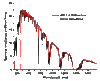
NIST serves as the nation's primary source for spectral reflectance and transmittance measurements from 250 nm to 2500 nm. Our reflectance and transmittance measurements support the measurement infrastructure of communities involved in optics, photonics, color technology, instrument manufacturing

Spectral responsivity measurement

Ongoing
The spectral responsivities of typical photodiodes that are used in the ultraviolet, visible, and near-infrared and calibrated by the SCFs are shown below. **Any commercial equipment, instruments, or materials mentioned are identified to foster understanding. Such identification does not

Spectrophotometry

Ongoing
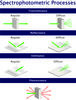
NIST uses spectrophotometric techniques to measure the optical properties of materials for dissemination of national measurement scales to its stakeholders and advancing the development of standards, measurement methods, and modeling capabilities. The beneficiaries of these activities include the

Spectroradiometry of sources

Ongoing
The spectral radiance sources in the form of tungsten-strip lamps and integrating-sphere sources are calibrated in the Facility for Spectroradiometric Calibrations (FASCAL). The measurements are performed by the use of a prism-grating double monochromator whose spectral radiance responsivity is

Spinor Condensates and Ultracold Collisions

Ongoing
A Bose-Einstein condensate (BEC) collapses the wavefunctions of many particles in to a single quantum state. In a spinor BEC the atoms can be in a superposition of internal quantum states. Thus, a BEC of spin-1 particles, like the F = 1 ground state of Na atoms, can be thought of as being a single

Spin-orbit interaction in devices and quantum materials

Ongoing
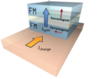
The spin degree of freedom can provide a basis for next-generation electronic devices. Spintronic devices typically include materials with magnetic ordering, such as ferromagnets or antiferromagnets. The state of the magnetization influences charge and spin current through an effect known as

Spintronics for Neuromorphic Computing

Ongoing
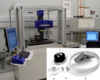
Magnetic tunnel junctions (see Fig. 1) consist of two thin films of ferromagnetic material separated by a few atomic layers of an insulating material. The insulator is so thin that electrons can tunnel quantum mechanically through it. The rate at which the electrons tunnel is affected by the

Standard Platinum Resistance Thermometer Calibration Laboratory (SPRTCL)

Ongoing
The SPRTCL provides an extensive list of calibration services that cover the whole temperature range for which long-stem SPRTs, including high-temperature SPRTs, are the ITS-90 interpolation artifacts. This range spans from the triple point of argon (-189.3442 °C) to the freezing point of silver

Standard Reference Materials: Standardization of 232U (SRM 4324c)

Ongoing
The certified massic activity for 232U was obtained by 4παβ LS spectrometry with two commercial LS counters. The beta detection efficiencies for the 232U daughters were calculated using the MICELLE2 code for the CIEMAT/NIST efficiency tracing (CNET) method with composition-matched LS cocktails of a

Standard Reference Materials: Standardization of 243Am (SRM 4332f)

Ongoing
The certified massic activity for 243Am was obtained by 4παβ LS spectrometry with two commercial LS counters. The beta detection efficiencies for the 243Am daughter ( 239Np) were calculated using the CN2003 code for the CIEMAT/NIST efficiency tracing (CNET) method with composition-matched LS

Standard Reference Materials: Standardization of 239Pu (SRM 4330d)

Ongoing
The certified massic activity for 239Pu was obtained by 4πα liquid scintillation (LS) spectrometry with two commercial LS counters. Confirmatory measurements were performed by LS counting comparative measurements against SRM 4330d, which was also standardized in 2009 by 4pa liquid scintillation (LS)

Structure, Defects, and Scattering in Graphene

Completed
The graphene honeycomb lattice is a key element in determining many of graphene's spectacular properties, which are desirable for a host of electronic applications. The graphene 6-fold symmetric lattice gives rise to charge carriers behaving like light-waves having zero mass. The charge carriers in

Subspace-Informed Deep Learning Solutions for Nanoscale Microscopy

Ongoing
Cutting-edge nanoscale microscopy techniques such as near-field scanning microwave microscopy (NSMM) and atom probe tomography (APT) enable a multi-dimensional virtual representation of an artifact to be constructed from a set of experimental measurements. These imaging techniques, which are

Super-Continuum Laser Solar Simulator

Completed
The design of the super-continuum solar simulator is shown below. Light is produced from 450 nm to 2400 nm in sub-nanosecond pulses at a repetition rate of 80 MHz. The total irradiance is sufficient to illuminate a 1 cm 2 cell at more than 1-sun. Initial tests have confirmed that solar cells respond

Super-resolution optical microscopy

Ongoing
Optical microscopy has been fundamental to science for four centuries, enabling resolution of the microscale. In the last two decades, scientists have made the remarkable discovery that super-resolution methods can extend optical microscopy deep into the nanoscale. It is now possible to detect and

Surface Texture and Forensic Topography

Ongoing
Surface texture and microform Surface texture affects the functionality of many products, ranging from bearings to semiconductors and optics. Affected properties include aesthetics, friction, wear, lubrication, sealing, light scattering, and conductivity. Improvements in parameters and metrology to

Temperature Sensitivity of Liquid Flow Meters

Completed
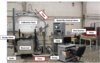
The Fluid Metrology Group is using NIST’s 15 kg/s water flow standard (Fig. 1) to test how coriolis meters are affected by liquid and environment temperatures. The water flow standard is a closed-loop, dynamic liquid flow calibration facility that is fully automated. For this work, calibrations were

Temporal Computing

Ongoing
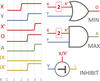
In standard integrated circuits, information that is coded as ones and zeros is implemented by voltages on wires being high or low. The circuits consume energy during transitions between these voltages. Binary numbers have a voltage per bit so there are a lot of transitions each time a number

Terahertz Imaging and Sources

Ongoing
Over the past several years, we have focused on bolometric detection of THz radiation. Our initial work on cryogenic detectors has been extended to antenna-coupled bolometers operating at room temperature. These detectors provide a rugged, low-cost alternative for homeland security applications; e.g
Was this page helpful?