U.S. flag

An official website of the United States government

Official websites use .gov
A .gov website belongs to an official government organization in the United States.

Secure .gov websites use HTTPS
A lock ( ) or https:// means you’ve safely connected to the .gov website. Share sensitive information only on official, secure websites.

Projects/Programs

Topic Area
Displaying 1176 - 1200 of 1667

Photon Absorbed-Dose-to-Water Primary Standards

Ongoing
Modeling of accumulated-dose dependence in the heat defect of H2/O2 exhibits expected peak behavior in qualitative agreement with experiment, and is being further refined for purposes of reducing the associated relative uncertainty from its present value of 0.3 %. Studies to quantify the possible...

Photon Drag in Metal Films

Ongoing
The photon-drag (PD) effect is the rectified electrical current in a medium generated by radiation pressure. That is, the optical force delivered to an illuminated metal results in a measurable voltage across the film (Figure, left). For decades, this effect in metals has been understood in terms of...

Photonic Dosimetry

Ongoing
With this effort, NIST is responding to industry needs for traceable, measurement solutions that can resolve spatial variations of absorbed dose at the level of individual components on a silicon wafer or bacteria on surgical instruments. Presently, there is only limited traceability to national...

Photonic Quantum State Imaging Metrology

Ongoing
Fundamental understanding of quantum behavior of single molecules, which is a favorable candidate for quantum information processing technologies, has advanced gradually, relying on empirical studies mostly. This requires a measurement platform to study fundamental quantum characteristics in single...

Photonic Radiometry

Ongoing
Meeting the needs of the photonics industry and anticipating emerging technologies requires investigation and development of improved measurement methods and instrumentation. This project develops state-of-art, absolute microfabricated thermal detectors with absorber coatings consisting of carbon...

Photonic Thermometry

Ongoing
Why do we need reliable temperature metrology? Temperature, the second most measured physical property after time and frequency, is indispensable to innumerable industries, military services, medicine, climate, and weather forecasts – precise, accurate, and rapid temperature metrology enables much...

Photopolymer Additive Manufacturing

Ongoing
NEWS September 2021: NIST and Radtech have launched a Photopolymer Additive Manufacturing Alliance (PAMA) to advance strategic goals for research, sustainability, and regulation in PAM. PAMA is on a mission to make photopolymer additive manufacturing (PAM) more accessible and to increase the safe...

Photopolymerization for Biomaterials

Completed
This project responds to priorities of National Institute of Dental and Craniofacial Research (NIDCR/NIH) for oral health by establishing clinical guidance/standards for adequate photocuring of restorative dental composites. Also, this project is intended to advance the knowledge relevant to thermal...

Physical Infrastructure: Connections

Completed
The NIST Physical Infrastructure Program will provide the critical measurement science needed to assess the condition of aging physical infrastructure and guide cost-effective strategies for its maintenance, repair, and replacement. Infrastructure management challenges in the U.S. have received...

Physical Layer Design and Evaluation

Ongoing
IEEE 802.11ay Physical Layer Modeling and Simulation NIST has developed models and simulation frameworks to evaluate the physical layer performance of IEEE 802.11ay under different channel environments based on real measurements. NIST IEEE 802.11ay EDMG Physical Layer Mode, implemented in MATLAB...

Physics and Hardware for Intelligence

Ongoing
Our work in this area can be separated into two categories: conceptual and experimental. Please read our publications linked below for more information. Experimental: Our latest generation of synaptic circuits are described in a 2024 paper published in APL Machine Learning. These circuits are our...

Pico-Watt ACR

Ongoing
Design Parameters for Improved ACR Sensitivity An absolute cryogenic radiometer (ACR) is an electrical substitution instrument for calibrating optical power. A bolometer designed so that virtually all incident optical power is absorbed by the radiometer, an ACR allows for absolute calibration...

Pipeline Safety

Ongoing
The U.S. operates more than 2.5M miles of natural gas, petroleum and hazardous liquid pipelines, crossing all 50 states and operated by more than 3,000 companies. Fluid hydrocarbon fossil fuels remain the world leading source of energy. The safest and most reliable means of transporting these fuels...

Plasma Metrology

Ongoing
Plasma, the fourth state of matter, is common in both nature (e.g., lightning, the earth's ionosphere, stellar objects) and in modern technology (e.g., semiconductor processing, lighting, plasma televisions, medical equipment). Yet despite this ubiquity, the plasma state is still a wide open...

Plasma Process Metrology

Ongoing
Intended Impact The model for rf bias effects that we have developed should make it easier for industry to select optimal operating frequencies and may stimulate the adoption of new methods for RF biasing, such as multiple-frequency bias and non-sinusoidal bias. NIST studies of electrical endpoint...

Platform for Realizing Integrated Molecule Experiments (PRIME)

Ongoing
Blackbodies realize a clear relationship between radiated power and temperature through Planck’s law. While a reliable instrument for temperature and power calibrations, blackbodies are afflicted with a plethora of systematics (e.g., non-ideal emissivity, propagation loss, temperature gradients...

A Point Process Model for Evacuation Flows: The Hawkes Mode

Ongoing
Results from a case study of evacuations of 14 office and residential buildings in the United States led us to model occupant exit times as a Hawkes point process, N(t). N(t) the number of evacuee exits in the time interval (0,t]. Because the Hawkes model is self-similar, human to human interaction...

Point and Shoot Face Recognition Challenge (PaSC)

Completed
Inexpensive "point-and-shoot" camera technology combined with social network technology motivates the general population to use face recognition technology. Users expect a lot; they want to snap pictures, shoot videos, upload, and have their friends, family and acquaintances more-or-less...

Point-of-Care Pharmaceutical Manufacturing & Precision Medicine

Ongoing
We are employing quality by design (QbD) and risk assessment (cause-and-effect) approaches to investigate production technologies ( e.g., drop on demand or inkjet printing platforms) and appropriate analytical control strategies for point-of-care manufacture of narrow therapeutic index drugs...

Polymer Advanced Manufacturing and Rheology

Ongoing
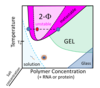
The manufacture of polymeric materials, whether from virgin or reclaimed sources, occurs under highly non-equilibrium conditions where temperature and stress fields evolve rapidly. The quality of the materials made from these processes depends not only on the composition of the starting material...

Polymer Analytics

Ongoing
This project focuses on a variety of activities to achieve the aforementioned goal of accelerating the discovery of new polymer physics. Enhanced machine learning Two major hurdles to applying machine learning to polymer science is a lack of large datasets and a need to understand the model...

Polymer Composites

Ongoing
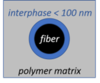
Measurements of interphase properties are extremely challenging, and their effects on macroscopic properties and performance of composites are poorly quantified. The objectives of this project fall into the following four research thrusts: Fluorescence Based Probes to Sense Damage and Water in...

Polymer Formulations

Completed
Bringing new and optimized formulated products to market requires measurements that will allow rapid assessment of the structure and properties of multicomponent mixtures over large parameter spaces. To this end, we are developing microfluidic "lab on a chip" technologies that enable researchers to...
Was this page helpful?