U.S. flag

An official website of the United States government

Official websites use .gov
A .gov website belongs to an official government organization in the United States.

Secure .gov websites use HTTPS
A lock ( ) or https:// means you’ve safely connected to the .gov website. Share sensitive information only on official, secure websites.

Projects/Programs

Displaying 1451 - 1475 of 1601

Sustainable Manufacturing Program

Ongoing
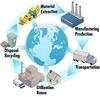
Objective: To develop and deploy advances in measurement science to achieve sustainability across manufacturing processes enabling resource efficiency and production network resiliency by 2016. What is the problem? Industrial interest in sustainable manufacturing has increased dramatically in recent

Sustainable Metals Processing and Alloy Development

Ongoing
Foundational measurement science is being developed to support sustainable innovations through alloy design and optimization. The integration of experiments and computational thermodynamics and kinetics tools with mechanistic models enables the prediction of key processing-structure-property

Synchrophasor Networks for Grid monitoring

Completed
It is well accepted that the Smart Grid will employ a variety of networking technologies. Although there has been tremendous advancement in networking technologies from an architectural point of view, those for smart grid applications need to be designed to ensure a high degree of reliability, self

Synchrotron Resonant Scattering and Diffraction

Ongoing
The Resonant Scattering and Diffraction effort seeks to develop measurements that provide spatial correlations in chemical, electronic, and physical structure in advanced materials. Scattering technology is developed as part of the NIST BNL partnership at the National Synchrotron Light Source II in

Synchrotron X-ray Absorbance Spectroscopy

Ongoing
The Absorbance Spectroscopy effort seeks to develop measurements that provide details of the local chemical, electronic, and physical structure in advanced materials. Spectrometer technology is developed as part of the NIST BNL partnership at the National Synchrotron Light Source II in Upton, NY

Synchrotron X-ray Spectroscopic Imaging

Ongoing
Building off technologies and expertise developed in the Synchrotron X-ray Absorption Spectroscopy project, the Spectroscopic Imaging effort seeks to develop measurements that provide spatial mapping of the local chemical, electronic, and physical structure in advanced materials. Technology is

Synthesis and longevity of candidate direct air capture (DAC) materials

Ongoing
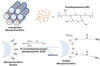
We have been working on the identification and development of repeatable synthesis techniques for DAC materials for the purposes of generating repeatable samples for evaluating DAC characterization techniques. We have initially focused on impregnated and grafted aminosilane-silica materials. We are

Synthetic Biology

Ongoing
New measurement methods and tools are required for biology to emerge fully as an enabling, practical platform for engineering. The Cellular Engineering Group works to provide a foundation of measurement assurance to support the control and rational design of biological function. Through state of the

Systems Analysis Integration

Ongoing
Purpose & Goal The purpose of the SAI Project is to reduce redundant and inconsistent information about systems and their analysis across the multiple engineering disciplines involved. Redundant and inconsistent information exists between: Systems and analysis models: discipline-specific analysis

Systems Analysis Integration for Smart Manufacturing Operations

Completed
Objective: Develop methods and protocols to facilitate analysis of smart manufacturing operations, by enabling efficient integration of smart manufacturing systems models and engineering analysis models. Technical Idea: Smart manufacturing system operations are difficult to manage because

Systems Integration for Additive Manufacturing

Ongoing
Objective: Deliver an information systems architecture, including metrics, information models, and validation methods to shorten the design-to-product cycle time in additive manufacturing (AM). Technical Idea: AM adopters are increasingly facing many of the challenges faced by early computer-aided

U.S. TAG for ISO/TC276: Biotechnology

Ongoing
Get involved: Interested U.S. Stakeholders may participate in the US TAG at no cost. Membership provides access to all ISO/TC 276 and US TAG documents, including standards under development. Please click here to join. Contribute to standards development: Please click here to review, submit comment

Tandem Mass Spectral Library

Ongoing
Intended Impact Modern mass spectrometers commonly generate ions by electrospray mass spectrometry which are separated and then fragmented by collisional dissociation. This process yields fragment ion ‘fingerprints’ (or mass spectra) that are widely used to identify the individual components in a

Targeting Membrane Proteins

Ongoing
Membrane proteins constitute approximately 30% of all cellular proteins. Nevertheless, this group of proteins is traditionally understudied due to limitations of the available analytical tools. Given the importance of membrane proteins in the various cellular processes and their potential as drug

Tattoo Recognition Technology

Ongoing
Tattoo Recognition Technology - Evaluation (Tatt-E) Tatt-E is a large-scale sequestered evaluation of tattoo recognition algorithms to support operationally relevant use cases, including tattoo identification, region of interest, tattoo detection/localization, matching sketches. For more information

Tattoo Recognition Technology-Challenge (Tatt-C)

Completed
Tatt-C Publications September 15, 2015: The first public report on Tatt-C has been published as NISTIR 8078 – Tattoo Recognition Technology – Challenge (Tatt-C) Outcomes and Recommendations. March 24, 2015: (The Tatt-C dataset is no longer available for public distribution) Mei Ngan and Patrick

Tattoo Recognition Technology-Evaluation (Tatt-E)

Completed
2018-Oct-31: Tatt-E report published The public report on Tatt-E has been published as NISTIR 8232 - Tattoo Recognition Technology - Evaluation (Tatt-E) Performance of Tattoo Identification Algorithms. The report documents empirical evaluation of 12 tattoo recognition algorithms from two providers

Teaching Liquid State Theory to an Artificial Neural Network (ANN)

Ongoing
Scientific questions: Can an ANN allow us to predict the structure of fluids that are impossible to predict numerically via liquid-state theory? Can we learn something about liquid-state theory itself by the nature of the trained ANN? What features do the hidden layers capture?

Technical Security Guidance Program

Ongoing
This program can increase the security of computer systems, networks, and data. It will increase understanding of new security technologies and the security implications of new IT technologies. Specifically, the program can have the following impacts: - Eliminate duplication of efforts across

Technological Advances in Aquaculture

Ongoing
According to the NOAA Fisheries of the U.S. report, in 2020 U.S. seafood consumption was estimated at ~6B pounds (~2.7 x 10⁹ kg). Of that, 85% is imported and U.S. exports have seen a significant decline. Globally, the U.S. ranked only 18th in aquaculture production (2020). NIST aims to enhance the

Temperature Sensitivity of Liquid Flow Meters

Completed
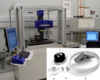
The Fluid Metrology Group is using NIST’s 15 kg/s water flow standard (Fig. 1) to test how coriolis meters are affected by liquid and environment temperatures. The water flow standard is a closed-loop, dynamic liquid flow calibration facility that is fully automated. For this work, calibrations were

Templated Assembly of Block Copolymer Films

Completed
Viable nanomanufacturing of templated block copolymers will require a capability to control orientation and line edge roughness of trillions of structures to within a single nanometer, however there are no existing platforms that meet this need. We are developing small angle x-ray and neutron

Temporal Computing

Ongoing
In standard integrated circuits, information that is coded as ones and zeros is implemented by voltages on wires being high or low. The circuits consume energy during transitions between these voltages. Binary numbers have a voltage per bit so there are a lot of transitions each time a number

Tension-Compression Testing

Ongoing
The inability to reliably predict the mechanical behavior of new automotive alloys during forming has generated strong demand for more advanced constitutive relationships and property data necessary to calibrate them. There is a particular need for models that incorporate combined kinematic and
Was this page helpful?