Official websites use .gov
A .gov website belongs to an official government organization in the United States.

Secure .gov websites use HTTPS
A lock (
) or https:// means you’ve safely connected to the .gov website. Share sensitive information only on official, secure websites.


Seeing Bits of Light

From the visible colors we can see to infrared radiation given off by animals to ultraviolet light, microwaves and X-rays from space, our world is full of light. Ancient sea creatures evolved eyes with the ability to detect light more than 500 million years ago. Ever since, the sensing of light has helped animals make their way in the world.
In recent times, scientists have extended our ability to sense and measure light using telescopes, microscopes, cameras, spectrometers and other devices. But just like our eyes, these classical sensors run into trouble when light becomes very faint. They need a minimum amount of light to “see” anything.
And sometimes, scientists study objects so faint or distant that every photon — the fundamental unit of light — counts. In such cases, they turn to a type of quantum sensor known as a single-photon detector. These detectors come in many flavors, each with its own advantages and trade-offs.
Transition-edge sensors
One of the most sophisticated single-photon detectors is the transition-edge sensor, or TES.
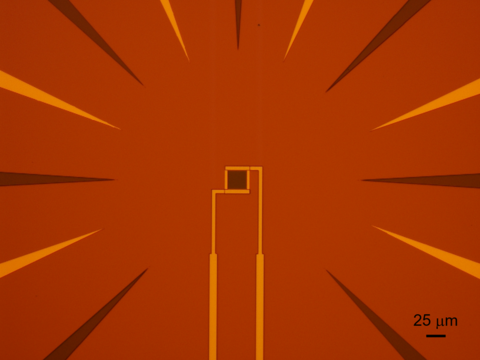
These sensors are made of thin films of materials with a special quantum property called superconductivity: When chilled to just above absolute zero, the material becomes a frictionless pipe for electric current, conducting electricity with no resistance.
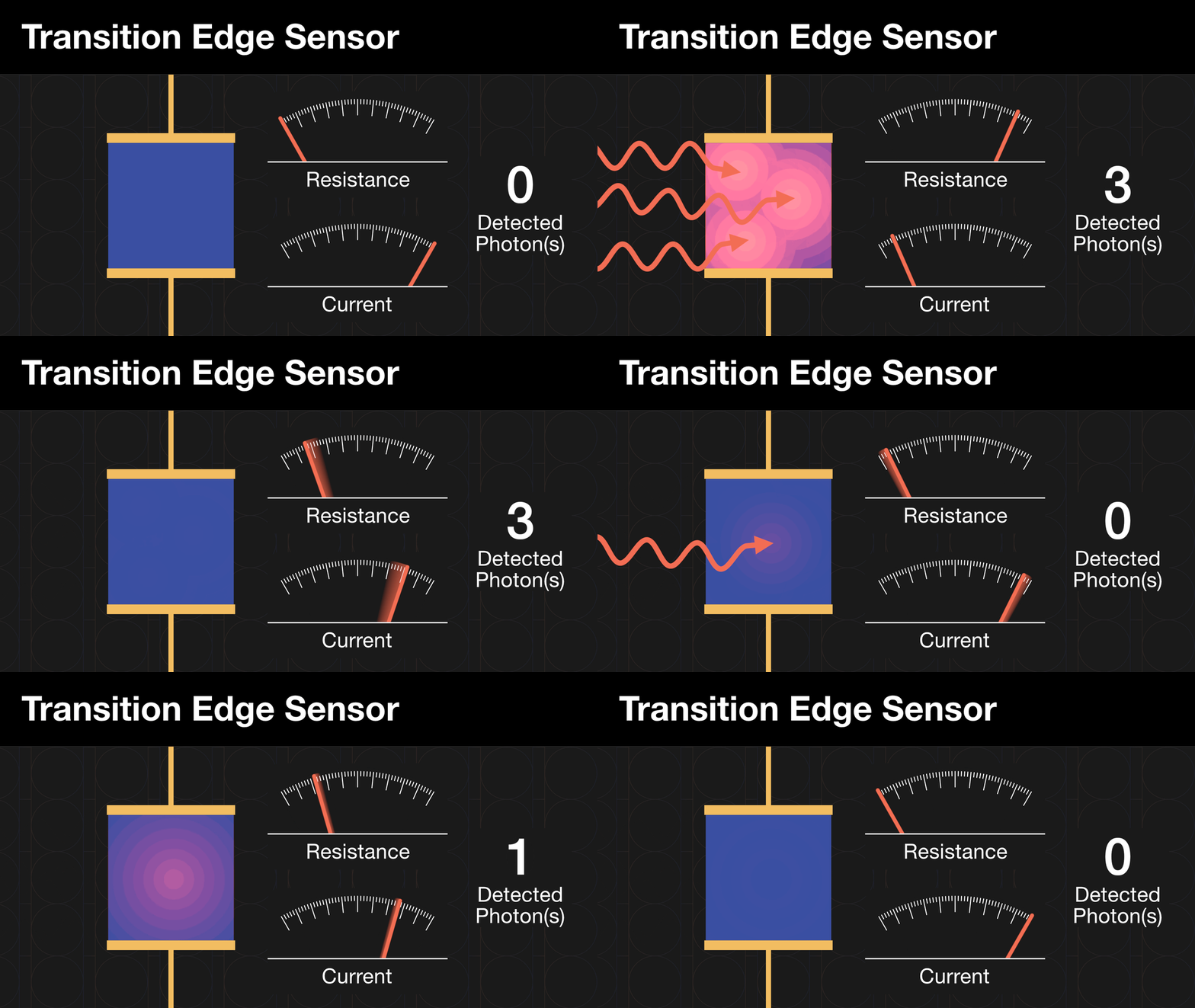
Each superconducting material has a “critical” temperature. Close to this temperature, the material balances on a knife’s edge: If it’s heated a tiny amount, it loses some of its superconducting ability. The material’s electrical resistance increases, and electrical current flowing through it plummets.
To turn that behavior into a sensor, scientists apply a small voltage to the film while cooling it to just below the critical temperature. When an incoming photon hits the sensor, the photon's energy heats the film, increasing the resistance. The resulting drop in current indicates that a photon has been detected.
TESs outperform all other detectors at counting exactly how many photons have hit them. Each additional photon heats the sensor’s superconducting material, further raising the resistance and causing an additional, measurable drop in current.
These devices are called transition-edge sensors because they operate at the transition between superconductor and nonsuperconductor. They can be designed to detect bits of light in many parts of the electromagnetic spectrum, from infrared to gamma rays.
Scientists use the unique capabilities of these powerful quantum sensors in a large and growing number of ways, including:
- Searching for dark matter
- Investigating how the universe began
- Detecting radioactivity
- Imaging computer chips
- Nuclear forensics
- Studying chemical reactions, light-matter interactions and fundamental particle physics
- Studying nuclear fusion reactions
- Biological imaging
- X-ray astronomy
- Quantum optics, photonic quantum computing and quantum networking
Superconducting nanowire single-photon detectors
When scientists need to detect photons but don’t need to count every photon individually, they may use a superconducting nanowire single-photon detector, or SNSPD. In these sensors, a thin wire made of a superconducting material twists and turns over a surface. Researchers hold the wire just below its critical temperature, typically around 1 to 2 degrees above absolute zero, while applying an electrical current that’s just below the maximum current at which the material can sustain superconductivity. An incoming photon heats an area of the wire and temporarily disrupts the superconductivity, locally increasing the resistance and creating a measurable voltage pulse.
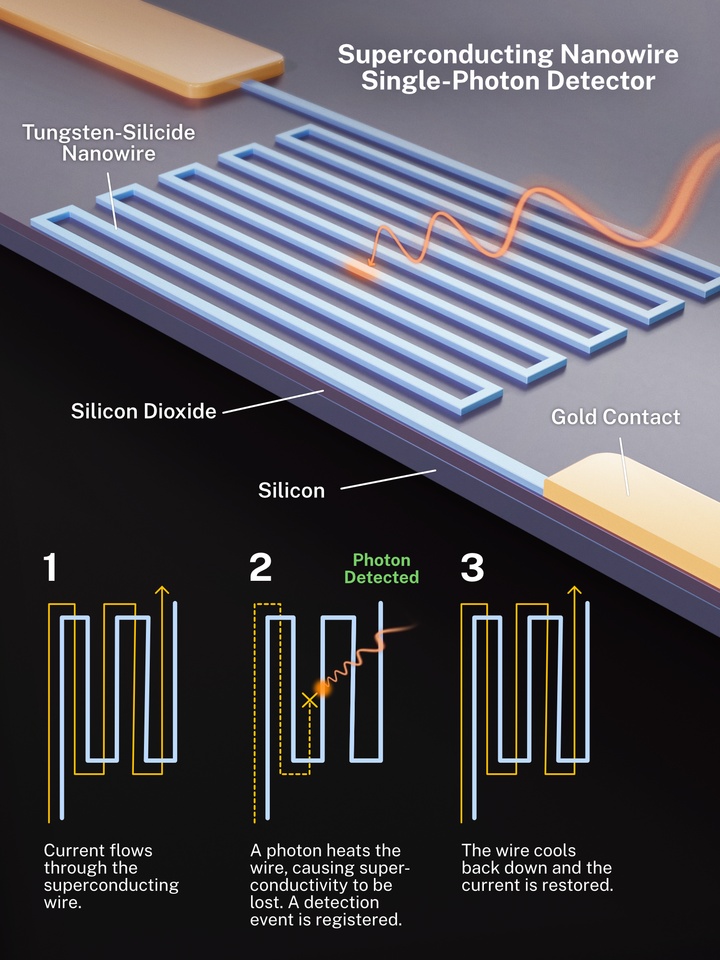
SNSPDs are less efficient than transition-edge sensors at capturing every photon that hits them. But they are simpler to operate and better at resetting themselves quickly after a detection. NIST researchers have arranged hundreds of thousands of these detectors in grids to make cameras that could someday detect very faint signals from distant objects in space such as exoplanets. Similar technology could sense photons from the brain, hints of dark matter or signals in a light-based quantum computer.
Magnetic kinetic inductance detectors
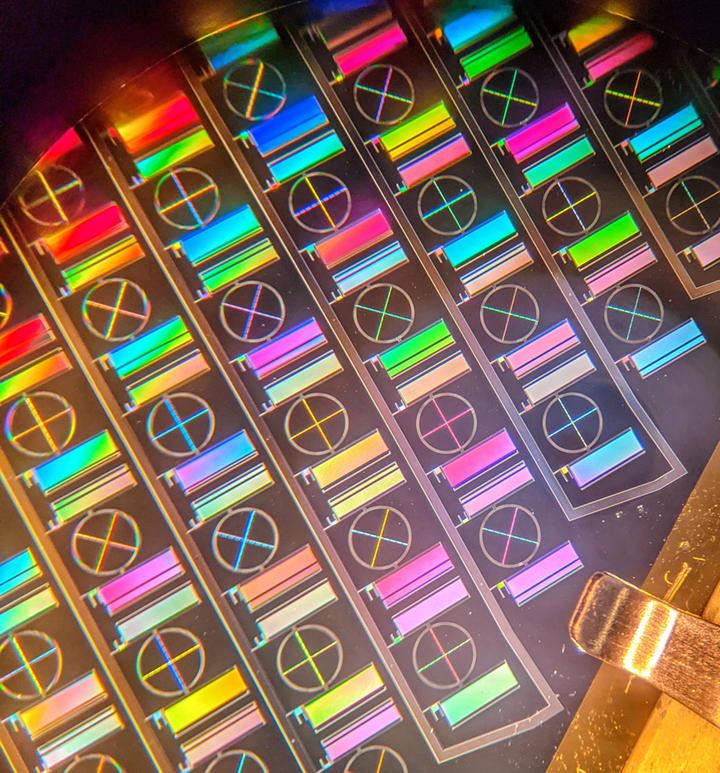
Magnetic kinetic inductance detectors, or MKIDs, work in a slightly different way. Incoming photons disrupt the electron flow in a superconducting resonating circuit (which is like an electrical “bell” that “rings” at a single frequency), causing a change in the frequency at which an electric current sloshes back and forth. The change provides information about the energy of the photon.
MKIDs are especially useful in astronomy. NIST researchers have assembled thousands of MKIDs into large arrays for instruments including the TolTEC camera on the Large Millimeter Telescope and the Prime-Cam instrument on the Fred Young Submillimeter Telescope.
Single-photon avalanche photodiodes
Not all single-photon detectors use superconductors. In a single-photon avalanche photodiode, or SPAD, an incoming photon triggers a small but measurable burst of current across a semiconductor — the type of material used to make computer chips. They are less effective than superconducting sensors at capturing and counting every photon that hits them, and slightly noisier. But SPADs can provide excellent timing resolution, and most importantly, they can operate at room temperature, making them much more compact, convenient and cost-effective than superconducting sensors.
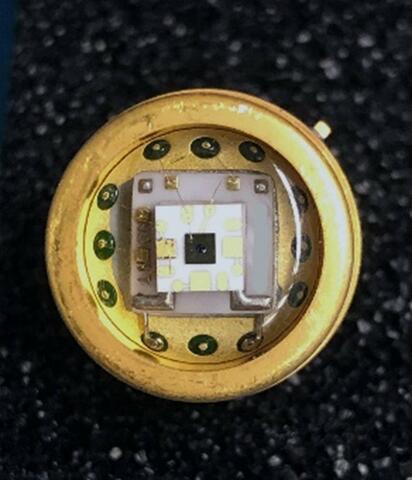
SPADs are a mature quantum sensing technology, used in applications such as optical communications, 3D imaging, PET scans, fluorescence microscopy and night-vision goggles. If you have a newer smartphone, it probably uses a SPAD combined with a laser to measure the distance to objects. This aids the camera’s automated settings and augmented and virtual reality applications.
NIST researchers are working to make these sensors more efficient so they can better support emerging quantum networking applications.
Photomultiplier tubes
Finally, there’s the photomultiplier tube, or PMT — perhaps the OG quantum sensor. It operates based on the photoelectric effect — the physical phenomenon whose Nobel Prize-winning explanation by Albert Einstein in 1905 launched the quantum revolution. These tubes use a series of metal plates to progressively amplify the signal created when one photon hits a piece of metal and dislodges an electron.
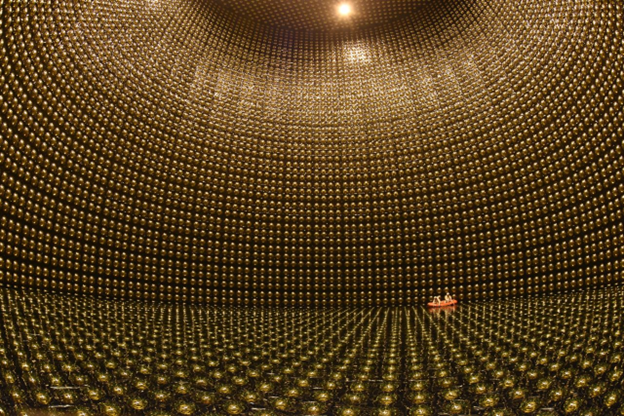
While more compact and efficient semiconductor-based sensors such as SPADs have largely replaced PMTs, they are still used in certain applications, especially ones that require detection of ultraviolet light or large detection areas. One example, shown below, is the Japanese detector Super-Kamiokande, which uses around 13,000 PMTs to detect faint light emitted when ghostly particles known as neutrinos collide with subatomic particles inside water molecules.