U.S. flag

An official website of the United States government

Official websites use .gov
A .gov website belongs to an official government organization in the United States.

Secure .gov websites use HTTPS
A lock ( ) or https:// means you’ve safely connected to the .gov website. Share sensitive information only on official, secure websites.

Projects/Programs

Topic Area
Displaying 201 - 225 of 1667

Calibrations: Neutron Device Calibrations

Ongoing
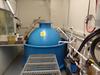
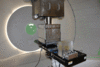
The Neutron Physics Group calibrates neutron radiation detectors used for personnel protection and irradiates personnel dosimeters in standard neutron fields. The fields are produced by unmoderated 252Cf and 252Cf moderated with a D 2O sphere (represented by the gray sphere near the center of the...

Calibrations: Neutron Source Strength

Ongoing
Calibrations are performed using the manganous sulfate bath technique in which the emission rate of the source to be calibrated is compared to the emission rate of NBS–1, the national standard Ra–Be photo-neutron source. Neutron source calibrations typically have a relative expanded uncertainty ( k...

Calibrations: Portable Manganese Sulfate Bath

Ongoing
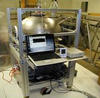
The Manganese Sulfate Bath uses a sphere of neutron-absorbing material that surrounds a neutron source. The induced radioactivity is a measure of the neutron source strength. Lower intensity sources provide less manganese activation, resulting in a reduced signal over background, and this signal-to...

Calibrations: Radioactivity Standard Reference Material Program

Ongoing
NIST radioactivity SRMs represent the national basis for accurate radioactivity measurements. SRMs for radioactivity measurements can typically be classified into three general categories: (1) environment and nuclear power, (2) medicine, and (3) basic and applied research using or involving...

CalNet

Ongoing
Electronics engineers use on-wafer calibration die to calibrate measurement equipment before characterizing or modeling semiconductor devices. While NIST pioneered on-wafer calibrations in the 1990’s, most industrial labs use commercial ‘Impedance Standard Substrates’ (ISS) that are manufactured by...

Cancer Biomarker Measurements and Collaborations

Ongoing
Collaborations and Cooperative Research Agreements We welcome collaborations and can help with assay validation and development of reference materials. Below are some examples of our collaborations and ways we can develop test materials. Early Detection Research Network (EDRN): Interagency agreement...

Cancer Genome in a Bottle

Ongoing
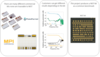
Goals: This project is an extension of the Genome in a Bottle Consortium to develop the technical infrastructure (reference standards, reference methods, and reference data) to enable translation of cancer genome sequencing to clinical practice and innovations in technologies. The priority of GIAB...

Carbon Capture, Use, and Storage

Ongoing
Carbon Capture, Use, and Storage (CCUS) requires a suite of technologies to capture carbon dioxide from industrial point sources, the atmosphere, and the ocean; convert carbon dioxide into products such as fuels, chemical feedstocks, and building materials; and sequester carbon dioxide deep...

Carbon Dioxide Measurements and Reference Materials

Ongoing
CO 2 Reference Materials The Gas Sensing Metrology Group at NIST has a long history of providing reference materials to industry, monitoring communities, and academia. The program began in the 1970’s by developing an initial suite of CO2 primary standard mixtures (PSMs) to support the US Department...

Carbon Dioxide Removal Consortium

Ongoing
Industry is developing a variety of carbon capture and removal techniques including nature-based, hybrid, and engineered solutions. The scientific understanding, measurements, and models of these complex systems are still evolving. Furthermore, advanced technologies that enhance the applicability...

Carbon Nanotube Reference Materials

Completed
Carbon nanomaterials are expected to play an important role in future technological developments of transistors, photovoltaics, transparent thin film conductors, sensors, and fuel cell electrodes among many potential applications. However, the potential of these materials has been hindered by a lack...

Cardiac Device Reliability

Ongoing
Impact and Customers This project will reduce the need for surgeries to replace failed implants, thereby improving safety and quality of life for implant recipients and reducing medical expense to society. It will provide assessment tools for the external electronic devices that support the...

Carrier Dynamics Measured by Ultrafast Time-Resolved Terahertz Spectroscopy

Ongoing
We employ ultrafast pulsed optical measurement techniques to directly monitor carrier generation, migration and relaxation dynamics in bulk semiconductors, polymers and mixed organic/organometallic photovoltaic nanofilms. These studies are conducted to measure (without contact) ultrafast carrier...

CBRS Sharing Ecosystem Assessment

Ongoing
Background: In 2020, FCC auction 105 auctioned licenses in the Citizens Broadband Radio Service (CBRS). CBRS (3.55 GHz to 3.7 GHz) has a three-tiered framework to accommodate shared federal and non-federal use of the band. The DoD 3.5 GHz Transition Plans focus on ecosystem validations...

CCQM Activities in the Gas Analysis Working Group

Ongoing
The results from these Key comparisons will be used to benchmark the appropriate Calibration and Measurement Claims (CMCs) of the participating NMIs. CMCs are basically the declared capabilities that an NMI offers to customers, and they are included in a searchable database at the BIPM web site...

CCQM Activities in the Organic Analysis Working Group

Ongoing
The results from these studies will be used to demonstrate the capabilities of participating NMIs for their similar measurement services, and eventually benchmark the appropriate  Calibration and Measurement Capabilities (CMCs) that summarizes this capability.  NIST CMCs that directly support SI...

Cell Line Authentication

Ongoing
Cell Line Authentication – The scientific community has responded to the misidentification of human cell lines with validated methods to authenticate these cells; however, there are few assays available for nonhuman cell line identification. We have developed multiplex polymerase chain reaction (PCR...

Cell Viability for Advanced Therapies

Ongoing
In the Biosystems and Biomaterials Division at NIST, we have established several technical programs to support the development and implementation of cell viability assays in advanced therapies. These programs address key needs in cell viability assay development including selection and development...

Cell-based Assay for Mechanistically-based Prediction of Cytoxicity

Completed
Ricin is a type 2 ribosome inactivating protein (RIP) belonging to the A-B family of toxins and is of particular interest because of its potential use as a biological weapon and the dearth of rapid and sensitive assays that could assist detection and decontamination. The ricin toxin inhibits protein...
Was this page helpful?