U.S. flag

An official website of the United States government

Official websites use .gov
A .gov website belongs to an official government organization in the United States.

Secure .gov websites use HTTPS
A lock ( ) or https:// means you’ve safely connected to the .gov website. Share sensitive information only on official, secure websites.

Projects/Programs

Topic Area
Displaying 1426 - 1450 of 1685

Smart Grid Interoperability Testbed Facility

Ongoing
Objective - To develop and progress an advanced multi-mode interacting measurement testbed that leverage cross-OU expertise to facilitate implementation, validation, and full characterization of smart grid interoperability standards and smart grid performance, with a particular emphasis on DER...

Smart Grid National Coordination

Completed
Objective: This project leads, coordinates and manages the national public-private stakeholder partnership effort to accelerate development of interoperability standards for the smart grid, fulfilling NIST’s statutory responsibility under the Energy Independence and Security Act of 2007 (EISA), and...

Smart Grid Program

Completed
Objective: To develop and demonstrate advances in measurement science to enable integration of interoperable and secure real-time sensing, control, communications, information and power technologies, in order to increase the system efficiency, reliability, resiliency and sustainability of the nation...

Smart Grid System Testbed Facility

Completed
Objective: To develop an advanced multi-mode interacting measurement testbed to facilitate implementation, validation, and full characterization of smart grid interoperability standards and smart grid performance. What is the technical idea? An interacting multi-mode measurement and characterization...

Smart Grid Testing and Certification

Completed
Objective: To accelerate the development of new test programs and improve existing test programs for smart grid interoperability and security by utilizing the ANSI/NEMA Interoperability Process Reference Manual (IPRM) testing and certification framework, and demonstrating benefits of testing and...

Smart Grid Wireless Network Security

Completed
Wireless local area networks (WLAN) can be deployed in various smart grid domains, such as the home area network (NAN), neighborhood area network (NAN), and substation area network (SAN). They offer a cost effective solution when compared with other wired or wireless options. However, to overcome...

Smart Infrastructure and Manufacturing

Ongoing
The U.S. economy relies on communications-enabled infrastructure and manufacturing for its fundamental operations as a society. The Internet of Things drives how we work, play, and live. From smart manufacturing systems to smart grid, intelligent vehicles, thriving communities, smart homes, and...

Smart Manufacturing Operations Planning and Control Program

Completed
The Smart Manufacturing Operations Planning and Control Program will enhance U.S. innovation and industrial competitiveness by facilitating the adoption of smart manufacturing systems (fully-integrated, collaborative manufacturing systems that respond in real time to meet changing demands and...

Smart Manufacturing Systems Design and Analysis Program

Ongoing
Smart Manufacturing has the potential to fundamentally change how products are designed, manufactured, supplied, used, remanufactured and eventually retired. Current smart manufacturing implementations are mostly at the plant level, and use information technology, sensor networks, computerized...

Smoke Stack Flow Measurement

Completed
The Fluid Metrology Group is using its smoke stack simulator (See Fig. 1.) and field tests in operating smoke stacks to critically test conventional and improved ways of measuring the flow of stack gases. In the NIST stack simulator, the inlet cone and reference (upstream) section of the simulator...

Software Assurance Metrics And Tool Evaluation (SAMATE)

Ongoing
The SAMATE project is an inter-agency project between the U.S. Department of Homeland Security and NIST, and consists of two parts: Development of metrics for the effectiveness of software security assessment (SSA) tools. assess current SSA methods and tools in order to identify deficiencies which...

Software and Data Carpentry

Ongoing
Software and Data Carpentry workshops conducted at NIST are designed to teach basic computing and data skills that enable NIST researchers to get more done in less time, while also making it easier to automate and document research workflows. These skills can allow for more rapid and reliable...

Software Defined Virtual Networks

Ongoing
Background Data networks have enabled extraordinary growth in capabilities such as email, the web, and social media; and today form the technical basis for our information-centric economy [1]. However, current network architectures and processes for technical evolution cannot support the complexity...

Software Performance Project

Completed
The mission of the Software Performance project is to strengthen the scientific foundations of software performance measurement ("metrology for IT"). Its goals are: Application: Replace unreliable common practices with rigorously-studied methods grounded in design of experiments Research: Solve...

Solid-state lighting metrology

Ongoing
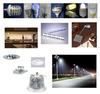
Light Emitting Diodes (LEDs) are increasingly being introduced into lighting market, and solid state lighting (SSL) is becoming a reality. But, this new technology still faces many challenges. Lighting consumes a huge amount of energy, currently 22% of all electricity consumed in the U.S. White LED...

Solvation Thermodynamics

Ongoing
Solvation thermodynamics data are essential in the characterization and interpretation of any process carried out in the liquid phase. The data have application in the study of biochemical processes such as protein folding and protein-protein association in aqueous fluids and are useful as...

Sources, detectors and metrology

Ongoing
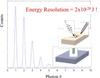
Detectors Detectors that can register individual photons are key to applications in quantum information, metrology, biology, and remote sensing, each having its own distinct detection requirements. In many ways, a single-photon detector is the device that spans the quantum-to-classical divide...

Speaker and Language Recognition

Ongoing
Current Speaker and Language Recognition Activities: Speaker Recognition Evaluation series: (1996-) A biennial NIST evaluation of fully automated text-independent speaker recognition technology. Human Assisted Speaker Recognition Evaluation series: (2010- ) A biennial NIST evaluation of approaches...

Special Functions

Ongoing
Special function evaluation is among the more venerable problems of numerical mathematics and remains a staple for engineers, physicists, and scientific computation. What is more, the need for detailed numerical evaluations grows steadily as new quantitative theories are developed for an increasing...

Spectral Reflectance and Transmittance

Ongoing
NIST serves as the nation's primary source for spectral reflectance and transmittance measurements from 250 nm to 2500 nm. Our reflectance and transmittance measurements support the measurement infrastructure of communities involved in optics, photonics, color technology, instrument manufacturing...

Spectrophotometry

Ongoing
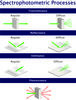
NIST uses spectrophotometric techniques to measure the optical properties of materials for dissemination of national measurement scales to its stakeholders and advancing the development of standards, measurement methods, and modeling capabilities. The beneficiaries of these activities include the...

Spectroradiometry of sources

Ongoing
The spectral radiance sources in the form of tungsten-strip lamps and integrating-sphere sources are calibrated in the Facility for Spectroradiometric Calibrations (FASCAL). The measurements are performed by the use of a prism-grating double monochromator whose spectral radiance responsivity is...
Was this page helpful?