U.S. flag

An official website of the United States government

Official websites use .gov
A .gov website belongs to an official government organization in the United States.

Secure .gov websites use HTTPS
A lock ( ) or https:// means you’ve safely connected to the .gov website. Share sensitive information only on official, secure websites.

Projects/Programs

Topic Area
Displaying 1301 - 1325 of 1667

Recaptured and Reclaimed Plastic Measurements

Paused
Plastics are a complex mixture of various polymer types with different chemical structures, shapes, and chemical additives. From microscopic nanoplastics (as small as 1 nm) to large megaplastics (over 1 m), plastic pollution poses significant measurement science challenges. By developing accurate...

Reconditioning of the 4.45 MN deadweight machine

Completed
The 4.45 MN DWM has been in use in the NIST Force Laboratory since 1965 and is frequently characterized as the largest deadweight force standard in the world. Thousands of measurements through many force calibrations have been performed over the lifespan of the machine. The machine was the...

Reduced Ignition and Flame Spread with Nano-Engineered Foam Project

Completed
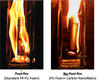
By 2015, this project aims to develop measurement science for (1) designing low-fire hazard soft furnishings using low-heat release, cost-effective, EHS-compliant nanoparticle fire retardant foam, (2) assessing the EHS attributes of nanoparticle fire retardants for polymer systems, and (3) creating a reference polyurethane foam with reproducible smoldering mass loss.

Reference Fluid Thermodynamic and Transport Properties Database (REFPROP)

Ongoing
REFPROP is a computer program, distributed through the Standard Reference Data program of NIST, that provides thermophysical properties of pure fluids and mixtures over a wide range of fluid conditions including liquid, gas, and supercritical phases. It contains critically evaluated mathematical...

Reference Material Production and Support

Ongoing
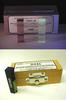
Bulk Cryogenic Production Large-batch cryogenic reference materials are produced using a specialized Palla VM-KT Vibrating Cryomill. The mill is pre-cooled to cryogenic temperatures using liquid nitrogen. Frozen material is fed through the inlet funnel to a vibrating chamber containing 26 titanium...

Reference materials for emerging and legacy organic contaminants

Ongoing
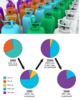
The Biochemical and Exposure Sciences Group (BSEG) produces environmental matrix and solution-based reference materials to support the environmental measurement community. These materials assist in identifying legacy organic contaminants such as polychlorinated biphenyls (PCBs)that were commonly...

Reference Materials and Methods for Vitamin D Binding Protein

Ongoing
Vitamin D is essential for bone health, and vitamin D deficiency can lead to rickets in children and osteomalacia (soft bones) in adults. Vitamin D status is typically monitored through measurement of the metabolite 25-hydroxyvitamin D [25(OH)D] in serum. Most 25(OH)D is tightly bound to its...

Reflectance Measurements of Human Skin

Ongoing
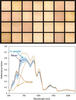
Investigations of the optical properties of human skin have largely been limited to the visible part of the electromagnetic spectrum, whereas many applications require high-quality reflectance data in the near infrared and short-wave infrared. Further, the complex and dynamic nature of skin results...

Refrigerants and Working Fluids

Ongoing
We apply a wide range of experimental apparatus to the task of measuring the properties of working fluids. Many of these instruments are the same as those used in our work on standard reference fluids, and our data for working fluids approach the accuracy of the reference fluids. Thermodynamic...

Reliability of Fiber Reinforced Composite Systems in Resilient Infrastructure

Ongoing
Objective - Develop methodologies to determine the resilience increase or loss of infrastructure by the application of FR composites to structural components. What is the technical idea? FR composites have been used in infrastructure applications to repair, retrofit (defined as strengthening and/or...

Reliability of Mechanical Systems in Buildings

Ongoing
Objective To develop AI-assisted Fault-Detection and Diagnostic tools for reliability and operating cost savings of residential air conditioners (ACs), heat pumps (HPs), and mechanical systems of large commercial buildings. Technical Idea NIST will develop and demonstrate cloud-based FDD methods for...

Reliability Metrologies for Advanced Electronic Interconnects

Completed
High-performance devices, such as microprocessors and memory chips, are typically composed of structures with strict dimensional tolerances and geometries and are made up of various materials, all in close proximity in a three-dimensional system. Material interactions lead to reliability issues such...

Reliable, High Performance Industrial Wireless Systems: Wi-Fi and TSN

Ongoing
Through collaboration with industry and academia, we will continue to develop model architectures for high-priority industrial use cases that include mobile robotic and collaborative platforms. We will continue to select use cases based on industry input and our independent research. In this project...

Reliable, High Performance Wireless Systems for Factory Automation

Completed
With the emergence of the Industrial Internet of Things (IIoT), Smart Manufacturing Systems provide a vision of future manufacturing that incorporate highly dynamic physical systems, robust and responsive communications systems, and computing paradigms to maximize efficiency, enable mobility...

Reliable Vaccine Storage

Completed
Our group examines best practices for the storage and monitoring of vaccines in partnership with the Centers for Disease Control and Prevention’s (CDC) Vaccine Supply and Assurance Branch. Vaccines are highly temperature sensitive, and inappropriate storage conditions can render them ineffective...

Remote Sensing Laboratory

Ongoing
The Remote Sensing Laboratory (RSL) is designed to address Earth-oriented remote sensing radiometry for the spectral region from the ultraviolet (UV) to the short wave infrared (SWIR), or 250 nm to 2500 nm. For spectral radiance, several lamp-illuminated integrating sphere sources are arranged...

Renewable Energy and Fuels

Ongoing
Fuel volatility and chemical characterization. We specialize in the Advanced Distillation Curve (ADC) method, developed at NIST, which is a powerful tool for the measurement of distillation curves to characterize complex fluids. We have applied this to simple hydrocarbons, gasolines, diesel fuels...

Renewable Polymers

Completed
In this project, use innovative measurements to optimize existing materials synthesis and discover new routes to polymers from renewable feedstocks by providing characterization methods that can describe the mechanisms and of enzymatic catalysis of polymers from renewable feedstocks and synthetic...
Was this page helpful?