U.S. flag

An official website of the United States government

Official websites use .gov
A .gov website belongs to an official government organization in the United States.

Secure .gov websites use HTTPS
A lock ( ) or https:// means you’ve safely connected to the .gov website. Share sensitive information only on official, secure websites.

Projects/Programs

Topic Area
Displaying 976 - 1000 of 1667

Multiplexed "Detectorless" Electrophoresis

Completed
Intended impact: In the biological sciences, there is an increasing need for measurement tools that can provide high-throughput, high-quality data (consider drug discovery and systems biology, for example). Capillary electrophoresis (CE) is fast, requires only small amounts of sample and reagents...

Multiscale MD-FEM Methodology

Completed
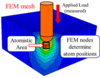
MSED, as a part of the MGI effort within NIST, is developing a multiscale modeling schema, statically coupling finite element modeling (FEM) to atomistic Molecular Dynamics (MD) 1. This methodology allows a far more realistic representation of physical phenomena than that obtained by applying each...

Multiscale Modeling and Validation of Semiconductor Materials and Devices

Ongoing
The limitations of scaling traditional CMOS (complementary metal-oxide semiconductors) designs have necessitated that the semiconductor industry consider new materials and design concepts. For wide bandgap semiconductor devices, optimization of materials and fabrication processes is needed to...

Multiscale structure and dynamics in advanced technological materials

Ongoing
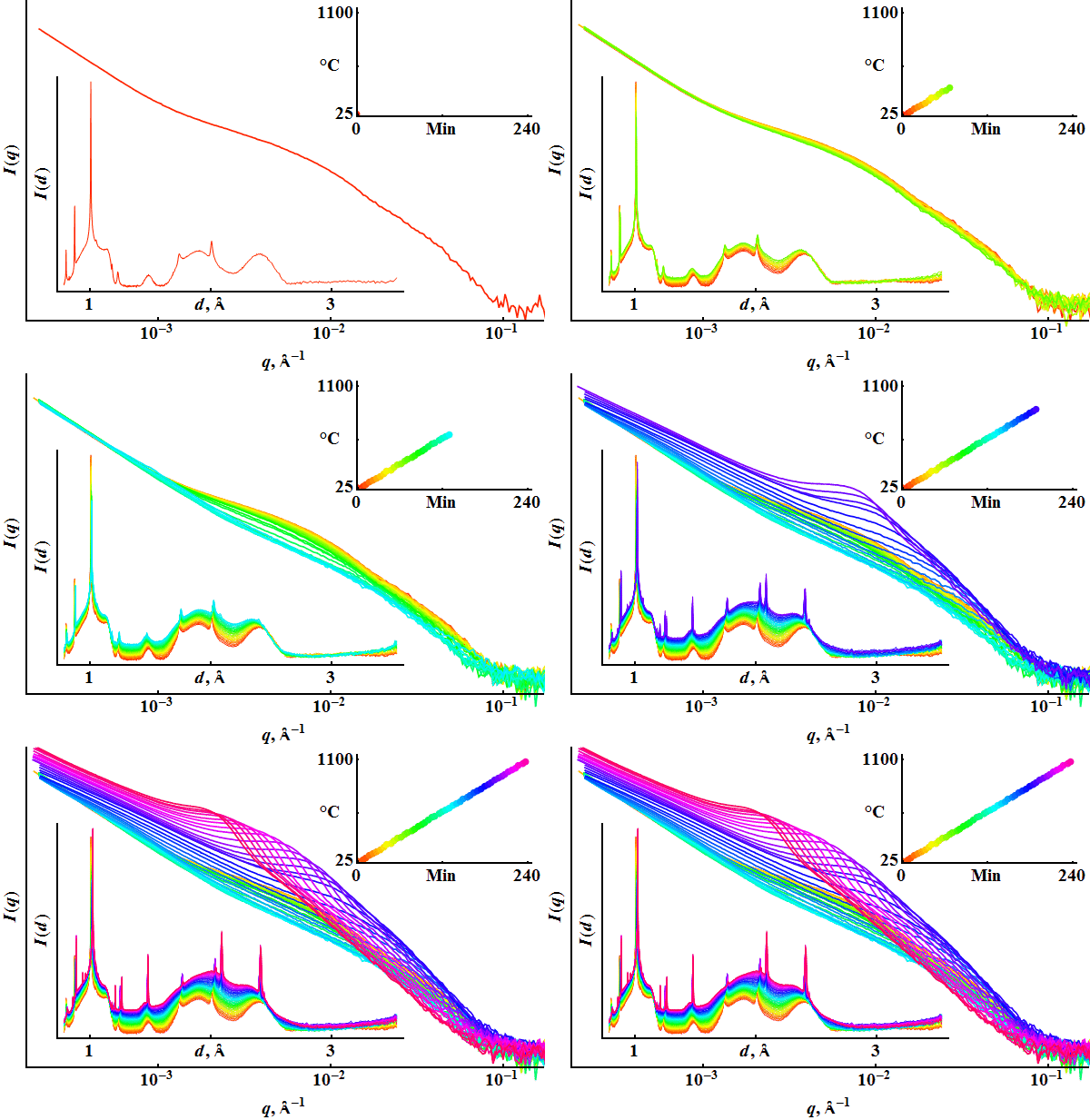
New technologies increasingly harness materials phenomena that operate across many length-scales: e.g., in selective gas adsorption, additive manufacturing, new alloy designs, or advanced concretes. To overcome technology barriers, it is no longer sufficient just to characterize the materials...

Nail to Nail (N2N) Fingerprint Capture Challenge

Completed
Updates 12 December 2019: Data from the Challenge has been released as Special Database 302. Future updates with N2N data will appear on the Special Database 302 page. 16 September 2019: We have begun work with Certified Latent Print Examiners to annotate our dataset with EFS Profile 2 information...

Nano-biophotonics for molecular imaging

Ongoing
Nano-biophotonics consists of four broad areas: molecular bioimaging; nano-biosensors; multiplexed bioassays ; and nanotechnology-based medical practices for diagnosis and therapy. Success in these areas is challenged by the underlying complexity of biological systems. Major levels of complexity and...

Nanocalorimetry

Completed
The global market for semiconductor chips is $270 billion. Growth in this industry is driven by the need to enhance performance by packing more transistors into the same chip area, with a relationship between feature size and time that approximately follows Moore's Law. As the feature size shrinks...

Nanocalorimetry Measurements

Ongoing
Accurate thermodynamic measurements are essential to understand fundamental properties of materials, providing direct and quantifiable insight into the thermodynamics of thin film reactions and phase transitions. Going forward, new classes of materials may only be synthesized as thin films, a scale...

Nanocalorimetry for Semiconductors and Semiconductor Process Metrology

Ongoing
In September 2022, NIST published a report titled Strategic Opportunities for U.S. Semiconductor Manufacturing , which cited, among other challenges, the need to understand and improve heat dissipation and performance in advanced microelectronics. Specifically, there needs to be better measurements...

Nanoelectromagnetics

Ongoing
The primary goal of this program is metrology that enables advanced nanoscale device (including electronics, spintronics, and life science) development. Based on current trends in electronics, we are focusing on metrology for two classes of devices: (1) nanoscale devices utilizing and exploring new...

Nanometer Scale Measurements of Crack Tips in Glass

Ongoing
Our approach is to fracture glass samples under controlled conditions in order to elucidate fracture mechanisms. Specimen geometries with well-defined fracture mechanics behavior are used to propagate cracks at controlled velocities ranging from 10-11 m s-1 to 102 m s-1. Fracture surfaces are then...

Nanometer-Scale Planar Reference Materials

Ongoing
In most industrial fabs today, foundry test artifacts (wafers) are used to test metrology tools and monitor process stability. These wafers are made in partnerships between specific materials providers and metrology tool providers and may have limited or no adoption across foundries. In some...

Nanoparticle Assembly in Complex Fluids

Completed
Engineered nanomaterials are promising for technological and medical purposes. However, molecular mechanisms of toxicology are less known. This presents a problem and barrier for future innovation and applications as new nanomaterials are developed for healthcare where particles are intentionally...

Nanoparticle Metrology in Complex Cellular Environments

Completed
Nanoparticle interactions with individual cells. Existing techniques to evaluate nanoparticle incorporation include ICP-AES or ICP-MS, which atomize entire samples (thousands of cells) and detect nanoparticles by quantifying the elemental composition. Bulk techniques provide general trends averaged...

Nanoparticle Tracking for Fluidic Self Assembly (Archived)

Completed
Over the last few decades, scientists have developed a sizable library of nanoscale "building blocks." These nanoparticles have novel thermal, optical, mechanical, and chemical properties relative to their macroscopic counterparts, and organized assemblies of these components promise vast...

Nanophononic Metamaterials for Thermoelectrics

Ongoing
About 68 % of the energy produced in the United States is wasted as heat lost to the environment. About a quarter of this lost heat is present at temperature gradients suitable for recovery with thermoelectric devices, which use the ability of semiconductors to generate electricity directly from...

Nanoplasmonics and Three-Dimensional Plasmonic Metamaterials

Ongoing
Plasmonic materials are composed of metals and insulators that are ordered in geometric arrangements with dimensions that are fractions of the wavelength of light. Research groups are experimenting with a variety of geometric approaches, but all aim to exploit surface plasmons, which are light...

Nanoscale, Element-Specific X-ray Imaging for Integrated Circuit Metrology

Ongoing
Industry roadmaps identify the characterization of nanoscale subsurface feature shape and composition as a measurement need for the semiconductor industry. However, IC interiors are difficult to probe post-manufacturing due to the presence of many close-packed and nanoscale subsurface features, of...

Nanoscale Property Measurements by Atomic Force Microscopy

Ongoing
Over the past several decades, Atomic Force Microscopy (AFM) has advanced from a technique used primarily for surface topography imaging to one capable of characterizing a range of chemical, mechanical, electrical, and magnetic material properties with nanometer resolution. Such characterizations...

Nanoscale Thermal Properties

Completed
It is known that at the nanoscale, composition and interface structure play important roles in determining the mechanical, thermal, and electrical properties of multiphase nanomaterials and nanocomposites. To probe the thermal properties of these heterogeneous nanomaterials, local thermal analysis...

Nanostructure Fabrication and Metrology

Completed
This project develops semiconductor nanostructures, especially self-assembled quantum dots and photonic crystals, for a variety of applications including single photonics, laser diodes, and quantum optical metrology. It also develops quantum optical metrology based on other sources and detectors...

Nanostructures for Energy Conversion

Completed
Transportation is the single largest contributor to U.S. carbon dioxide emissions. Moving to an electrically powered transportation system that draws on sustainable energy supplies has the potential to lower transportation costs, reduce greenhouse gas emissions, and help further reduce the nation's...
Was this page helpful?