U.S. flag

An official website of the United States government

Official websites use .gov
A .gov website belongs to an official government organization in the United States.

Secure .gov websites use HTTPS
A lock ( ) or https:// means you’ve safely connected to the .gov website. Share sensitive information only on official, secure websites.

Gaithersburg

Nanocalorimeter Measurement System

This Nanocalorimeter Measurement System is used for nanocalorimetry measurements at fast heating rates (100 °C/s to 100,000 °C/s) and measurements of samples

Nanocalorimeter Calibration System

The Nanocalorimeter Calibration System is used to calibrate each individual nanocalorimeter sensor chip used in the nanocalorimetry measurements project. The

Impact Mitigating Materials

The STG is developing improved test methods for assessing the ability of materials to protect against sporting and similar moderate rate impacts.

Model-Based Enterprise Summit 2018

Mon, Apr 2 - Thu, Apr 5 2018
The goal of the 2018 MBE Summit was to identify challenges, research, implementation issues, and lessons learned in

Metal Detection

Metal detection is the most commonly-used technology for finding metallic threats concealed on people. Hand-held metal detectors (HHMDs) and...

Sir Charles Oatley award - Michael Postek

In recognition of his many years of dedication to and work in the field of scanning electron microscopy including research, instruction, publications, and metrology, industrial and nanomanufacturing applications.

Through-barrier sensing and imaging

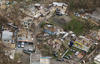
The Security Technologies Group (STG) develops the metrology for through-barrier sensing and imaging technologies. These nonmetal barriers may be ordered/structured, such as building walls, barricades, bridges, etc., or disordered, such as hedges and rubble. Because the purpose is to sense or image through these barriers, the frequencies (or equivalently, the wavelengths) of the electromagnetic energy used in these imaging systems is relatively low, typically between 100 MHz and 5 GHz (or between 3 m and 0.06 m). The lower frequencies typically have greater penetration through nonmetal barriers than the higher frequencies, but their spatial resolution is lower, which would affect image resolution.

2013 - NCWM Distinguished Service Award - Juana Williams

The recipient will have been a member of NCWM for at least ten (10) years, and made significant contributions to the enhancement of the organization as a whole through committee service, important contributions to standards development, served as a...

2010 Outstanding Young Scientist - Ian Spielman

From JQI press release: "By shining laser light and applying an external magnetic field with a gradient on a gas of neutral atoms in an ultracold state of matter known as a Bose-Einstein condensate, Spielman and his colleagues have synthesized an...

1998 Young Investigator Award - John D. Gillaspy

John D. Gillaspy, a physicist at the National Institute of Standards and Technology, received his Ph.D. in 1988 from Harvard University, where he also received his A.M. degree. His undergraduate work was at Stanford University. At NIST, he is leader...

Nailing Down Lumber Standards

Before you line up at the cash register in a building-materials store, you might want to ask yourself: Is that 8-foot, 2x4 board you’re...

NCNR 50 Year Symposium

Thu, Dec 7 - Fri, Dec 8 2017
Purpose To celebrate the achievements and illustrious lifetime of the NCNR. Description The NIST Bureau of Standards

2017 nSoft Annual Meeting

Thu, Oct 26 2017
The 2017 Annual meeting of the NIST nSoft Consortium was held on October 25-26, 2017 at the NIST Center for Neutron
Was this page helpful?