An official website of the United States government
Here’s how you know
Official websites use .gov
A .gov website belongs to an official government organization in the United States.
Secure .gov websites use HTTPS
A lock (
) or https:// means you’ve safely connected to the .gov website. Share sensitive information only on official, secure websites.

For some, it is a shocking revelation. But most Americans eventually come to accept the fact that a “two by four” board is actually 1.5 inches by 3.5 inches (38...
When your heart beats, blood courses through your arteries in waves of pressure. These pressure waves manifest as your pulse, a regular rhythm unperturbed by...
Last year, upwards of 25 trillion cubic feet of natural gas were delivered to customers in the United States, and when it changed hands, nearly every cubic foot...
When you walk into the laboratory that houses NIST’s newest coordinate measuring machine (CMM), you might be puzzled at first about how engineers got it into...
It is often the case that a valuable new industrial capability brings with it a whole new set of challenges for measurement science -- and thus, inevitably, for...
We see the world in reflection: Nearly all the light that enters our eyes has bounced off something first, bringing with it information about the nature of the...
A multi-kilowatt laser beam can cut through steel and melt bricks into glass. Many industries use high-power lasers like these to precisely cut and weld metals...
What if there were a wearable fitness device that could monitor your blood pressure continuously, 24 hours a day? Unfortunately, blood pressure (BP)...
Next year, scientists expect to change the way we define the basic units with which we measure our universe. An article by scientists at the National Institute...
Neutron detectors and sources play critical roles in national defense, homeland security, nuclear power plant control, radiation medicine, petroleum exploration...
Physicists at the National Institute of Standards and Technology (NIST) have cooled a mechanical object to a temperature lower than previously thought possible...
On Jan. 9, 2017, President Obama named 102 scientists and researchers as recipients of the Presidential Early Career Awards for Scientists and Engineers (PECASE...
NIST is frequently asked to provide unusual, sometimes downright exotic, measurements and calibrations in support of U.S. commerce. But even old hands in the...
Using their advanced atomic clock to mimic other desirable quantum systems, JILA physicists have caused atoms in a gas to behave as if they possess unusual...
Nanoparticles -- those with diameters less than one-thousandth the width of a human hair -- are increasingly prevalent in high technology, medicine, and...
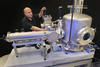
Scientists at the National Institute of Standards and Technology (NIST) have developed a new device that measures the motion of super-tiny particles traversing...
Lately, neutrinos – the tiny, nearly massless particles that many scientists study to better understand the fundamental workings of the universe – have been...
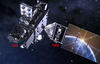
On Nov. 19, 2016, America’s most advanced weather satellite rocketed into orbit carrying six new, state-of-the-art instruments, dramatically enhanced...
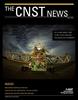
The NIST Center for Nanoscale Science and Technology) (CNST) is pleased to announce the release of the Fall 2016 edition of The CNST News. This quarterly...
What could be better than a world-leading atomic clock? Two clocks in one. Physicists at the National Institute of Standards and Technology (NIST) have combined...
When the kilogram, the world’s basic unit of mass, gets a new definition in 2018, it will be based not on a physical artifact but a constant of nature. However...
In science, sometimes the best discoveries come when you’re exploring something else entirely. That’s the case with recent findings from the National Institute...
Fundamental constants are physical quantities that are universal in nature. For example, the speed of light in vacuum and the charge of a single electron are...
If you spend time in physics research circles, you may have heard of the big G controversy. The universal constant of gravitation, G – affectionately known as...
For the first time in a laboratory setting, NIST scientists have made stop-action x-ray measurements of the way visible light interacts with atoms and molecules...