

Official websites use .gov
A .gov website belongs to an official government organization in the United States.

Secure .gov websites use HTTPS
A lock (
) or https:// means you’ve safely connected to the .gov website. Share sensitive information only on official, secure websites.


Research Areas
NIST laboratories conduct targeted, cross-disciplinary research across the lifecycle of critical minerals and materials (CMMs). Select a specialized research focus below to view our portfolio of active projects, publication databases, and laboratory capabilities.
Jump to: Substitution and Alternatives | Traceability and Supply Chain Resilience | Identification, Characterization, and Quantification | Separation and Recovery
To insulate domestic industries from raw material shortages, NIST is advancing computational models, data-driven frameworks, and autonomous testing environments required to design and discover CMM-free or CMM-lean alternatives.
In Situ Structural Metrology and Autonomous Experimentation for Critical Materials
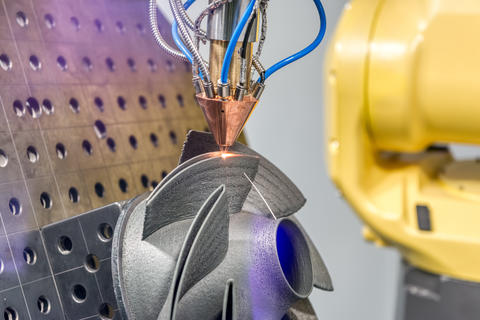
NIST combines advanced additive manufacturing, autonomous experimentation, and in situ structural metrology to accelerate the evaluation of critical materials and alternative material systems. A flexible six-hopper additive manufacturing (AM) platform enables rapid exploration of composition and processing spaces, while high-speed diffraction measurements reveal the phase transformations and microstructural evolution that govern material performance. These capabilities support critical material substitution, qualification of alternative feedstocks, reduced reliance on critical elements, and the development of measurement methods that facilitate industrial adoption of new materials and advanced manufacturing technologies. Contact: Howie Joress, Fan Zhang
Cobalt-Free Structural Alloys
While cobalt-free maraging steels are commercially available, they may exhibit lower strength after standard processing compared to traditional cobalt-containing alloys. To bridge this performance gap, NIST is evaluating how additive manufacturing build parameters and heat treatments can be adjusted to optimize the material's internal structure. This research supports the development of processing and post-processing methods that may help cobalt-free maraging steel reach performance parity with legacy materials in demanding industrial applications. Learn more by reading the NIST Technical Note on cobalt-free alloy heat treatments and the NIST Internal Report on cobalt-free alloy build parameters. Contact: Nik Hrabe
Minimization of CMM Use
NIST has identified opportunities to reduce the volume of CMMs required for specific functions. In catalysis applications, researchers envision leveraging electrochemical atomic layer deposition to create core-shell architectures, where a thin layer of a platinum group metal (PGM) is deposited on a non-PGM substrate. This process could enhance catalytic performance while reducing CMM usage and allowing for the exploration of thickness-dependent properties in multilayer films. The process has been demonstrated on various substrates and has potential applications in microelectronics, additive manufacturing, and fuel cells, where it can improve catalyst lifetimes and reduce costs. Contact: Thomas Moffat
NIST is advancing measurement methods, modeling, and data systems to understand and track CMMs and their derivative products through supply chains.
CMM Demand Forecasting
NIST is advancing material flow analysis (MFA) and diffusion modeling to project long-term domestic CMM demand and supply via recovery. This data-driven forecasting maps the current circulating mass of CMMs (such as neodymium, dysprosium, gallium, indium, and cobalt) to help stakeholders anticipate market shifts as domestic technology production scales up. Read more. Contact: Nehika Mathur.
Decision-Support for Secondary Markets
NIST is developing computational, agent-based frameworks that simulate complex, localized interactions between decommissioning firms and manufacturers. By evaluating cost-sharing and willingness-to-adopt factors, these models facilitate open-loop recovery pathways, in which materials from one industry (e.g., solar photovoltaic waste) serve as feedstocks for another (e.g., the automotive or glass industries). Contact: Nehika Mathur
Supply Chain Traceability
NIST is advancing a conceptual Manufacturing Meta-Framework through the National Cybersecurity Center of Excellence to explore traceability principles across complex and distributed manufacturing ecosystems. The initial focus of the framework is on discrete manufacturing and software, though its foundational concepts offer potential future applications for broader sectors, including CMM supply chains. This framework explores how organizations can independently verify product provenance and pedigree data to manage supply chain risk without exposing proprietary business operations. Read more. Contact: Michael Pease
NIST is leveraging a multi-scale metrology portfolio to identify, characterize, and quantify CMMs across their entire lifecycle, from geological exploration and primary extraction to the analysis of complex, heterogeneous secondary waste streams.
Analytical Instrumentation
MML’s Chemical Sciences Division maintains a suite of analytical capabilities, including neutron-based analytical methods (neutron activation analysis (NAA), prompt gamma activation analysis (PGAA), and neutron depth profiling (NDP)), inductively coupled plasma mass spectrometry, optical emission spectroscopy (ICP -MS, - OES), X-ray fluorescence spectroscopy (XRF), and a host of industry utilized methods (gravimetry, coulometry, titrimetry) that measure elemental content, speciation, and isotopic signatures. Contact: Michael Winchester, Nicholas Sharp
Additionally, hyperspectral imaging standards, managed by the Physical Measurement Lab, can facilitate geographic and geological exploration of CMM stockpiles by providing a spatially scalable remote sensing modality – ranging from microscopic to satellite scales – that utilizes spectral signatures for the rapid identification and quantification of minerals. Contact: David Allen
High-Resolution X-ray Microcalorimetry
NIST is advancing X-ray microcalorimetry analysis to characterize elemental composition and distribution in microstructures, providing significant improvements in energy resolution over conventional energy-dispersive X-ray spectroscopy. A microcalorimeter X-ray detector, in conjunction with a scanning electron microscope (SEM) has been demonstrated to be a practical instrument for quantitative analysis. Contact: Terrence Jach
Characterization and Metrology for Battery "Black Mass"
NIST is advancing the analysis of battery "black mass," shredded or size-reduced end-of-life lithium-ion batteries, and battery manufacturing scrap. NIST is investigating various measurement methods such as inductively coupled plasma optical emissions spectroscopy (ICP-OES), prompt gamma activation analysis (PGAA), and neutron depth profiling (NDP) to accurately quantify "payable" elements such as cobalt, nickel, and lithium, while identifying detrimental impurities, including fluorine, phosphorus, and chlorine. Read more. Contact: Jamie Weaver
Quantitative Elemental Analysis of Electronic Scrap
NIST is investigating the fate of critical minerals in electronics recycling processes to improve their recovery. The activity involves characterizing the elemental compositions of bulk-separated material streams from e-scrap recycling using various analytical methods, including inductively coupled plasma optical emissions spectroscopy (ICP-OES), X-ray fluorescence (XRF), prompt gamma activation analysis (PGAA), and neutron activation analysis (NAA). Understanding how critical minerals are distributed during the initial shredding and sortation process could help identify opportunities for system improvements, such that recyclers can better assess the value of their e-scrap streams and recover more critical minerals. Read more. Contact: Nicholas Sharp
By providing fundamental thermodynamic data and kinetics modeling, NIST establishes the baseline parameters needed to optimize and scale commercial mineral extraction and chemical refinement.
Thermodynamic Quantification for Microelectronic Waste
NIST addresses supply chain vulnerabilities in the semiconductor industry by establishing a metrological foundation for the separation and recovery of key CMMs, specifically gallium, indium, and antimony, from microelectronic waste. The effort employs a multi-faceted approach, utilizing pyrometallurgical, membrane/sorbent (solution separation), and electrochemical methods to characterize material behavior across various recovery pathways. Contact: Andrew Iams, Avery Baumann, Lucas Flagg
Advanced Metals Processing Pathways
NIST is establishing an integrated, high-throughput workflow for the design, fabrication, and testing of metallic alloys that reduces reliance on primary CMM sources. This effort leverages computational thermodynamics to explore novel alloy compositions that can be used to replace CMM alloying elements in existing metallic materials or to develop impurity-tolerant alloys. Target compositions are synthesized using various advanced processing routes. For example, novel metallic powders can be produced using an ultrasonic atomizer and evaluated in the NIST System for AM Alloy Development (SAMAD) for precise compositional control and high-throughput property validation. Read more. Contact: Andrew Iams
Impurity-Tolerant Alloy Design
The increasing global demand for structural alloys, such as steel and aluminum, has fostered an increase in the use of scrap to reduce cost, energy consumption, and reliance on primary CMM sources. This shift creates an inherent challenge of potential contamination introduced with recycled metals. Impurities are known to promote the formation of deleterious secondary phases during processing that adversely affect ductility, formability, and corrosion resistance. This research integrates advanced characterization methods to evaluate the role of the impurities on the material performance with computational-based microstructure evolution models to design new impurity-tolerant alloys. Contact: Mark Stoudt, James Zuback