U.S. flag

An official website of the United States government

Official websites use .gov
A .gov website belongs to an official government organization in the United States.

Secure .gov websites use HTTPS
A lock ( ) or https:// means you’ve safely connected to the .gov website. Share sensitive information only on official, secure websites.

Projects/Programs

Displaying 1 - 25 of 30

Additive Manufacturing Fatigue and Fracture

Ongoing
RESEARCH HIGHLIGHTS FACILITIES and CAPABILITIES PUBLICATIONS - see individual staff webpages on right POST-DOCTORAL OPPORTUNITIES - jump to section below Metal additive manufacturing (AM) is not used in fatigue and fracture critical applications despite industrial need. The goal of this project is

Additive Manufacturing Part Qualification

Completed
Objective To develop and deploy test methods and protocols, standard test artifacts, exemplar data, data processing tools, and automation tools that create robust post-process measurements and non-destructive testing to enable qualification of AM parts by manufacturers. What is the Problem? To

Charpy Machine Verification Program

Ongoing
The Charpy test is a high loading rate test that measures the energy absorbed during fracture, hence providing an indirect measure of impact toughness. For a Charpy machine to maintain an accurate absorbed energy scale, periodic verification with certified specimens is required. To achieve the

Data Driven Decision Support for Additive Manufacturing

Completed
Objective To develop and deploy the metrics, models, and best practices for using product definition, advanced analytics, and machine learning methods in additive manufacturing design and process planning to reduce lead times and support first-part-correct goals. Technical Idea Future advancements

Data Integration and Management for Additive Manufacturing

Completed
Objective Data plays the most critical role in linking AM lifecycle and value chain activities and streamlining the AM development process. While the AM data from a single build is essential for establishing part traceability, when methodically collected, the full processing history of thousands of

Electronic Material Characterization

Ongoing
Manufacturing optimized devices that incorporate newly-emerging materials requires predictable performance throughout device lifetimes. Unexpected degradation in device performance, sometimes leading to failure, is often traceable to poor material reliability. Reliability is rooted in the stability

Hierarchical Materials

Ongoing
The STG develops the methods and metrology that will lead to the understanding of the structure-property relationships of hierarchical composites in real medical PPE or protective applications, which heretofore has been lacking. This work establishes in situ monitoring of advanced manufacturing

Material Qualification

Ongoing
Objective To develop, utilize, and analyze methods of characterizing the precursor materials in additive manufacturing in both virgin and recycled states with the goal of advancing measurement science to benefit the AM community. The components of principal interest will include the rheological

Measurements of Point-Defect Chemistry in Complex Oxides

Ongoing
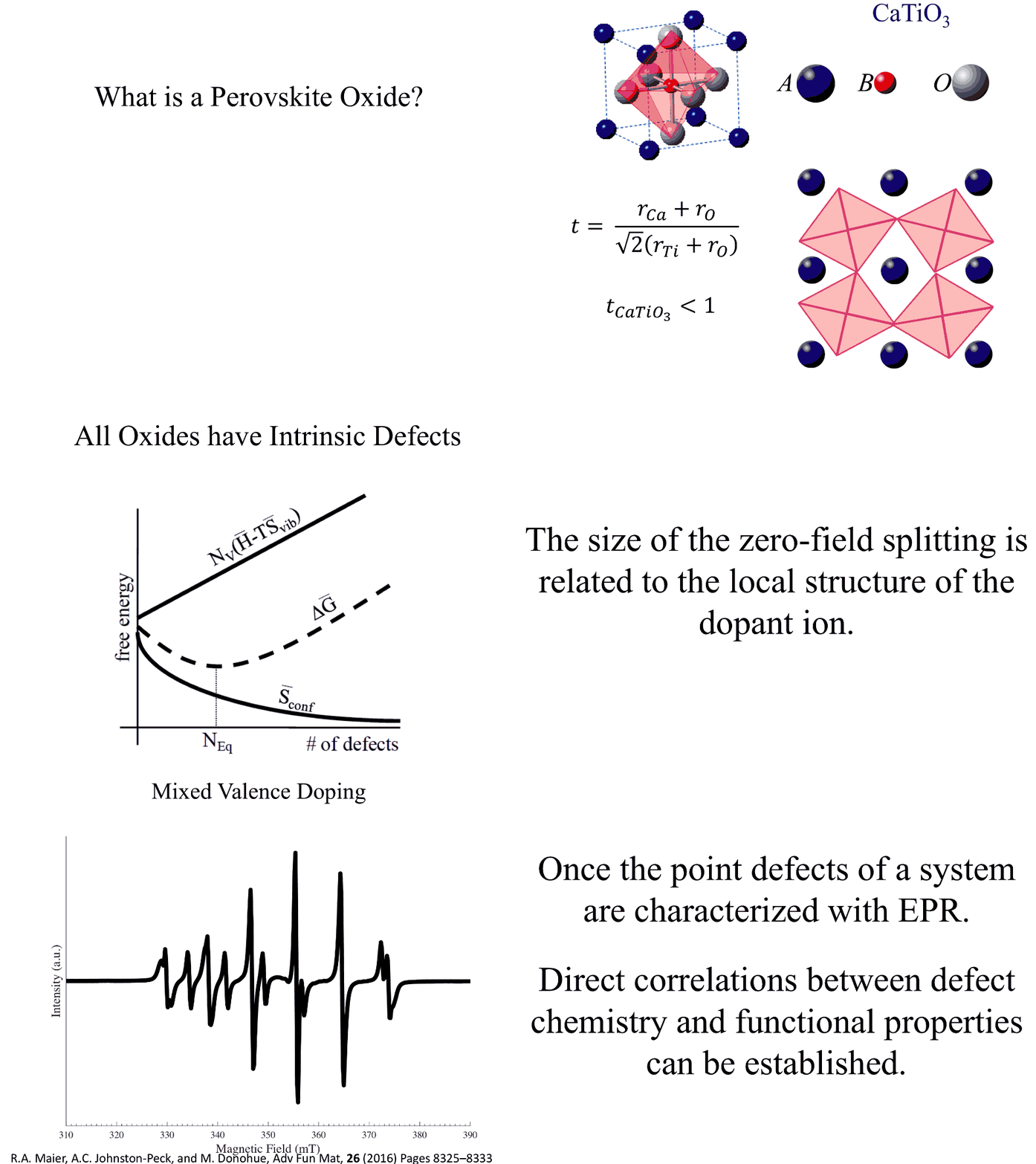
Project Goal: To develop magnetic resonance, x-ray absorption, electron diffraction, and electrical conductivity measurements to better characterize dilute concentrations of point defects in oxide materials and effectively correlate electro-mechanical properties to measured defect chemistry. Oxide

Metrologies for Non-linear Materials in Impact Mitigation

Ongoing
Overview This project develops fundamental structure-property measurements on model materials and novel material chemistries from quasi-static to dynamic rates. The goal is to foster a materials by design approach for novel energy dissipation and force re-direction mechanisms. Processing-Structure

Multifunctional 3D Printable Polymer-Metal Composites

Ongoing
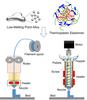
Recent advances in additive manufacturing (AM) have positioned metals and polymers as two key materials. Typically, AM of these two materials involves incompatible methods and conditions. The novel multifunctional polymer-metal composites in this project incorporate low-melting alloys with

Nanoscale Property Measurements by Atomic Force Microscopy

Ongoing
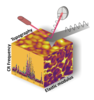
Over the past several decades, Atomic Force Microscopy (AFM) has advanced from a technique used primarily for surface topography imaging to one capable of characterizing a range of chemical, mechanical, electrical, and magnetic material properties with nanometer resolution. Such characterizations

NCAL: Data Management

Ongoing
In the mechanical testing and materials science communities there is not a widely accepted solution for data management of test data. As part of NIST efforts on data archiving, provenance, and availability, we have worked to improve our data practices. We have extended our system beyond many out-of

NCAL: Diffraction Stress Measurement Under Applied Load

Ongoing
Using X-ray diffraction (XRD) techniques one can measure the full stress tensor just inside the surface of a sheet metal specimen under applied loading. This permits the measurement of biaxial stress states resulting from directly applied deformation (see NCAL: Multiaxial Material Performance) or

NCAL: Intermediate Strain Rate Testing

Ongoing
This project seeks to improve servohydraulic testing methods at intermediate strain rates by addressing the well-known problems associated with excessive stress oscillations (ringing) that currently limit our understanding of the mechanical behavior of engineering materials for loading conditions

NCAL: International Documentary Standards Activities

Ongoing
NIST Center for Automotive Lightweighting (NCAL) staff participate in many different international standards committees (e.g. ISO TC 164, ASTM E28 and D30); however, our main focus has been in the mechanical testing of metals and, to a lesser extent, composites. We work on the calibration and

NCAL: Materials Testing 2.0

Ongoing
The traditional approach to calibrating material models, known as Materials Testing 1.0, is a time-consuming and costly process that requires multiple experiments to be performed on different types of testing equipment. This not only results in high capital costs for testing machines but also leads

NCAL: Multiaxial Material Performance

Ongoing
Modern metal forming methods are designed and optimized using digital models of specific manufacturing operations. These models rely on a precise understanding of the mechanical behavior of sheet materials as they undergo multiaxial loading out to large plastic strains without failure (necking or

NCAL: NIST Center for Automotive Lightweighting

Ongoing
The ongoing development of new, advanced lightweight materials presents opportunities for the USA automotive industry to produce better, more reliable and less expensive products provided the new materials can be efficiently manufactured. The use of lightweight materials in automobiles, such as

NCAL: Quantifying Crystallographic Texture and Phase Fraction

Ongoing
Predicting the deformation and force response of a polycrystalline material with the level of accuracy needed by today’s manufacturers requires knowledge of the aggregate deformation and force response of all the grains in the material. Polycrystalline materials will respond differently depending on

NCAL: Tension-Compression Testing

Ongoing
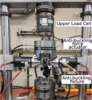
The inability to predict the mechanical behavior of new automotive alloys during forming has generated strong demand in industry for more advanced material models and test methods necessary to calibrate them. Industry is particularly interested in modeling the behavior of advanced sheet metals

Polymer Mechanics

Ongoing
The mechanical behavior for polymers is very sensitive to the deformation rate of the impact test. Thus we are developing and applying several novel measurements that can study the mechanical response of the polymer at different deformation rates and at different material length scales. High-rate

Polymer Membranes

Ongoing
We are developing and applying the following advanced tools to measure the structure, dynamics, and performance of polymer-based membranes and sorbents: Vibrational Spectroscopy We have developed a custom-built tandem quartz crystal microbalance (QCM), which measures total mass uptake of adsorbed
Was this page helpful?