U.S. flag

An official website of the United States government

Official websites use .gov
A .gov website belongs to an official government organization in the United States.

Secure .gov websites use HTTPS
A lock ( ) or https:// means you’ve safely connected to the .gov website. Share sensitive information only on official, secure websites.

Projects/Programs

Displaying 101 - 112 of 112

Temporal Computing

Ongoing
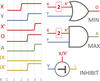
In standard integrated circuits, information that is coded as ones and zeros is implemented by voltages on wires being high or low. The circuits consume energy during transitions between these voltages. Binary numbers have a voltage per bit so there are a lot of transitions each time a number...

Theory and Modeling of Materials for Renewable Energy

Completed
Nanostructured materials offer potential benefits for a range of renewable energy applications that rely critically on interfaces for separating charges, including photovoltaics, thermoelectrics, and electrochemical energy storage. The use of nanostructures allows scientists and engineers to...

Theory of the optical properties of materials

Ongoing
Around 1998, first-principles calculation of optical constants and dielectric response began to include excitonic effects. Beginning with simple, wide-gap insulators and semiconductors, the field has progressed to studying more complex materials, clusters, and so forth. In the area of core...

Thermoelectric Measurements

Ongoing
Thermoelectric effects enable the inter-conversion of thermal and electrical energy, with applications that include solid-state waste heat recovery in engines for automotive and industrial manufacturing; power generation for aerospace, non-terrestrial exploration, and remote sensing; and...

Thin Film Electronics (Archived)

Completed
Today's electronics have reached a point where sheer computation power has yielded to combined form and function as the key driver of large consumer markets. The demand for portable and pervasive electronics with greater functionality promises significant changes over the next decades in how society...

Thin Film RGTMs

Ongoing
Research Grade Test Materials (RGTMs) are a type of pre-standard developed by NIST as part of the development of Standard Reference Materials and as feedstock for Interlaboratory Studies. NIST is producing a series of thin film RGTMs for use in thin film characterization inter-comparison and as...

Training and optimization of hardware neural networks

Ongoing
The goal of this project is to develop a general method that can train many different types of neural networks, and to demonstrate and evaluate their performance on new emerging hardware. We aim to develop and demonstrate training on diverse hardware platforms, and in the presence of realistic noise...

Transport Property Measurements for Semiconductors and Energy Materials

Ongoing
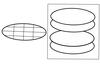
The image above is an exploded cross section diagram representing the simplified structure layers in a MOSFET transistor. Thermoreflectance (TR) laser-based measurement techniques, a key focus of this project, can measure the thermal properties of substrates, thin films, multilayer structures, and...

Ultrafast Spectroscopy to Advance Microelectronics

Ongoing
Continued advancement in microelectronics, including analog and digital electronics, power electronics, optics and photonics, and micromechanics for memory, processing, sensing, and communications as defined by the OSTP “National Strategy on Microelectronics Research,” requires knowledge of material...

Universal Microscopy Standards

Ongoing
Microscopy standards that are available today have inadequate performance characteristics. As device linewidths decrease toward physical limits, the international roadmap of devices and systems (IRDS) has set uncertainty targets by the year 2025. This target is hard to hit, challenging the industry...
Was this page helpful?