U.S. flag

An official website of the United States government

Official websites use .gov
A .gov website belongs to an official government organization in the United States.

Secure .gov websites use HTTPS
A lock ( ) or https:// means you’ve safely connected to the .gov website. Share sensitive information only on official, secure websites.

Projects/Programs

Displaying 1151 - 1175 of 1601

Polymer Advanced Manufacturing and Rheology

Ongoing
The manufacture of polymeric materials, whether from virgin or reclaimed sources, occurs under highly non-equilibrium conditions where temperature and stress fields evolve rapidly. The quality of the materials made from these processes depends not only on the composition of the starting material

Polymer Analytics

Ongoing
This project focuses on a variety of activities to achieve the aforementioned goal of accelerating the discovery of new polymer physics. Enhanced machine learning Two major hurdles to applying machine learning to polymer science is a lack of large datasets and a need to understand the model

Polymer Composites

Ongoing
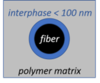
Measurements of interphase properties are extremely challenging, and their effects on macroscopic properties and performance of composites are poorly quantified. The objectives of this project fall into the following four research thrusts: Fluorescence Based Probes to Sense Damage and Water in

Polymer Formulations

Completed
Bringing new and optimized formulated products to market requires measurements that will allow rapid assessment of the structure and properties of multicomponent mixtures over large parameter spaces. To this end, we are developing microfluidic "lab on a chip" technologies that enable researchers to

Polymer Mechanics

Ongoing
The mechanical behavior for polymers is very sensitive to the deformation rate of the impact test. Thus we are developing and applying several novel measurements that can study the mechanical response of the polymer at different deformation rates and at different material length scales. High-rate

Polymer Membranes

Ongoing
We are developing and applying the following advanced tools to measure the structure, dynamics, and performance of polymer-based membranes and sorbents: Vibrational Spectroscopy We have developed a custom-built tandem quartz crystal microbalance (QCM), which measures total mass uptake of adsorbed

Polymer Property Predictor and Database

Ongoing
We aim to generate the data necessary for polymer informatics by developing information extraction pipelines to automatically extract polymer properties from the literature. We use natural language processing software (ChemDataExtractor) to extract both names of chemical entities and properties

Polymers for Next-Generation Lithography

Completed
We work closely with the semiconductor industry to develop and apply measurements with high-spatial and chemically-specific resolution to elucidate the critical materials properties and process kinetics at nanometer scales that are needed to advance next-generation photolithography, including both

Portable Field Test Standard for Evaluation of Hydrogen Gas Dispensers

Completed
This project provides a metrological tool and standards supporting the fair trade of hydrogen gas as a vehicle fuel of the future. Objective(s): The Fluid Metrology Group (FMG) and the Office of Weights and Measures (OWM) collaborated in designing, constructing, and testing a hydrogen gas dispenser

Portable Optical Lattice Clock

Ongoing
Exploiting their very high precision, atomic clocks today are used extensively in demanding timekeeping applications. These include a variety of navigation, communication, and remote sensing and imaging applications. The very best atomic clocks today, optical clocks, are among the most precise

Potential Primary Measurement Tool for the Quantification of DNA

Ongoing
The biotechnology industry relies primarily on absorbance and fluorescence methodologies to assess DNA mass. However, these measurements can be seriously compromised by impurities in the DNA preparations or state of the DNA itself. These techniques are also not traceable to the SI because the

Powder Diffraction SRMs

Ongoing
This program strives to produce the highest-quality, traceable powders and other artifacts for x-ray diffraction calibration. (to be completed)

Power Conditioning Systems for Renewables, Storage, and Microgrids

Ongoing
Objective: To establish standards and measurement methods, and test for smart grid and microgrid Power Conditioning Systems needed to transition from today’s low penetration of nondispatchable intermittent renewable energy sources to flexible grid operations that can actively adjust to varying grid

Power Quality Measurements and Fault Detection and Identification

Completed
Traditionally, disturbance detection relies on customer calls to the utility and through the SCADA (Supervisory Control and Data Acquisition) system. A major disadvantage of SCADA is that the measurements are not synchronized, which means that the fault detection process is not precise or timely

Precision Electro-Mechanical Experiments (PREME)

Ongoing
NIST-4 Kibble Balance Previously called ‘the Electronic Kilogram’ Project, a major component of PREME is the realization of SI unit of mass, the kilogram, using the NIST-4 Kibble balance, the fourth generation of Kibble balances at NIST. This is accomplished through a high-accuracy comparison of

Precision Materials for Quantum Devices

Ongoing
MBE System Our fabrication system is composed of ultra-high vacuum (UHV) chambers that support the in-vacuum exchange of 75 mm wafers without exposure to air as seen in Figure 1. These chambers are: (1) a deposition chamber with electron gun deposition, UHV compatible sputter guns, in situ shadow

Precision Measurement Grants Program

Ongoing
If funding is available, one new grant in the amount of $50,000 per year will be awarded for the initial period of October 1 through September 30 of the following year. The award may be continued for up to two additional years; however, future or continued funding will be at the discretion of NIST

Precision metrology with integrated photonics

Ongoing
This project develops integrated photonics– devices based on waveguides that are fabricated in a nanoscale device layer on a silicon wafer –for the purposes of exploring nonlinear science, enabling new applications with scalable integrated photonics light sources, and enhancing classical and quantum

Precision Spectroscopy and Quantum Control of Trapped Molecular Ions

Ongoing
Spectroscopy and Quantum Control of Molecular Ions Molecules exhibit vibration and rotation of their nuclei, degrees of freedom not present in atoms, and less stringent selection rules for transitions. This creates experimental challenges and great opportunities for exploring new physics. In this

Precision Timing for Smart Grid Systems

Completed
Objective: The key objective is to support the power sector industry through research and development in the metrology for online and predictive precision timing characterization necessary for grid monitoring and control applications. This project strives to support to the Smart Grid Testbed and the

Precision X-ray Emission Line Measurements

Ongoing
Precise knowledge of the shape and position of x-ray emission lines is the basis of connecting x-ray diffraction measurements to the Système Internationale d'Unités (SI), the official worldwide standard for making any measurement. Measurements of position of x-ray emission lines have been made been

Precursor Material Qualification

Completed
To develop, utilize, and analyze methods of characterizing the precursor materials in additive manufacturing in both virgin and recycled states with the goal of advancing measurement science to benefit the AM community. The components of principal interest will include the rheological, size

Prediction of Global Warming Potential

Ongoing
Goals Use ANN models to fit RF and .OH rate constant data k(.OH). Be able to predict RF, k(.OH), and GWP with reasonable accuracy using readily available information. Create a screening tool based on the ANNs.  Research Activities Improve the performance of rate constant prediction. Compare rate

Premise Plumbing Systems for High-Performance Buildings

Ongoing
Objective To develop new measurement methods, modeling approaches, and data to support improvements in building plumbing design, utility consumption, and water quality. The results of these efforts are intended to support standards development and industry programs to advance innovative technology

Pressure/Vacuum Calibrations

Ongoing
Piston Gauge (29010C - 29040S) This service provides calibrated secondary standard piston gauges, calibrated electronic pressure instruments, and special tests of customer supplied piston gauges. Measurements of pressure are available for submitted calibration items for the range from 10 kPa to 280
Was this page helpful?