An official website of the United States government
Here’s how you know
Official websites use .gov
A .gov website belongs to an official government organization in the United States.
Secure .gov websites use HTTPS
A lock (
) or https:// means you’ve safely connected to the .gov website. Share sensitive information only on official, secure websites.

GAITHERSBURG, Md.—The U.S. Commerce Department’s National Institute of Standards and Technology (NIST) this week recognized more than 150 staff members for...
Future communications networks that are less vulnerable to hacking could be closer to reality with an invention that measures the properties of single-photon...
Like sandblasting at the nanometer scale, focused beams of ions ablate hard materials to form intricate three-dimensional patterns. The beams can create tiny...
Data found on a suspect’s computer, cell phone or tablet can prove to be crucial evidence in a legal case. A new set of software tools developed at the National...
Tiny pores at a cell’s entryway act as miniature bouncers, letting in some electrically charged atoms—ions—but blocking others. Operating as exquisitely...
NIST published the second draft of the proposed update to the Framework for Improving Critical Infrastructure Cybersecurity . This second draft update aims to...
Note: Several recent media reports have inaccurately described NIST’s decision to conclude the Panel’s efforts and transition to a workshop format to achieve...
Superman’s X-ray vision has nothing on Jake LaManna’s. For the past couple of years, LaManna, an engineer at the National Institute of Standards and Technology...
COLLEGE PARK, Md.—Two independent teams of scientists, including one from the Joint Quantum Institute (JQI, University of Maryland/NIST), have used more than 50...
It’s crunch time for government contractors. They only have until Dec. 31, 2017, to demonstrate they are providing appropriate cybersecurity for a class of...
Researchers at the National Institute of Standards and Technology (NIST) have invented a new approach to testing multilayered, three-dimensional computer chips...
GAITHERSBURG, Md.—The Hollings Manufacturing Extension Partnership (MEP), a program of the U.S. Commerce Department’s National Institute of Standards and...
Catching cancer early can make all the difference for successful treatment. A common screening practice measures tumor growth with X-ray computed tomography (CT...
WASHINGTON—U.S. Commerce Secretary Wilbur Ross today named two small businesses, one city government, and two health care organizations as the 2017 recipients...
For more than a decade, the National Institute of Standards and Technology (NIST) has been unveiling experimental next-generation atomic clocks. These clocks...
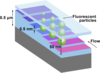
Paving the way for testing experimental drugs in more realistic environments, scientists at the National Institute of Standards and Technology (NIST) have...
In this video, The Computational Power of the Universe, National Institute of Standards and Technology physicist Stephen Jordan asks, “What if we consider...
Studio photographers may be familiar with the 1,000-watt quartz halogen lamps known as “FELs.” Scientists use them too—specially calibrated ones, at least—to...
Scientists at the National Institute of Standards and Technology (NIST) and their collaborators have taken a new step forward in the quest to build quantum...
Physicists at the National Institute of Standards and Technology (NIST) have come up with a way to link a group of atoms’ quantum mechanical properties among...
Imagine a miniature device that suffuses each room in your house with a different hue of the rainbow—purple for the living room, perhaps, blue for the bedroom...
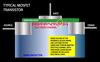
An entirely new model of the way electrons are briefly trapped and released in tiny electronic devices suggests that a long-accepted, industry-wide view is just...
For first responders, such as firefighters, police officers and emergency medical technicians, a successful outcome to a mission—and perhaps the difference...
A marriage between 3-D printer plastic and a versatile material for detecting and storing gases could lead to inexpensive sensors and fuel cell batteries alike...