An official website of the United States government
Here’s how you know
Official websites use .gov
A .gov website belongs to an official government organization in the United States.
Secure .gov websites use HTTPS
A lock (
) or https:// means you’ve safely connected to the .gov website. Share sensitive information only on official, secure websites.

Just as a journey of 1,000 miles begins with a single step, the deformations and fractures that cause catastrophic failure in materials begin with a few...
Researchers at the National Institute of Standards and Technology (NIST), in collaboration with the U.S. Government Publishing Office (GPO), have developed a...
When are two nominally identical kilogram masses no longer identical? When each goes to a different place and adsorbs varying amounts of moisture and...
It looks more like a long water main pipe than a microscope, but a new custom-built instrument at the National Institute of Standards and Technology (NIST)...
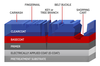
Know that sickening feeling when you exit the grocery store and find your car has been banged up by a runaway shopping cart? It may one day be just a bad memory...
Building off of a nearly 40 year partnership with Brookhaven National Laboratory (BNL), NIST has recently completed and commissioned the Beamline for Material...
Tinkering with a method they helped develop over the last few years, scientists have for the first time used it to measure at the nanometer scale the...
Our 2018 NIST/TRC Consortium Workshop has drawn to a close; the consortium is hosted by the Thermodynamics Research Center within Boulder’s Applied Chemicals...
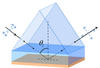
Manipulating light in a variety of ways—shrinking its wavelength and allowing it to travel freely in one direction while stopping it cold in another--hyperbolic...
Doctors use X-rays to see inside people, and scientists use neutrons to peer inside advanced materials and devices such as fuel cells to better understand and...
NIST’s nSoft consortium helps product developers solve difficult problems by giving them access to a powerful tool, unlike anything in an industry R&D lab, for...
Trapping light with an optical version of a whispering gallery, researchers at the National Institute of Standards and Technology (NIST) have developed a...
The Pilot Study — read 2016 article details — was completed in late 2016 and the Final Report was published on the BIPM website in June of 2017. The main...
Antiferromagnets have generated significant interest for future computing technologies due to their fast dynamics, their ability to generate and detect spin...
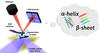
Scientists at the National Institute of Standards and Technology (NIST) have developed a new way to investigate the high-performance fibers used in modern body...
In a pioneering effort to control, measure and understand magnetism at the atomic level, researchers working at the National Institute of Standards and...
One of the persistent challenges in 21 st century metrology is the need to measure ever-more-detailed properties of ever-smaller things, from microchip features...
Crystalline materials known as perovskites could become the next superstars of solar cells. Over the past few years, researchers have demonstrated that a...
Researchers at the National Institute of Standards and Technology (NIST) have produced and precisely measured a spectrum of X-rays using a new, state-of-the-art...
NIST has been granted a patent for technology that may hasten the advent of a long-awaited new generation of high-performance, low-energy computers....
It is often the case that a valuable new industrial capability brings with it a whole new set of challenges for measurement science -- and thus, inevitably, for...
The worldwide market for additive manufacturing (AM) products and services is projected to exceed US$6.5 billion by 2019 [1]. Despite this prediction, there are...
Additive manufacturing (AM) is a high-priority technology growth area for U.S. manufacturers. Innovative AM processes that fabricate parts layer-by-layer...
When the kilogram, the world’s basic unit of mass, gets a new definition in 2018, it will be based not on a physical artifact but a constant of nature. However...
You may have seen it on CSI: The star examines hair from a crime scene and concludes its color or texture looks like the defendant’s hair, or maybe his dog’s...