An official website of the United States government
Here’s how you know
Official websites use .gov
A .gov website belongs to an official government organization in the United States.
Secure .gov websites use HTTPS
A lock (
) or https:// means you’ve safely connected to the .gov website. Share sensitive information only on official, secure websites.

Report on Education Technology - Skills & Jobs PCAST released a letter report to the President on Information Technology for Targeting Job-Skills Training and
In a rare case of having their cake and eating it too, scientists from the National Institute of Standards and Technology (NIST) and other institutions have
A NIST team is at work on what promises to be one of the world's most accurate methods for generating a specified number of photons, and has devised a method to
Would your laboratory or company benefit from having an easy method to track fluorescence microscopy performance? Can you compare your imaging results to those
The U.S. Commerce Department's National Institute of Standards and Technology (NIST) has awarded a contract to operate its first Federally Funded Research and
Doctors shrink tumors with radiation therapy, but a badly calibrated beam can cause serious complications. Scientists in NIST's Radiation Physics Division in
NIST's National Cybersecurity Center of Excellence (NCCoE) has posted a revised draft of a building block to help enterprises address security issues that
The U.S. Department of Commerce's National Institute of Standards and Technology (NIST) today announced nearly $3 million in grants that will support projects
Researchers at the University of Waterloo in Canada have directly entangled three photons in the most technologically useful state for the first time, thanks in
Researchers from the NIST Center for Nanoscale Science and Technology (CNST) and the University of Maryland have for the first time used photothermal induced
The National Institute of Standards and Technology (NIST) has contributed to the development of a new standard for defining the performance of micromechanical
Scientists at the National Institute of Standards and Technology (NIST) have determined* that polonium-209, the longest-lived isotope of this radioactive heavy
National Institute of Standards and Technology (NIST) researchers have earned a 2014 GCN Award for Information Technology Excellence for speeding development
Photovoltaic devices, also known as solar cells, produce electrical power when exposed to light, and that technology has enabled a fast-growing industry. The
Recent experiments have confirmed* that a technique developed several years ago at the National Institute of Standards and Technology (NIST) can enable optical
Want to make more fuel-efficient cars and trucks? Build them out of lighter materials. Sounds easy, but it's not. Automakers have decades of experience with the
The National Institute of Standards and Technology (NIST) is converting one of its laboratories into the equivalent of a small office building—not because of an
Thanks to precision calibration measurements recently performed at NIST, satellites may soon be looking at sunlight with new and improved vision. On July 22
Six months ago, the National Institute of Standards and Technology (NIST) released version 1.0 of its voluntary Framework for Improving Critical Infrastructure
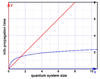
Just as diamonds with perfect symmetry may be unusually brilliant jewels, the quantum world has a symmetrical splendor of high scientific value. Confirming this
While many mobile device apps such as a calendar or collaboration tools are very handy and can improve productivity, they can also introduce vulnerabilities
Construction is nearly complete on one of the world's more unusual precision measurement facilities: A 50 meter horizontal smokestack located on NIST's
Researchers from the NIST Center for Nanoscale Science and Technology (CNST) have established guidelines for using surface plasmon polaritons (SPPs) to improve