U.S. flag

An official website of the United States government

Official websites use .gov
A .gov website belongs to an official government organization in the United States.

Secure .gov websites use HTTPS
A lock ( ) or https:// means you’ve safely connected to the .gov website. Share sensitive information only on official, secure websites.

Projects/Programs

Topic Area
Displaying 751 - 775 of 1669

Iris Challenge Evaluation (ICE)

Completed
ICE 2006 Workshop ICE 2006 consisted of a large-scale, open, independent technology evaluation of iris recognition technology. To guarantee an accurate assessment, the ICE measured performance with sequestered data (data not previously seen by the researchers or developers...

Iris Exchange (IREX) 10: Ongoing Evaluation of Iris Recognition

Ongoing
IREX 10 is a continuing evaluation of automated iris recognition technology. Administered at the Image Group's Biometrics Research Laboratory (BRL), developers submit their matching software for analysis over sequestered test data. As an ongoing evaluation, developers may submit their software at...

Iris Exchange (IREX) Overview

Ongoing
The data used in IREX comes from publicly available datasets and from operational data provided by various government and commercial entities. The publicly available data sets may be procured from the original sources; in general, NIST does not have license to redistribute any of the public datasets...

Iris Experts Group - II Homepage

Ongoing
Documents for Public Comment Some of our IEG activities generate documents that may benefit from public comment. There are three general categories: Documents that are sent to OSAC for further work. Documents that are provided to another entity (e.g. FBI NGI) for dissemination. Documents that will...

Iris Projects

Ongoing
IRIS Experts Group II Starting in June 2016, NIST is convening the Iris Experts Group as a series of colloquia addressing topics of interest to operational deployment of biometrics in the United States government and more broadly. Iris Exchange (IREX) The Iris Exchange (IREX) was initiated at NIST...

Isotope Metallomics Quality Assurance Program (IMQAP) Consortium

Ongoing
The use of stable metal isotopes in the health and medical sciences, known as Isotope Metallomics, shows promise for developing clinical biomarkers and improving diagnostics and prognostics. This field is grounded in the idea that certain pathologies trigger physiological responses which lead to...

Isotope Metrology

Ongoing
The application of isotope measurements drives advances in an enormous number of fields and stakeholder engagements, including federal and state government agencies, academia, and private industry including the medical industry. The objective of the NIST Isotope Metrology Program is to address the...

Isotopes as Environmental Tracers in Biological Specimens

Ongoing
Multicollector inductively coupled plasma mass spectrometry (MC-ICP-MS) provides sensitive and precise measurements of stable isotope ratios and can be coupled to a variety sample introduction systems such as laser ablation and gas or liquid chromatography. The versatility and performance of MC-ICP...

ITL Forensic Science Program

Ongoing
The principal goals of the Program are to develop standards, measurement methods, tests, validation studies, and technology to: Better understand and improve the accuracy and reliability of forensic science. Provide scientifically validated bases for forensic methods and standards. Establish...

ITL Quantum Information Program

Ongoing
The principal goals of the ITL Quantum Information Program are: To understand the potential (both opportunities and risks) for quantum information to revolutionize information science. To develop theory, methods, architectures and algorithms to enable engineering and testing of quantum computing...

JARVIS-ALIGNN, JARVIS-ALIGNN-FF

Ongoing
ALIGNN uses a line graph neural networks to include bond distances and angular information graph to incorporate finer details of atomic structure, leading to high accuracy models. While the nodes of an atomistic graph correspond to atoms and its edges correspond to bonds, the nodes of an atomistic...

JARVIS-DFT

Ongoing
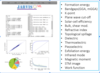
JARVIS-DFT hosts materials property data for ~40000 bulk and ~1000 low-dimensional crystalline materials and the database is continuously expanding. Some of the properties in the database are: formation energies, bandgaps, elastic, piezoelectric, dielectric constants, and magnetic moments...

JARVIS-FF

Ongoing
Many classical force-fields are developed for a particular set of properties (such as energies) and they may not have been tested for properties or configurations outside the training (such as elastic constants, defect formation energies or energies for metastable phases). JARVIS-FF provides an...

JARVIS-ML

Ongoing
JARVIS-ML introduced Classical Force-field Inspired Descriptors (CFID) as a universal framework to represent a material’s chemistry-structure-charge related data. With the help of CFID and JARVIS-DFT data, several high-accuracy classifications and regression ML models were developed, with...

Johnson Noise Thermometry

Completed
The NIST Gaithersburg JNT project produces data useful for verification of the International Temperature Scale of 1990 (ITS-90) over a temperature range from 500 K to 930 K. This range overlaps those covered by other thermodynamic methods, most notably the upper-most range of Acoustic Thermometry...

Key Comparisons and International Interlaboratory Studies Project

Ongoing
Key comparisons serve as the technical basis for the MRA and must therefore accurately reflect the true relationships between measurement systems maintained by NMI's belonging to the CIPM. The results of key comparisons must also be extensible to members of Regional Metrology Organizations (RMO's)...

Kinetic Inductance Spectrophotometry

Ongoing
The Kinetic Inductance Spectrophotometry Project is developing novel superconducting detector and readout technologies targeting next generation large-scale hyperspectral imaging applications. Within this application space, the transition-edge sensor (TES) microcalorimeter is the most mature...

Knowledge Extraction and Application

Completed
Objective - To develop and deploy advances in standards, measurement science, and software tools using actionable, computable, domain knowledge and data in operations and logistics to improve the reliability, quality, and efficiency of advanced manufacturing systems. What is the technical idea? The...

Knowledge Facilitation Project

Ongoing
As we grow to rely on the data in our computers, and that data is shared more frequently, the need for security of that data also grows. Our staff depends upon the confidentiality, integrity, and availability of the data we store and process for them. Confidentiality refers to allowing access to our...

Label-free imaging of cells and their extracellular matrix by SPR imaging

Ongoing
Cellular remodeling of their neighboring environment, extracellular matrix (ECM), is an important biological process from development biology, to wound healing, to diseases and cancers – this is a challenging process to measure and quantify. Surface plasmon resonance imaging (SPRI) has been...

Landscape Review of Forensic Science Training for Officers of the Court

Completed
The 2009 NAS Report highlighted the need for forensic science training for judges and lawyers noting, “Lawyers and judges often have insufficient training and background in scientific methods, and they often fail to fully comprehend the approaches employed by different forensic science disciplines...

Laser Power and Energy Meter Calibrations

Ongoing
We serve Industry, DoD, and research institutions by calibrating instruments used to measure the power or energy emitted by a laser, or single photon source. From Single Photons to Kilowatts, Longwave Infrared to Deep Ultraviolet, Free-space and Fiber, we can calibrate your instruments. The chart to...

Laser Stabilization and Coherence with Optical Resonators

Ongoing
Coherent laser interrogation of the narrowband electronic ‘clock’ transition is required to realize the very high spectroscopic resolution that make optical clocks so precise. At the same time, phase fluctuations in the laser interrogation can compromise the frequency stability of the optical clock...
Was this page helpful?