U.S. flag

An official website of the United States government

Official websites use .gov
A .gov website belongs to an official government organization in the United States.

Secure .gov websites use HTTPS
A lock ( ) or https:// means you’ve safely connected to the .gov website. Share sensitive information only on official, secure websites.

Projects/Programs

Topic Area
Displaying 651 - 675 of 1669

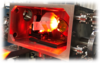
High-Power Laser Applications

Ongoing
Measurement challenges Traditional measurements of laser power or energy involve absorbing the laser light and measuring the resulting temperature increase of the absorber. However, as the power and total energy delivered by these lasers increases, thermal management, absorber size, and response...

High-Precision Isotopic Reference Materials

Ongoing
A new generation of multi-collector IRMS, utilizing both inductively coupled plasma and thermal ionization sample sources, is now capable of measuring isotope ratios with extremely high precision – a few parts in 10 6. This new measurement capability has caused a minor revolution in the use of...

High-Precision Structural Measurements

Ongoing
On the instrumental and data processing side, we focus on improving the precision of structural information derived using transmission electron microscopy (TEM). Aberration-corrected scanning TEM enables direct imaging of atomic columns but the precision of column positions extracted from the images...

High-Sensitivity IR Spectroscopy of Proteins

Ongoing
Infrared (IR) absorption spectroscopy has been widely used as a non-invasive, label-free characterization method of chemical identification and structure for complex biomolecules. Conventional IR spectroscopy, e.g., Fourier-transform IR (FT-IR) technology, can characterize proteins and other...

HML Organic Chemical Metrology Program Areas

Ongoing
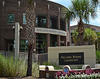
The organic analytical facility, located on the second floor of the Hollings Marine Laboratory, consists of two laboratories with a combined area of approximately 215 m2. These two laboratories provide the space and instrumentation to achieve two main functions for NIST: (1) the determination of...

Human Factor Guidelines and Accessibility

Ongoing
With the aging of America, increasing prevalence of chronic disease and growing immigrant and minority populations in the U.S., there is the real potential for both unintentional traditional and digital health-care disparities. Health information technology (HIT) holds significant potential to...

Human Factors in Latent Print Analysis

Completed
Fingerprint analysis is critical to the success of the nation's criminal justice system. In fact, fingerprints left at a crime scene — referred to as latent prints — are the most common type of forensic science evidence and have been used in criminal investigations for more than 100 years. The...

Human Gut Microbiome Reference Material

Ongoing
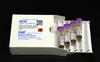
The most common measurements currently being used to describe these complex microbial communities are: NGS-based metagenomics Mass spectrometry-based metabolomics In either case, no fit-for-purpose standards exist that enable researchers to compare results generated across different laboratories and...

Human/Machine Teaming for Manufacturing Digital Twins

Completed
Objective To remove barriers to the use of complex tools in manufacturing, such as digital twins, by developing the foundation for integrating generative AI, declarative domain-specific languages, and human/AI teaming. Technical Idea The mission of NIST’s Engineering Laboratory includes researching...

Human-Centered AI

Ongoing
The Human-Centered Artificial Intelligence (AI) program within the NIST Human-Centered Technologies Group performs research across several AI areas, always keeping humans at the core of our work. Our projects include: Generative AI Use in the Workplace Assessing Risks and Impacts of AI (ARIA)...

Humidity

Ongoing
Our goals include: Providing SI traceability of humidity standards through use of standardized realization methods, and supporting humidity measurements in the U.S. and abroad through calibrations and proficiency testing Ensuring the equivalence of US humidity standards with those of other countries...

Humidity Calibration Services at NIST

Ongoing
Humidity calibration services at NIST are performed with its primary standard humidity generator, the Hybrid Humidity Generator (HHG). The HHG produces humidified air of known moisture content over the dew/frost-point range from -90 °C frost point to +85 °C dew point, which corresponds to a water...

Hybrid Ferromagnetic-Superconductor Memory

Ongoing
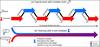
The core of the research program is to understand how the transit of a supercurrent through a series of ferromagnetic films affects both its amplitude, phase, and spin state, which can result from magnetic fields within the element, interfacial spin-filtering effects, and exchange interactions...

Hybrid Ferromagnetic-Superconductor Systems

Ongoing
The main goal of the research program is to develop and understand the physics of systems in which a ferromagnet is strongly interacting with (i.e., coupled to) microwave and optical photons. When these measurements are performed using microfabricated resonators, they represent a novel metrology to...

Hybrid Quantum Optomechanical Systems with Solid-State Artificial Atoms

Ongoing
Quantum Dot – Surface Acoustic Wave Microwave-to-Optical Transducers In this project, we focus on coupling nanoscale acoustic resonators with InAs quantum dot (QD) single photon sources (Fig. 1). At ultra-low temperatures, such as those in a dilution refrigerator, the acoustic resonators act as...

Hydration Reactions in Microstructures Project

Completed
Objective - Generate and publish reaction rate data and enhanced computer modeling tools to better understand and predict the rates of microstructure development and phase interactions in portland cement concrete binders. What is the new technical idea? Reflection digital holographic microscopy (DHM...

Hyperspectral Image Projector (HIP)

Ongoing
Remote sensing instruments and medical imagers are designed to take images composed of many spectral bands, not just the minimum three components used by common digital cameras (i.e., red, green, and blue). These images are referred to as hyperspectral because each pixel contains information for...

Hyperspectral Imaging Standards

Ongoing
There has been a surge in interest in hyperspectral imaging for the use in environmental monitoring, medical imaging, and manufacturing, as several examples. Standards provide common reference points that foster an understanding between different entities. The range of standards encompass all...

Hyperspectral Microscopy

Ongoing
NIST has developed a laboratory dedicated to measuring the optical properties of materials through the use of commercial and custom hyperspectral imagers. The custom built hyperspectral imaging microscope covers the 400 nm to 2500 nm spectral range using narrow contiguous spectral bands. This system...

Identity Credential Interoperability

Completed
As the ISO/IEC 24727 technical standard for smart cards nears completion, enabling USG identity credentials to take advantage of the standard is desirable but our federal constituency requires a better understanding of the standard itself. In order to do this, an implementation and operational...

Identity Management

Ongoing
A dedicated nationwide public safety broadband network based on Long Term Evolution (LTE) technology will have unique cybersecurity capabilities and features due to public safety’s operational environment and requirements. One significant public safety requirement is the ability to know the identity...

Identity Management Systems Research & Development

Completed
This project's activities will significantly advance the identity management community's understanding of fundamental issues, and the ability to effectively implement and use identity management systems.

IDMS Standards Activities

Ongoing
This work focuses on U.S. participation on related IDM standards activities, development of standards and metrics, and related outreach. The work program for this project includes: 1. U.S. representation on the following ISO/IEC JTC 1 subcommittees: a. ISO/IEC JTC 1 SC17 b. ISO/IEC JTC 1 SC 27 c...
Was this page helpful?