U.S. flag

An official website of the United States government

Official websites use .gov
A .gov website belongs to an official government organization in the United States.

Secure .gov websites use HTTPS
A lock ( ) or https:// means you’ve safely connected to the .gov website. Share sensitive information only on official, secure websites.

Projects/Programs

Topic Area
Displaying 876 - 900 of 1667

Membranes for Clean Water

Completed
Impact Access to affordable, clean water is vital to the nation's economic growth and security. Polymer-based membrane separation technologies based on reverse osmosis, forward osmosis and nanofiltration will play an increasingly critical role in the production of clean, safe water. In order to...

Memory

Ongoing
While photonic systems offer very robust qbits and are excellent for transporting quantum information between locations due to their minimal interactions with their environment, they are inconvenient for the storage of quantum information in one place. As a result there is significant interest in...

Metal Additive Manufacturing Laser Power Assessment

Ongoing
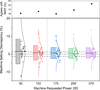
A calibrated (U=1.2 %, k=2) power meter was taken to a variety of AM locations (industry, academic, government, DoD) to anonymously assess the accuracy with which these institutions know the laser power being delivered to the workpiece. At each site, the LPBF operator was asked to use the AM system...

Metal Additive Manufacturing Powder Consortium

Ongoing
The Consortium is focused on pre-competitive measurement science and standards research for metal powder feedstocks used in AM. MAMP research findings will broadly benefit the AM community, with more direct benefit to metal powder manufacturers, manufacturers of powder measurement tools, original AM...

Method Assessment for Non-Targeted Analyses (MANTA) Program

Ongoing
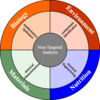
Typical targeted analysis aims to detect and/or quantify a set of known chemical compounds using specific instrumental techniques (such as liquid chromatography with triple quadrupole mass spectrometry). In contrast, non-targeted analysis is an analytical technique that detects, identifies, and/or...

Methods for Absolute Quantitation of Transcription

Ongoing
The ability to engineer novel, useful functions into microbial cells for manufacturing or therapeutic applications has accelerated rapidly over the last few decades. However, the measurements required to underpin predictive engineering of these systems are typically not comparable across different...

Methods for Community Resilience Tradeoffs

Completed
Objective - To support community resilience planning in the context of multiple competing objectives, including sustainability, adaptation, and public health, by evaluating complementarities and tradeoffs. What is the technical idea? Communities face multiple competing objectives in planning...

Methods to Quantify Microbial Viability

Ongoing
Validating DNA-based methods to quantify viable bacteria ( S. Da Silva , G. Pinheiro) Microbial detection technologies based on nucleic acid measurements, such as polymerase chain reaction (PCR), are powerful detection tools that can provide relatively rapid results as compared to traditional...

METIS

Ongoing
A Metrology Exchange to Innovate in Semiconductors

Metrics for Manipulation and Enhancements of Forensic Images

Completed
Image metrics and well-defined algorithms will be researched and developed to analyze and quantify the image transformation processes applied by forensic scientists in the context of latent fingerprint analysis. The research will focus on two principal aspects. Image Enhancement Tools The...

Metrics for Reactive Wetting in Complex Systems

Completed
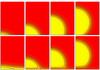
From fundamental physical considerations, we have derived a set of partial differential equations describing wetting and spreading. These equations are derived using a variational thermodynamic principle applied to a two-component alloy system with three (vapor, liquid and solid) phases. The method...

Metrics and Tools for Construction Productivity Project

Ongoing
What is the problem? Although the construction industry is a major sector of the U.S. economy, it has experienced a perceived period of decline in productivity[1]. Due to the critical lack of measurement methods, however, the magnitude of the productivity problem in the construction industry is...

Metrologies for Nanobiomaterials in Artificial Photosynthesis

Completed
A transition to solar fuel will require high-efficiency catalysts that make use of domestic fuel feedstocks with minimal additional energy input. In the past several years, novel water oxidation catalysts from abundant elements have been reported. Catalysts deposited onto a photoactive substrate...

Metrologies for Non-linear Materials in Impact Mitigation

Ongoing
Overview This project develops fundamental structure-property measurements on model materials and novel material chemistries from quasi-static to dynamic rates. The goal is to foster a materials by design approach for novel energy dissipation and force re-direction mechanisms. Processing-Structure...

Metrologies for Protein Structure, Dynamics and Function

Ongoing
Based on its established expertise, infrastructure, and resources for structure/function studies of biological macromolecules, the program aims to impact advances in physics, chemistry, and engineering relevant to biological problems. NIST researchers also develop new technologies for application to...

pH Metrology

Ongoing
The suite of NIST pH SRMs forms the basis for pH measurements in the United States, and pH is the most-often-measured chemical quantity. Hence this NIST work directly or indirectly impacts a large number of users in industry, government, and academia. One of the most critical set of users is in...

Metrology for Cardiac Leads

Ongoing
Quantifying cardiac lead reliability is not an easy task because of the vastly different conditions under which leads must operate under when installed in a human body. The committee is actively involved in many aspects of cardiac lead reliability including: gage repeatability and reproducibility...

Metrology For Cell-Free Expression Systems

Ongoing
Cell-free expression systems are poised to advance the US bioeconomy and play a key role in ensuring US manufacturing resilience. NIST has several, on-going projects in its growing portfolio to promote reproducibility, new measurement methods, and best practices and standards in cell-free expression...

Metrology of Dim Light Sources

Ongoing
“What is the lowest amount of light that this instrument can detect?” is an important yet unmet measurement challenge. Evaluating the detection performance of complicated imaging instruments is crucial to quantifying substances of interest and the ability to compare results across instruments...
Was this page helpful?