U.S. flag

An official website of the United States government

Official websites use .gov
A .gov website belongs to an official government organization in the United States.

Secure .gov websites use HTTPS
A lock ( ) or https:// means you’ve safely connected to the .gov website. Share sensitive information only on official, secure websites.

Projects/Programs

Displaying 276 - 300 of 1607

Comparisons (Archive): International Comparison of Pu-241 Activity

Completed
Quantitation of 241Pu in low-level waste and environmental samples is of interest because 241Pu is a precursor of other transuranium nuclides that have longer half-lives, greater environmental mobility, and greater toxicity. In addition, 241Pu is the most difficult of the plutonium isotopes to...

Comparisons: NIST Participation in International Intercomparisons

Ongoing
The NIST Radioactivity Group pilots and participates in a variety of different comparison activities. The BIPM’s Consultative Committee on Ionizing Radiation (CCRI) organizes formal comparisons (“key comparisons”) of long-lived radionuclides through its Key Comparison Working Group (KCWG-II). As...

Comparisons: Radiological Traceability Program (RTP)

Ongoing
The RTP provides an annual exchange of testing samples between NIST and RESL. It is designed to provide a mechanism to evaluate the ability of RESL scientists to prepare testing samples containing known activities of various radionuclides (Table 1), and to analyze samples of unknown activities...

Complete Automation and Distribution of Parallel Simulation Tasks

Ongoing
In computational materials science, many problems require the execution of numerous parallel simulation tasks on High Performance Computing (HPC) resources. Often a single published data point is the result of several parallel tasks executed in a specific sequence. Despite the continual improvement...

Composition in IoT/CPS

Completed
One approach develops a ‘CPS algebra’ based on a formal language that offers the expressive power needed to capture the observable behavior of Cyber-Physical System (CPS) components, and at the same time offers a way to express the notion of composition of CPSs. A second effort extends the in...

Computation Platform for AI/ML

Ongoing
In collaboration with NIST’s Information Technology Laboratory and Office of Information Systems Management, the Office of Data and Informatics is supporting the deployment and development of the long-term operational model for the enki computation platform for NIST staff members who research and...

Computational Biology: Comparison of Cell Image Segmentation Algorithms

Ongoing
The Problem: The initial project problem was to determine whether image analysis techniques existed (or could be developed by the ITL groups) which would assist in the automatic differentiation of the A10 and 3T3 cell lines. The larger problem at hand was to determine what factors (and interactions)...

Computational Biology Project

Ongoing
Overview: High-throughput technologies are generating large amounts of complex data that is difficult to process and convert into knowledge Issues exist throughout data lifecycle: Acquisition Analysis Archiving Interchange Imaging technologies are increasingly being used both as diagnostic tools and...

Computational Chemistry

Ongoing
Given the combinatorial possibilities for combining fundamental elements to create novel molecules, bench science experimentation is impractical as a wholesale means to discovery. By contrast, computational resources abound and thereby offer a possible alternative. However, this immense resource is...

Computational Design of Photopolymerized Materials

Ongoing
Photopolymerization represents a versatile method that affords rapid and robust manufacturing of polymers and composites. The properties of polymerized materials can be controlled by the chemistry and processing parameters, as well as novel molecular mechanisms. As such, photopolymerization has...

Computational Materials For Qualification And Certification (CM4QC)

Ongoing
CM4QC is an informal collaboration of U.S. aviation-focused companies, research and regulatory government agencies, and universities that was assembled to develop a comprehensive strategic framework and maturation path for increasing the use of computational materials (CM) approaches in the aviation...

Computational Micromagnetics

Ongoing
Micromagnetics technologies constitute the foundation of computer storage devices. Exponential growth in the size of portable magnetic memories accompanied by decrease cost-per-byte is evidence of success in this technology. To sustain this growth engineers and scientists are increasingly using...

Computational Scanning Electron Microscopy

Ongoing
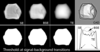
In many cases, SEM measurements are carried out without knowledge of the best measurement conditions, partly due to engineering limits of the SEM, but also due to lack of thorough knowledge of the physics of the signal generation. For example, in many cases the best-quality results can be obtained...

Computer Forensic Reference Data Sets

Ongoing
There are several uses envisioned for the data sets, but we also expect that there will be unforeseen applications. The four most obvious applications are testing forensic tools, establishing that lab equipment is functioning properly, testing proficiency in specific skills and training laboratory...

Computer Forensics Tool Testing (CFTT)

Ongoing
The Computer Forensics Tool Testing Program is a project in The Software Diagnostics and Conformance Testing Division supported by The Office of Law Enforcement Standards.

Configurable Data Curation System (CDCS)

Ongoing
The ability to automate and accelerate the activities of scientific and engineering lifecycles for materials science (or any other domain) depends critically on a scalable infrastructure for scientific data. Without appropriate data or inter-connection of that data, no meaningful automation or...

Conformance Testing of JPEG 2000 CODEC's

Ongoing
Those suppliers wishing to submit NIST Special Publication 500-289 implementations of JPEG 2000 CODECs for conformance testing to NIST must follow the procedures, outlined in NIST Special Publication 300. This includes obtaining a NIST assigned encoder identifier, downloading the NIST reference...

Connecting Quantum Electronics and Photonics using Silicon Color Centers

Ongoing
Overview: In the first decades of the semiconductor electronics industry, color centers were ubiquitous in silicon. However, through iterative refinement of materials’ processing and spectroscopy methods, color centers are virtually non-existent in commercial silicon today, and leveraging their...

Connecting Thermodynamic and Dynamic Properties of Bulk and Confined Fluids

Ongoing
The dynamic properties of bulk fluids remain a challenge to predict. Predicting the dynamic properties of confined fluids represents a greater scientific and engineering challenge. Developing simple heuristics or even robust correlations will be helpful in developing and understanding technologies...

Consistency Analysis and Uncertainty in ‘omic Data

Ongoing
‘Omics is increasingly moving out of the laboratory and towards use in industrial and commercial applications. For instance, in biomanufacturing, there is a need for quality control when developing biotherapeutics, which will almost certainly require a machine-learning classifier to separate...

Contactless Fingerprint Capture

Ongoing
Conventional fingerprint sensors require a person to touch the device platen or sensor. Disadvantages to this mode of acquisition include the time required to collect (particularly rolled)prints as well as hygiene concerns. The government has funded research for the development of fast-capture non...
Was this page helpful?