U.S. flag

An official website of the United States government

Official websites use .gov
A .gov website belongs to an official government organization in the United States.

Secure .gov websites use HTTPS
A lock ( ) or https:// means you’ve safely connected to the .gov website. Share sensitive information only on official, secure websites.

Boulder

Fundamental Guided Wave Metrology

Radio-frequency (RF) waves and microwaves are involved with almost every facet of everyday life. Radio stations, television, wireless devices, satellite

Advanced Materials Metrology

In this project we measure the fundamental electrical properties of materials from bulk to nanoscale from 1 MHz to 0.3 THz. Understanding the interaction of

Nanoelectromagnetics

The core activities in this program are the development and application of metrology for quantitative characterization of hetero-structured materials and

Dynamic Fracture in Steel

On May 7, 2008, MML and Mississippi State University co-hosted a workshop to discuss recent advances in fracture toughness testing of structural materials. This

Fluid Characterization Group

The Fluid Characterization Group specializes in the development of novel methods for analyzing vapors and fluid mixtures to serve public health and safety, criminal justice, and industry.

Thermophysical Properties of Fluids Group

The Thermophysical Properties of Fluids Group performs experimental measurements and develops models and empirical correlations to describe and predict thermodynamic and transport properties for a variety of industrially relevant fluids and fluid mixtures including fuels, refrigerants, bulk

Terahertz Imaging and Sources

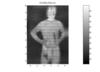
Imaging in the terahertz frequency range enables the detection of concealed weapons and other contraband (e.g., explosives under clothing) without the use of

Waveform Metrology Project

The Waveform Metrology Project provides measurement and algorithmic support for waveform traceability to the optics and high-frequency electronics industries

Photonic Radiometry

Accurate characterization of photonic equipment is important for optical communications, medical devices, semiconductor lithography, manufacturing and materials

Quantum Conductance

Graphene, the two-dimensional honeycomb carbon lattice isolated in 2004, has enabled significant advancement in a variety of subfields in physics due to its

Advanced Microwave Photonics

Research on quantum information (QI) seeks to control and exploit exotic properties of quantum mechanics, and researchers are already generating "unbreakable"

Quantum Voltage Project

Goal: To develop Josephson voltage standard (JVS) systems to improve the dissemination of primary standards and the accuracy of voltage measurements from DC to

Pipeline Safety

Our goal is to provide standard test methods and critical data to the pipeline industry to improve safety and reliability. Of particular interest is the testing

Nanotube Quality Control

Our goal is to develop new methods to rapidly screen bulk carbon nanotubes for chemical purity and homogeneity. The different synthesis routes used to produce

Charpy Machine Verification Program

Impact testing is required for many critical applications in the construction, machinery and equipment, defense, and energy markets. Charpy testing provides

Electromagnetic Fields Group

The Electromagnetic Fields Group measures, characterizes, and calibrates antennas and radiated fields of the type used in many high-performance communication, defense, aerospace, satellite, and wireless systems.

Guided Wave Electromagnetics Group

The Guided Wave Electromagnetics Group conducts theoretical, computational, and experimental research to deliver the basic metrology, special measurement techniques, and measurement standards needed for advancing both conventional and microcircuit guided-wave technologies, including coaxial

Sources and Detectors Group

The Sources and Detectors Group conducts research on the characterization of lasers, detectors, and related components.

Antenna Metrology Project

Antennas are the eyes, ears and voice boxes of everything from cell phones to interplanetary spacecraft. The Antenna Metrology Program carries on NIST's

Fatigue and Fracture Group

We provide metrology, standard reference materials, documentary standards support, property data, and predictive models to ensure materials reliability against fatigue and fracture. We specialize in structural applications (e.g., buildings, bridges, pipelines, and some medical devices).

Nanoscale Reliability Group

The Nanoscale Reliability Group develops and disseminates science, standards, and technology for high-resolution measurements of material structure, chemistry, and physical properties, to ensure reliability of materials and devices with critical dimensions in the micrometer to nanometer regime.

Quantum Sensors Division

The Quantum Sensors Division, part of NIST’s Physical Measurement Laboratory, advances the detection of photons and particles in a variety of application areas using superconducting sensors and readout electronics.

Was this page helpful?