

Official websites use .gov
A .gov website belongs to an official government organization in the United States.

Secure .gov websites use HTTPS
A lock (
) or https:// means you’ve safely connected to the .gov website. Share sensitive information only on official, secure websites.


Sensors for a Magnetic World
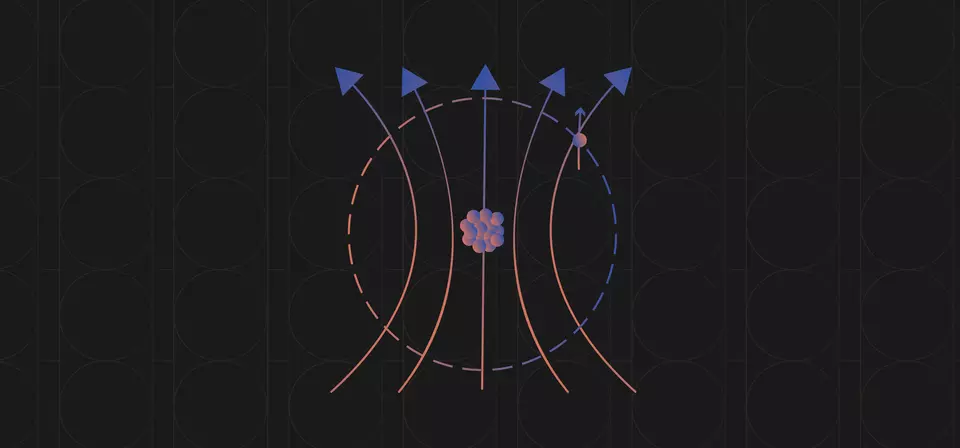
Magnetic fields are everywhere. Earth’s iron core generates a magnetic field that surrounds the planet and protects us from charged particles from outer space. Electric currents in wires create magnetic fields, as do the electrical signals coursing through our nerve cells.
Measuring these fields can yield powerful data. Scientists measure magnetic fields produced by superconductors and other materials to design advanced technology and electronics. Biomedical researchers measure the tiny magnetic fields produced by brain cells and the electrical currents that control the heart’s beating to gather vital health information. Geologists measure magnetic minerals in rocks to study how Earth's magnetic field has evolved over the planet’s long history. And militaries around the world hope to use measurements of Earth’s magnetic field to navigate without reliance on GPS.
While classical magnetometers that don’t use quantum physics, such as a compass or a flux gate magnetometer, can be good enough in some situations, quantum magnetometers are much more sensitive. That unmatched sensitivity is opening up exciting new applications and possibilities.
Quantum magnetometers come in several flavors.
Superconducting magnetometers
In the 1800s, scientists discovered an intimate relationship between electricity and magnetism: Electric current creates a magnetic field, and magnetic fields in turn induce current.
Building on this insight and later discoveries, scientists in the 1960s and 70s invented a new kind of quantum sensor: the superconducting quantum interference device, or SQUID.
Superconductors are special materials that, when cooled to extremely low temperatures, allow electricity to flow without resistance due to an effect of quantum physics. A superconductor is like a perfectly frictionless pipe for electrical current.
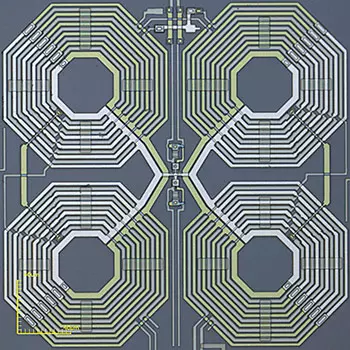
To turn such a material into a sensor, scientists shape a superconductor into a small loop and insert insulating barriers. Applying a magnetic field makes the electric current in the loop split and interfere with itself when passing through the barriers. This in turn makes the total amount of current in the loop oscillate; the stronger the magnetic field, the larger the oscillations. SQUIDs are extremely sensitive because the loop functions essentially as an antenna for magnetic fields that amplifies tiny changes into detectable signals.
SQUIDs have given scientists new ways to detect extremely weak magnetic fields generated in the body. For example, magnetoencephalography, or MEG, helps doctors pinpoint diseased or damaged tissue in the brain and can guide surgeons during operations for conditions such as epilepsy. Recent studies have used MEG to identify patients with multiple sclerosis, Alzheimer’s, schizophrenia and brain injuries.
Quantum-enabled magnetocardiography, or MCG, first demonstrated at NIST, has been tested for detecting fetal heart signals, which are usually too weak to monitor with conventional techniques. Scientists hope to eventually use quantum magnetic sensors to noninvasively monitor fetal heart health during high-risk pregnancies.
Beyond the biomedical realm, scientists and companies have used SQUIDs to measure variations in Earth’s magnetic field. This has led to major mineral finds, discoveries of ancient sites buried under soil or vegetation and unexploded ordnance. Scientists use SQUIDS to measure the magnetic properties of materials at very low temperatures, helping characterize new superconductors and spintronic devices — devices that use the quantum spins of electrons for information processing.
SQUIDs also excel at reading out signals produced by a different type of superconducting quantum sensor used to measure very faint light. When incoming photons (particles of light) hit these “transition-edge sensors,” the electrical current passing through them plummets. SQUIDs can detect the change in magnetic field caused by this drop in current.
Astronomers use transition-edge sensors with SQUID readouts to measure faint wisps of microwave light from the beginning of the universe, while physicists use them to search for dark matter.
(Read more about transition-edge sensors.)
SQUIDs also have limitations. They need bulky and expensive refrigerators to produce the frigid temperatures at which superconductors operate. For that reason, despite the potential benefits of magnetoencephalography, only a few hundred medical and research facilities around the world currently house SQUID-powered units. So scientists have gone looking for other magnetic sensors that can provide the sensitivity of SQUIDs without the heft and cost.
Atomic magnetometers
Scientists hope magnetic field sensors based on atoms can overcome some of these challenges and help quantum magnetometry reach its full potential.
Quantum mechanics tells us that fundamental particles such as the protons, neutrons and electrons that make up atoms have tiny intrinsic magnets — a property known as “quantum spin.” In the 1960s, scientists figured out how to use these microscopic magnets as sensors.
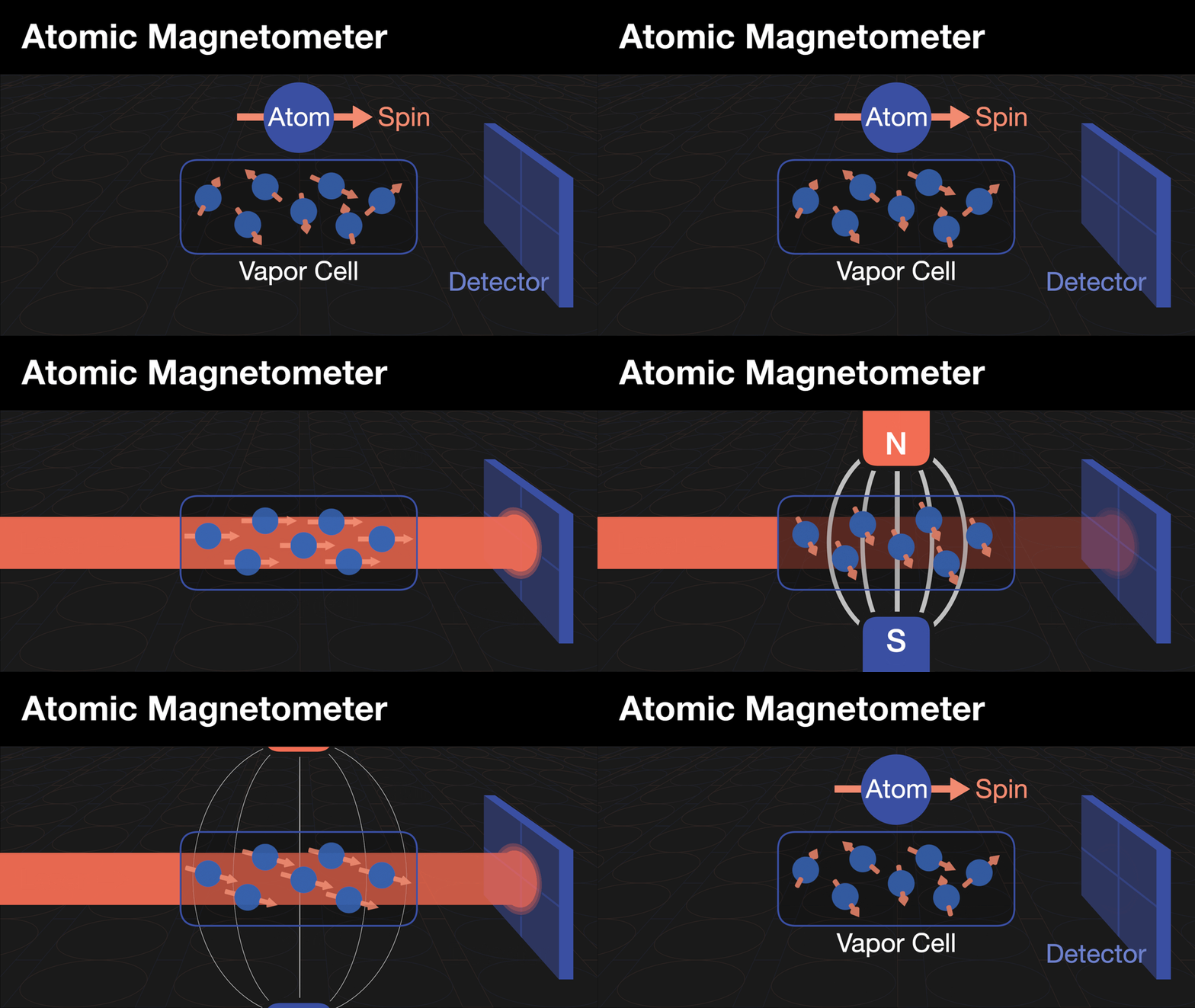
First, scientists trap billions of cesium or rubidium atoms in a small glass cell. Then they shine polarized laser light, which forces the spin of each atom’s outermost electrons to point in the same direction. The cell is then placed inside the magnetic field the scientists want to measure.
The magnetic field deflects the electron spins away from the direction of the polarized light, essentially turning each atom into a tiny compass. The deflection decreases the amount of light that makes it through the cloud of atoms to a detector. Monitoring the amount of transmitted light provides a sensitive and accurate measure of the magnetic field strength.
Atomic magnetometers have been around since the 1960s, but recent advances have made them nearly as sensitive as SQUIDs. Today’s best devices can detect fields weaker than one-billionth of the magnetic field produced by a typical refrigerator magnet.
And similar to SQUIDs, atomic magnetometers have been used to measure weak magnetic fields produced by electrical currents in the brain and the heart. For example, neuroscientists have shown that atomic magnetometers can locate epileptic seizures, in at least one case demonstrating higher signal-to-noise than a traditional SQUID MEG.
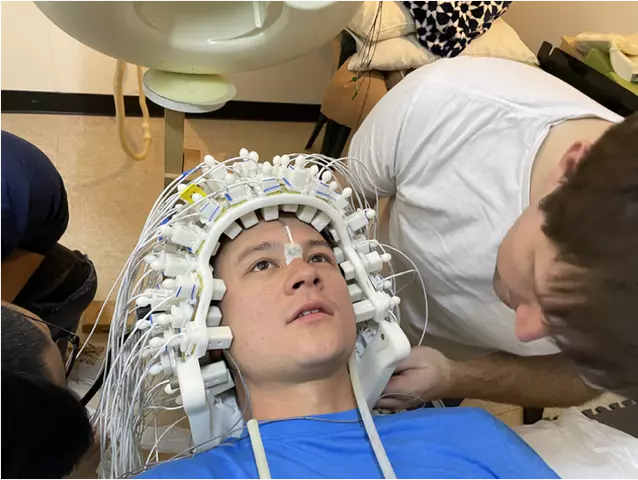
Because atomic magnetometers can be much smaller than SQUIDs and operate at room temperature, researchers hope atom-based MEG and MCG could help more people benefit from these powerful technologies. Smaller and more portable units could be especially helpful for treating children and infants, and they could offer a less cumbersome way to monitor fetal heart health.
Portable atomic magnetometers could also be used more easily in the field to look for magnetic signatures of underground minerals, and in planes, ships and other vehicles to measure Earth’s magnetic field in support of GPS-free navigation.
NV-center magnetometers
However, a third type of quantum magnetometer could be even better suited for navigation and certain other applications. These devices use the spins of subatomic particles in a similar way to an atomic magnetometer, but with a key difference: The atoms are trapped inside a tiny diamond. This setup makes for a compact and robust sensing technology.
Diamonds are crystals of regularly spaced carbon atoms. To make a magnetometer, scientists introduce defects in the crystal structure such that one carbon atom is missing and a neighboring carbon is replaced by a nitrogen atom — a so-called nitrogen-vacancy center, or NV-center. Like atoms, NV-centers have discrete quantum energy levels, and their electron spins are sensitive to external magnetic fields in a way that can be read out using laser light.
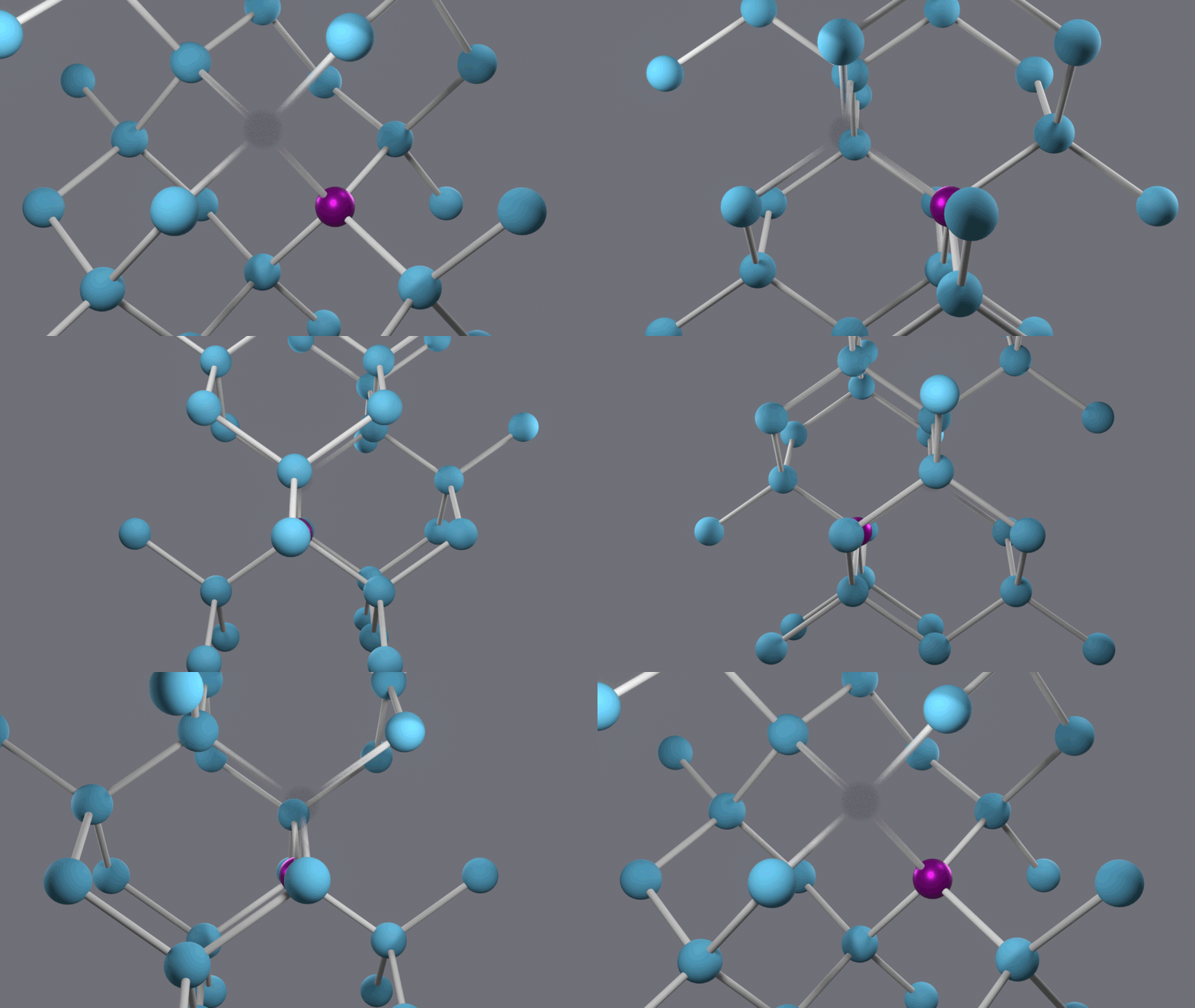
The best NV-center magnetometers have not yet reached the sensitivity of atomic and SQUID magnetometers, which remain the tools of choice for measuring very weak fields. But NV-centers excel at measuring high-frequency magnetic fields and can handle a wide range of field strengths with ease.
And they are starting to find their niche. Because diamonds can measure both the strength and direction of a magnetic field, they can be incorporated into microscopes to produce not just a reading but a nanoscale image of a sample’s magnetic field. Scientists have used this capability to make discoveries in paleomagnetism, the study of ancient magnetic rocks.
Researchers are also using quantum diamond microscopes to image magnetic fields produced by microelectronic devices such as computer chips — potentially helpful both for quality control and for ensuring that chips don’t have malicious circuits hidden inside them.
NV-centers can be attached to cells in the lab or in living organisms (similar to commonly used fluorescent protein markers) without harming the organism or cell, making them promising for biomedical applications. Scientists have used NV-center magnetometers to measure magnetic fields at the level of a single cell or even a single protein. NV-center magnetic imagers could measure changes in the speed at which electrical signals travel down nerve cells, potentially helping scientists study neurological diseases such as multiple sclerosis, Parkinson’s and Alzheimer’s.
The quantum states of NV-centers can also last longer than those of other quantum magnetometers, and the diamonds they are made from are also durable. This robustness has captured the attention of militaries interested in using them for GPS-denied navigation — a long-sought capability that could reshape global security, aviation and warfare.
A magnetometer in an airplane or drone would measure the magnetic field of Earth’s crust as the aircraft flies, and those measurements would be compared to magnetic maps to help pinpoint the craft’s location. Scientists are currently testing NV-center magnetometers for this purpose.