

Official websites use .gov
A .gov website belongs to an official government organization in the United States.

Secure .gov websites use HTTPS
A lock (
) or https:// means you’ve safely connected to the .gov website. Share sensitive information only on official, secure websites.


Additive Manufacturing Benchmark Test Series (AM-Bench)
A continuing series of highly controlled benchmark tests for additive manufacturing, with modeling challenge problems. Results are discussed at the corresponding conference series.
New Focus on Higher Technology Readiness Level Applications
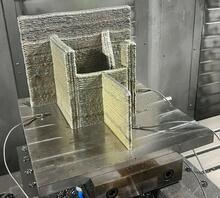
Since completing our first benchmarks in 2018, AM Bench has tracked the AM modeling community's progress in simulating laser powder bed fusion (PBF-LB) of metal alloys. Models have now reached a maturity level that allows AM Bench to shift focus from simple test specimens to realistic metal components designed in partnership with industry, with the first sets of benchmarks planned for AM Bench 2028. We will expand this effort to additional AM methods and materials as their modeling capabilities mature. For further details on our current plans, please explore our new webpage on New Focus on Higher TRL Applications.
what is am bench?
AM Bench is a NIST-led organization that provides a continuing series of AM benchmark measurements, challenge problems, and conferences with the primary goal of enabling modelers to test their simulations against rigorous, highly controlled additive manufacturing benchmark measurement data. All AM Bench data are permanently archived for public use using comprehensive, custom data management systems. The first round of benchmark measurements, challenge problems, and conference (AM Bench 2018) was completed in 2018 and the second round was completed in 2022, following a one-year delay caused by the COVID-19 pandemic. All work on AM Bench 2025 has been completed except for finishing the final data publications and measurement papers. Planning for AM Bench 2028 is underway and additional asynchronous benchmarks are also being planned. A key change expected for AM Bench 2028 is a new focus on higher technology readiness level (TRL) applications, while continuing to support our lower-TRL base.
AM Bench partners broadly with the AM research community. If you have ideas for future AM benchmarks, or if you wish to partner with us on conducting such benchmarks, please contact the lead AM Bench organizers listed below.
AM Bench Mission: To promote US innovation and industrial competitiveness in AM by providing open and accessible benchmark measurement data for guiding and validating predictive AM simulations across the full range of industrially relevant AM processes and materials.
Scope
AM Bench was established to develop benchmark measurements for all AM processes and materials. However, the requirement for highly controlled and quantitative measurements severely limits the number of benchmark measurements that can be conducted in any given test cycle. Thus, one of the key challenges faced by AM Bench is to select benchmark measurements, processes, and materials that are both technically feasible and have the highest impact on the AM community. We thank the AM Bench Scientific Committee for the valuable advice they provided in selecting the final materials and processes that were used for AM Bench 2018, 2022, and 2025. Links to descriptions of all AM Bench benchmark measurements, challenge problems, and results are provided on the left sidebar.
2025 BENCHMARKS
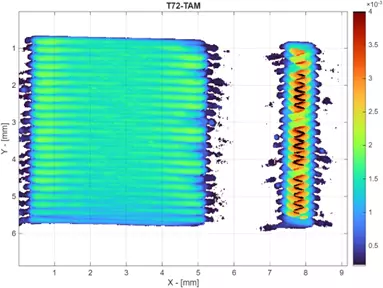
The 2025 benchmarks include 8 sets of measurements and challenge problems for metals AM and 1 set for polymers AM. The metals AM benchmarks included several new focus areas, including composition sensitivity (1 set of benchmarks), high-cycle fatigue (1 set), laser hot-wire DED (2 sets), and time resolved measurements of phase transformations immediately following solidification (1 set). Another set of metals AM benchmarks was a mechanical properties follow-on to an AM Bench 2022 set of laser powder bed fusion (PBF-LB) benchmarks. Two additional sets of benchmarks continued our long tradition of providing measurements of the underlying physical processes for PBF-LB. The polymers AM set of benchmarks focused on cure depth for vat photopolymerization.
2022 BENCHMARKS
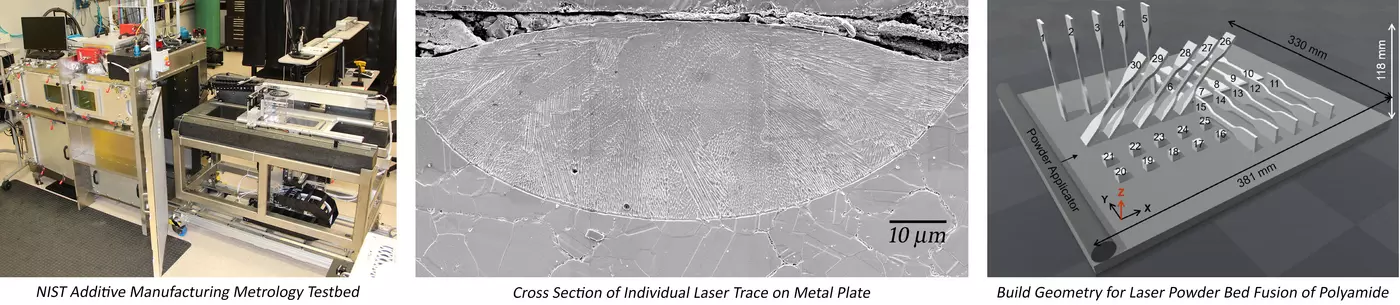
The 2022 benchmarks included both metals AM and polymers AM. For metals, 3 sets of benchmarks focused on PBF-LB of the nickel-based superalloy 718 and 2 sets of benchmarks included follow-on mechanical performance and microstructure measurements for the 2018 PBF-LB studies using the nickel-based superalloy 625. Taken together, these benchmarks cover the full processing-structure-properties range, including feedstock characterization, in situ measurements during the build process, heat treatments, 2D and 3D microstructure characterization, measurements of residual strains and part deflection, and mechanical behavior measurements. For polymers, one set of benchmarks focused on material extrusion (MatEx) of polycarbonate test objects, and another set of benchmarks focused on vat photopolymerization measurements. Finally, an asynchronous set of benchmark measurements was completed in early 2022 and focused on melt pool and laser coupling dynamics during high-power laser interactions with Ti-alloy and Al-alloy bare metal surfaces.
2018 BENCHMARKS
The 2018 benchmarks included both metals AM and polymers AM. For metals, the focus was on PBF-LB of both a nickel-based superalloy, 625, and a martensitic, precipitation-hardenable stainless steel, 15-5. Both 3-D builds and single laser tracks on bare metal plates were conducted. For polymers, the focus was on thermoplastic AM technologies, and we identified the two most widely used approaches for AM-Bench: MatEx and PBF-LB, also sometimes referred to as selective laser sintering (SLS). The MatEx benchmark focused on polycarbonate and the PBF-LB focused on polyamide 12 (nylon 12).
CHALLENGE PROBLEMS
The AM Bench benchmarks include blind challenge problems to the AM modeling community where AM modelers are asked to predict the AM Bench measurement results. These challenge problems have proven to be extremely popular, with 85 submissions to AM Bench challenge problems in 2025. The award winners may be found within the Awards section of this website.
AM Bench DAtasets
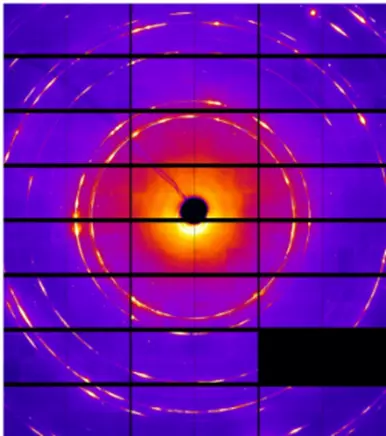
The greatest long-term impact of AM Bench resides in its published datasets. For example, the AM Bench 2022 microstructure Challenge Problem AMB2022-01-MS received a total of 3 submissions from the modeling community. However, as of July 21, 2026, NIST tracked a total of 6044 unique-user downloads of the corresponding data publication. Looking at all published AM Bench data publications, approximately 1670 unique user downloads per month (55 per day) were tracked between May 2, 2025 and May 1, 2026.
Conference
With a three-year cycle time, AM Bench holds a conference associated with the preceding benchmark measurements and challenge problems. This conference provides a venue where modelers and experimentalists can come together to examine successful measurement and simulation approaches, evaluate shortcomings, and provide input for future AM Bench directions. The first AM Bench conference, AM Bench 2018, was hosted by NIST at their Gaithersburg, MD campus during the week of June 18, 2018. The second conference, AM Bench 2022, was held in Bethesda, MD during the week of August 15, 2022. The TMS handled the conference logistics for both conferences and the 2018 conference proceedings are published in the TMS archival publication, Integrating Materials and Manufacturing Innovation (IMMI). These proceedings include both the AM Bench measurement results and invited papers from the AM Bench modeling community. The 2022 conference proceedings were also published through IMMI. Due to a change in policy, TMS no longer supports small independent conferences such as AM Bench. Instead, AM Bench 2025 was held in conjunction with ASME's International Mechanical Engineering Congress & Exposition (IMECE) as a separate track at the Renasant Convention Center in Memphis, TN on November 16-20, 2025. Nevertheless, the AM Bench 2025 conference proceedings will again be published in IMMI.
Contacts
NIST Organizing Committee Co-Chairs
-
(301) 975-6032
-
(301) 975-2265