An official website of the United States government
Here’s how you know
Official websites use .gov
A .gov website belongs to an official government organization in the United States.
Secure .gov websites use HTTPS
A lock (
) or https:// means you’ve safely connected to the .gov website. Share sensitive information only on official, secure websites.

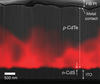
Manufacturers may soon have a speedy and nondestructive way to test a wide array of materials under real-world conditions, thanks to an advance that researchers...
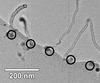
In the nanoworld, tiny particles of gold can operate like snow blowers, churning through surface layers of an important class of semiconductors to dig...
The NIST Center for Nanoscale Science and Technology (CNST) Center for Nanoscale Science and Technology (CNST) is pleased to announce the release of the...
As microchip feature dimensions approach atomic scale, it becomes formidably difficult to measure their size and shape. According to the International...
The characterization technology needed for nanoelectronic materials and device research, development, and manufacturing was discussed by experts from industry...
NIST researchers have demonstrated the autonomous computer-controlled assembly of atoms into perfect nanostructures using a low temperature scanning tunneling...
Two-dimensional (2D) materials* such as molybdenum-disulfide (MoS 2) are attracting much attention for future electronic and photonic applications ranging from...
Defect-free nanowires with diameters in the range of 100 nanometers (nm) hold significant promise for numerous in-demand applications including printable...
Researchers from the NIST Center for Nanoscale Science and Technology (CNST) and the University of Maryland have for the first time used photothermal induced...
Changing the polarity of the magnetic field response of a material one thousandth the width of a human hair may seem like the stuff of science fiction, but that...
The NIST Center for Nanoscale Science and Technology (CNST) is pleased to announce the release of the Winter/Spring 2014 edition of The CNST News. This...
Researchers at the National Institute of Standards and Technology (NIST), working in collaboration with the Naval Research Laboratory, have found that a...
Researchers from the NIST Center for Nanoscale Science and Technology (CNST) have observed electromagnetically induced transparency at room temperature and...
Researchers from the NIST Center for Nanoscale Science and Technology (CNST) have demonstrated a new low energy electron beam technique and used it to probe the...
The Center for Nanoscale Science and Technology (CNST), NIST's nanotechnology user facility, has deployed a new laboratory equipment management system which it...
The NIST Center for Nanoscale Science and Technology (CNST) is pleased to announce the release of the Fall 2013 edition of The CNST News. This quarterly...
The Center for Nanoscale Science and Technology (CNST), NIST's nanotechnology user facility, is pleased to announce a major update to the NanoFab website. The...
Video showing a 10 µm × 1 µm fluorescently labeled rod being controlled using a combination of electric fields and fluid flow to travel along the "NIST" path...
The NIST Center for Nanoscale Science and Technology (CNST) was featured on the Friday, March 22 edition of Metro Connection, a weekly radio broadcast of...
Robert Celotta, Director of the NIST Center for Nanoscale Science and Technology (CNST), was interviewed in the 2013 edition of International Innovation -...
How the semiconductor industry can create the next generations of nanoscale computing technology will be one of the themes of the 2013 International Conference...
One of the surprising predictions of quantum mechanics is that uncharged conductors can attract each other over small distances, even in empty space. While the...
Researchers from the NIST Center for Nanoscale Science and Technology and the Johns Hopkins University have developed a technique to reliably manipulate...
Researchers from the NIST Center for Nanoscale Science and Technology and Arizona State University have used an environmental scanning transmission electron...
If you ease up on a pencil, does it slide more easily? Sure. But maybe not if the tip is sharpened down to nanoscale dimensions. A team of researchers at the...