An official website of the United States government
Here’s how you know
Official websites use .gov
A .gov website belongs to an official government organization in the United States.
Secure .gov websites use HTTPS
A lock (
) or https:// means you’ve safely connected to the .gov website. Share sensitive information only on official, secure websites.

Researchers have demonstrated that a strange type of quantum particle called the anyon, believed to exist in only two dimensions, can also be created in one...
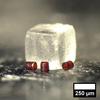
Not all gems are the precious stone kind. In the field of magnetic resonance imaging (MRI), a type of microscopic magnetic probes called geometrically encoded...
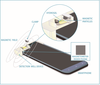
Nearly every modern cellphone has a built-in compass, or magnetometer, that detects the direction of Earth’s magnetic field, providing critical information for...
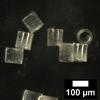
Microscopic magnetic probes that change shape in response to their environment may greatly enhance magnetic resonance imaging (MRI). However, producing the...
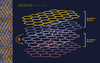
A single-atom-thick sheet of carbon known as graphene has remarkable properties on its own, but things can get even more interesting when you stack up multiple...
Magnetic resonance imaging (MRI) has revolutionized medical diagnostics and research by providing a non-invasive way to investigate internal tissue structures...
Magnetic resonance imaging (MRI) is widely used in medicine to detect, diagnose and treat diseases such as cancer, while relying on experts’ interpretation of...
They may not be impervious to bullets like Superman, but groups of electrons that gather along the edges of some ultrathin materials have their own superpowers...
Some might call it a diamond in the rough: NV center magnetometry, which uses specially adapted diamonds to make sensitive measurements of magnetic signals, is...
It’s cool to be small. Scientists at the National Institute of Standards and Technology (NIST) have miniaturized the optical components required to cool atoms...
Researchers at the National Institute of Standards and Technology (NIST) have developed a device to detect a quantum property of electrons, known as spin, in...
Researchers at the National Institute of Standards and Technology (NIST) and their colleagues have for the first time created and imaged a novel pair of quantum...
As if they were bubbles expanding in a just-opened bottle of champagne, tiny circular regions of magnetism can be rapidly enlarged to provide a precise method...
Eight years ago, NIST researchers developed a groundbreaking microscope that uses a narrow beam of low-energy lithium ions, rather than a beam of light or...
Researchers from the National Institute of Standards and Technology (NIST) and University of Colorado Boulder (CU) have developed a low-power microchip that...