An official website of the United States government
Here’s how you know
Official websites use .gov
A .gov website belongs to an official government organization in the United States.
Secure .gov websites use HTTPS
A lock (
) or https:// means you’ve safely connected to the .gov website. Share sensitive information only on official, secure websites.

Timekeeping slippin’ into the future: For the first time, a NIST team transferred ultraprecise time signals over 28 kilometers of turbulent airspace (the...
While awaiting full access to their labs due to COVID-19 restrictions, scientists at the National Institute of Standards and Technology (NIST) have taken this...
It images single atoms. It maps atomic-scale hills and valleys on metal and insulating surfaces. And it records the flow of current across atom-thin materials...
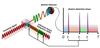
Just as a meter stick with hundreds of tick marks can be used to measure distances with great precision, a device known as a laser frequency comb, with its...
Researchers at the National Institute of Standards and Technology (NIST) have used state-of-the-art atomic clocks, advanced light detectors, and a measurement...
Physicists at the National Institute of Standards and Technology (NIST) have boosted their control of the fundamental properties of molecules at the quantum...
When the surface of the Sun erupts, it emits dangerous particles that can knock out GPS and communication links on our planet, but the rain of particles from a...
In arguably the coziest laboratory on NIST’s campus in Gaithersburg, Maryland, fellow Yoshi Ohno and his colleagues make measurements on the white light...
Once unimaginable, transistors consisting only of several-atom clusters or even single atoms promise to become the building blocks of a new generation of...
Scientists at the National Institute of Standards and Technology (NIST) have devised a novel, accurate, easy-to-operate, time- and labor-saving way to provide...
A high-end race car engine needs all its components tuned and working together precisely to deliver top-quality performance. The same can be said about the...
On the morning of March 22, 1915, residents of the small town of West Shelby, New York, awoke to a horrific scene. A woman clad only in a bloodied nightgown lay...
Have you heard of foldable smartphones? How about the flexible television screen that rolls up into a box? Or the ultrathin “wallpaper” TVs that are just...
Researchers at NIST have devised a way to eliminate a long-standing problem affecting our understanding of both living cells and batteries. When a solid and an...
Silicon, the best-known semiconductor, is ubiquitous in electronic devices including cellphones, laptops and the electronics in cars. Now, researchers at the...
A tooth? An angel? A strong man? Instead of seeing patterns in clouds, our scientists go to the microscope! NIST’s Ravi Attota uses a simple optical microscope...
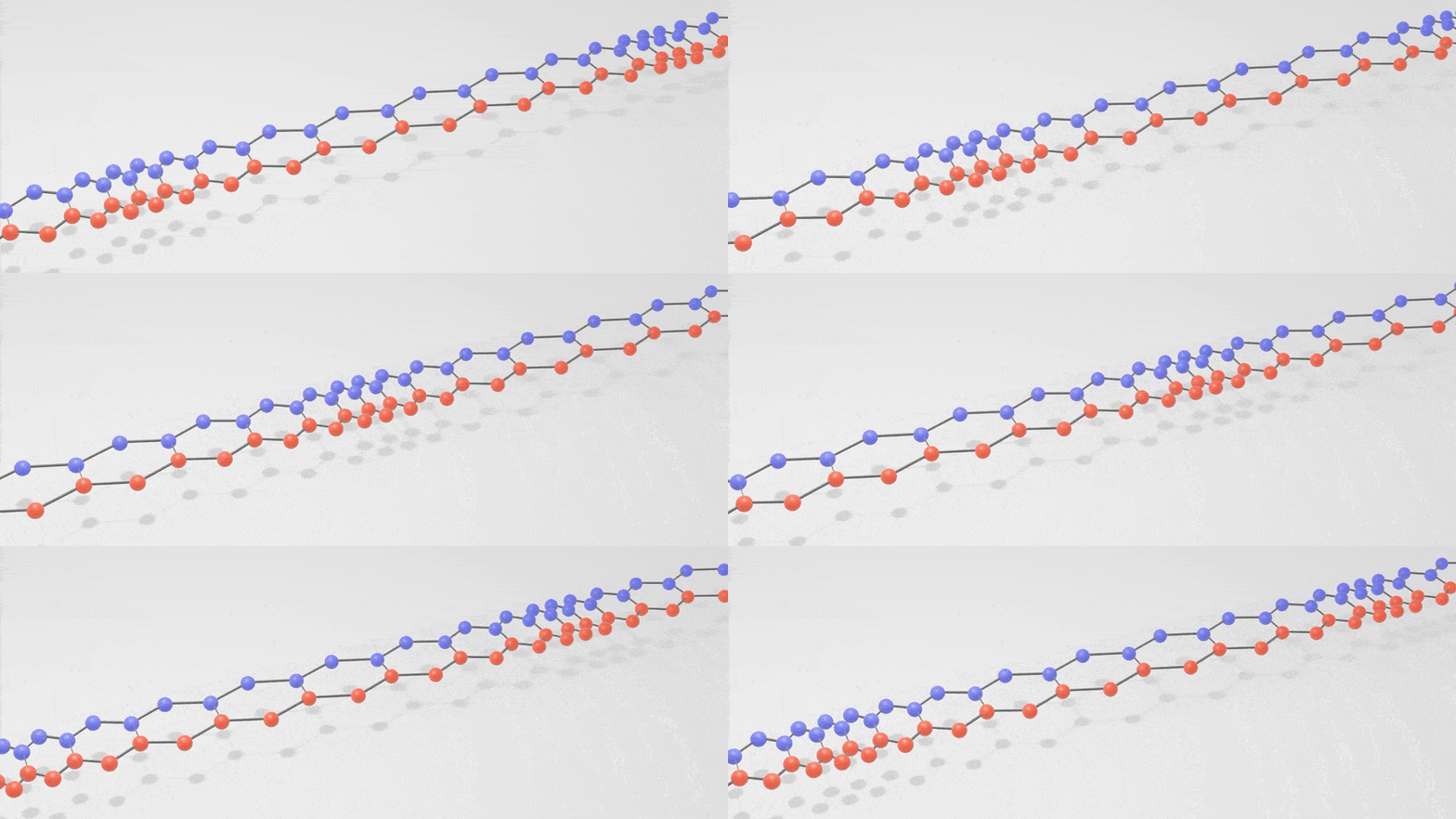
Researchers at the National Institute of Standards and Technology (NIST) have discovered a surprising feature in two-dimensional (2D) magnets, a new class of...
Dating can be complicated. Our team uses this instrument — a live-timed anticoincidence counter — to figure the decay rate of an isotope, which we can then use...
Researchers at the National Institute of Standards and Technology (NIST) have found a way to link measurements made by a device integral to microchip...
Researchers at the National Institute of Standards and Technology (NIST) and their colleagues have for the first time created and imaged a novel pair of quantum...
Forget ice cube trays … we have microscopic molds for any shape we want. Scientists at NIST can now pour a polymer liquid into a template to make exact shapes —...
Silicon, found everywhere from the brick in your fireplace to the sand between your toes at the beach, also forms the basis of microchips in conventional...
Always on the lookout for better ways to measure all kinds of things, researchers at the National Institute of Standards and Technology (NIST) have published a...
Since the National Institute of Standards and Technology (NIST) built its first superconducting devices for counting photons (the smallest units of light) in...
Particles can sometimes act like waves, and photons (particles of light) are no exception. Just as waves create an interference pattern, like ripples on a pond...